

This is not a story about gold.
It is a story about a name — 新金山 (Xīn Jīnshān), New Gold Mountain — and what that name promised the men and boys who left the Siyi (四邑, Sìyì) region of Guangdong in the 1850s. They already knew about the first Gold Mountain: California, 旧金山 (Jiù Jīnshān), where news of the 1848 strike had rippled through Siyi villages years earlier. But when gold was discovered in Victoria in 1851, a second mountain rose on the horizon. Australia. The name traveled back through letters, through returning men, through the Hong Kong piers where emigrants gathered — and thousands chose the longer voyage south.
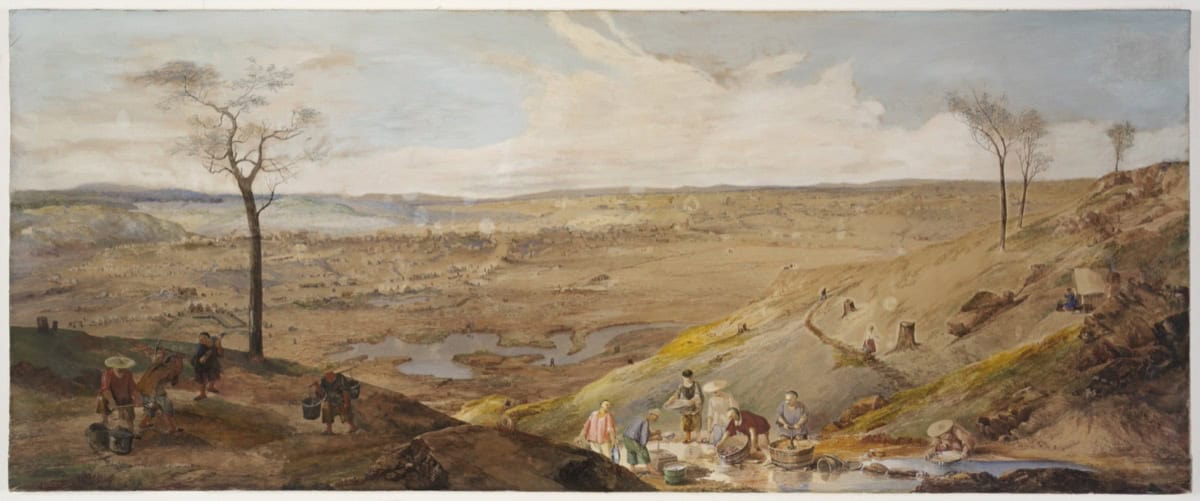
They called themselves 淘金客 (táojīnkè) — gold seekers. They walked from Melbourne to the Ararat goldfields carrying supplies on shoulder poles (扁担, biǎndan). They built camps, temples, and mutual aid societies. And then, at a place called Lambing Flat in 1861, they watched two thousand European men come over the ridge to cut the queues from their heads.
One nine-year-old boy from Taishan made this journey in 1859. His name was Mei Guangda. The world would come to know him as Quong Tart.
This is the story of what the New Gold Mountain gave them — and what it took away.
The Mountain That Had Two Names
By the 1850s, the villages of the Four Counties — Taishan (台山, Táishān), Kaiping (开平), Xinhui (新会), and Enping (恩平) — were sending sons and husbands overseas in numbers that would reshape both Guangdong and the Pacific rim. The first destination had been California: a place they called simply Gold Mountain, 金山. When Australia’s goldfields opened, the naming was practical, not poetic. California became Old Gold Mountain. Australia became New Gold Mountain.
The choice mattered. California was closer, its Chinese community larger and more established. But it was increasingly crowded — the surface gold was thinning. Australia was newer. News had arrived from earlier arrivals describing rich fields still being discovered through the 1850s. One letter, attributed to a miner named Luo Amao, circulated through Taishan villages describing the Bendigo goldfields in detail. For families who had missed the California rush, Australia offered a second chance.
The word “new” in the name carried a specific kind of weight. It meant unclaimed ground. It meant possibility. It meant a man could still arrive with nothing and walk away with enough to build a house in his home village, to send his children to school, to return with his head held high. This was the promise — and thousands bet their lives on it.
What the name obscured was what waited on the other side: the £10 entry tax Victoria imposed on Chinese arrivals in 1855, the racial hostility already building on the goldfields, the fact that Chinese miners were already being accused — in newspapers, in mining camps, in colonial parliaments — of working too hard, sending money home, and refusing to become Australian. The mountain had two faces. One was named hope. The other had no name yet.
In 1859, a boy named Mei Guangda (梅光达, Méi Guāngdá) boarded a ship in Hong Kong. He was nine years old, traveling with his uncle, from Duanfen Town (端芬镇, Duānfēn Zhèn) in the heart of Taishan. His life would trace the full arc of the Chinese-Australian story — from the hope of New Gold Mountain to the violence that followed, and finally to a kind of survival that outlasted every attempt to erase it.
From Siyi to the Southern Cross
The journey began in Hong Kong (香港, Xiānggǎng), the British colony that had become the departure point for tens of thousands of Chinese emigrants. The ships that left its harbor carried men from the Siyi counties bound for Melbourne (墨尔本, Mò’ěrběn) and Sydney. The voyage took roughly three months. Conditions were crowded, food was poor, and mortality was not uncommon. Those who survived the sea would remember the smell of the holds, the roll of the southern ocean, the first sight of land after weeks of nothing but water.
Most traveled under the credit-ticket system (赊单工, shēdāngōng). A labor broker advanced the cost of passage, and the miner repaid the debt through work on the goldfields. Some worked for months or years before they earned a single coin for themselves — free to move and mine, but bound by debt to brokers who had financed their passage from the other side of the ocean.
When the ships docked at Melbourne, the walk began. Chinese sources describe it plainly: “华人淘金者从墨尔本下船后,结队排成一排,挑着扁担,步行山路前往班迪戈等金矿” — the Chinese gold seekers, after disembarking at Melbourne, formed lines and walked mountain roads to Bendigo and other goldfields, carrying everything on shoulder poles. The poles held food, tools, bedding, and the few possessions that remained of home. The distance from Melbourne to the Ararat goldfields was roughly two hundred kilometers. They walked it in groups, in lines, in silence or in talk, knowing that every step took them deeper into a country where they were already being watched.
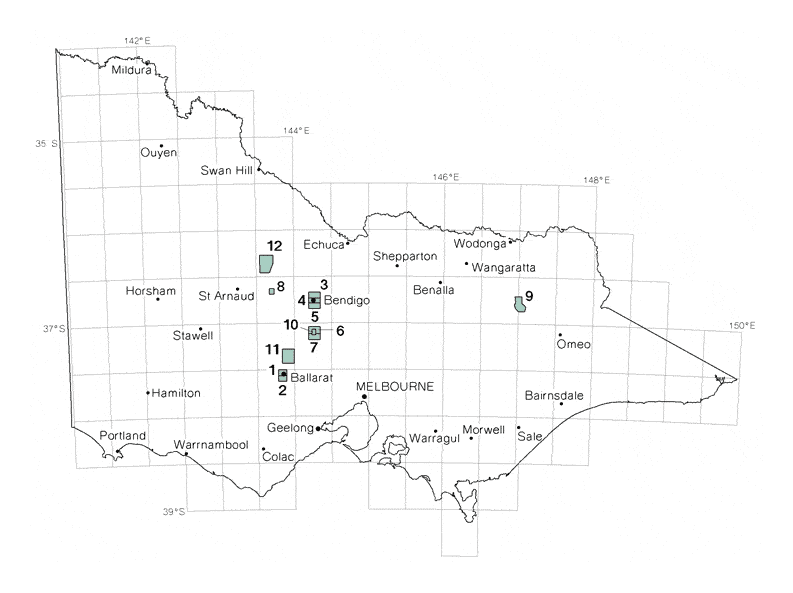
At the peak of the gold rush, the Chinese population in Australia reached roughly forty thousand. Nearly all were men. Chinese women made up less than one percent of the Chinese population between 1850 and 1901. Most of these men were from Taishan — the largest single source county among the Four Counties. They were not the poorest of the poor; passage required capital or access to credit. Many left wives and children in Siyi, planning to return wealthy. The two-family system (两头家, liǎngtóujiā) was not yet a permanent condition. It was supposed to be temporary. A man would go, he would earn, and he would come home.
Most never did.
Quong Tart’s journey was different from the start. His uncle did not take him to a mining camp but to the Braidwood region of New South Wales, where a Scottish family named Simpson took the boy in. The Simpsons owned mining claims and, for reasons lost to history, adopted a nine-year-old Chinese child. They educated him in English, raised him Protestant, and gave him something almost no other Chinese miner on the Australian goldfields possessed: access to white society. In 1871, at the age of twenty-one, he would become one of the very few Chinese men to receive naturalization in colonial Australia. But that was years away. In 1859, he was simply a boy from Taishan who had crossed the ocean and found himself in a Scottish home in a goldfield town, learning to speak English with a Scottish accent while Chinese miners walked the roads to Ararat.
Ararat: Life on the New Gold Mountain
The Ararat goldfields were smaller than Ballarat (巴腊腊, Bālàlà) and Bendigo (本迪戈, Běndígē), but they had a distinct Chinese presence. Chinese miners arrived in the 1850s and established camps alongside — but separate from — the European diggings. Where European miners rushed from one new strike to another, Chinese miners were known for thoroughness: they worked abandoned claims, re-washing tailings, finding gold that faster hands had missed. Their patience became, in the eyes of their competitors, a form of unfairness — as if extracting value from ground that white miners had already discarded was somehow cheating.
Daily life on the goldfields was hard in ways that statistics cannot capture. Men lived in tents at first, then built more permanent structures within the Chinese camps. They maintained what they could of home: rice and tea imported through Chinese merchants in Melbourne, preserved vegetables, the rhythms of festivals that marked the lunar calendar. A man might wash gravel for twelve hours and end the day with a pinch of dust.
But the goldfields were not chaos. They were organized. The Sze Yup Society (四邑会馆, Sìyì Huìguǎn) had been founded in 1854 — the first Chinese association in Australian history. Its purpose was direct and practical: mutual aid. The society mediated disputes, organized funerals for those who died far from home, raised funds for hospitals, and represented Chinese interests when violence threatened. All Siyi people were automatic members. This was not optional; it was survival infrastructure.
Clan associations (会馆, huìguǎn) provided the social fabric that held the Chinese camps together — a place to bring grievances, borrow money, hear news from Guangdong, or arrange for a body to be shipped home if a man died on the diggings. In the absence of legal protection from the colonial state, the huiguan was the law.
Yet the hostility was ambient, constant, and growing. Chinese miners were accused of sending their earnings home instead of spending them locally, bringing disease, practicing a religion white Australians found incomprehensible. The question was not whether the weather would break. The question was when.
The Day They Cut the Queues
The storm broke at Lambing Flat (兰宾平原, Lánbīn Píngyuán), in New South Wales. The town is called Young now — a name chosen to bury what happened there.
Gold was discovered at Burrangong in 1860. By year’s end, European and Chinese miners had arrived in force. On November 13, 1860, a mob destroyed the Chinese camp. Roughly five hundred miners were driven out. On December 9, the mob returned. More tents were burned. Two Chinese men were killed.
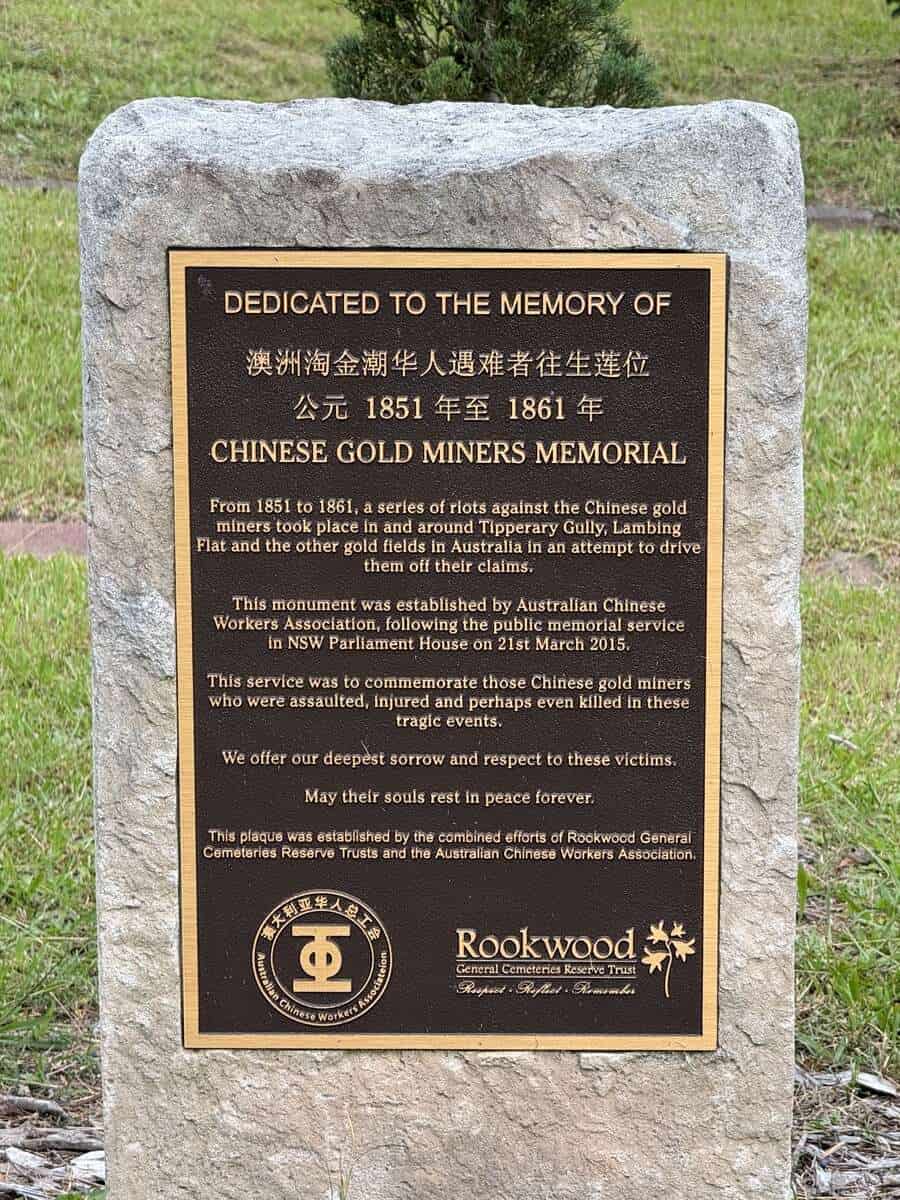
The violence continued for months. There were at least seven separate documented attacks between November 1860 and September 1861. But what happened on June 30, 1861, was different in scale and in kind.
On that day, approximately two thousand European men gathered and advanced on the Chinese camp, where roughly a thousand to twelve hundred Chinese miners were working or resting. The Europeans were organized. They carried weapons. They looted property, destroyed shelters, and drove the miners from the field. Two Chinese men were killed. More than ten were injured. The survivors fled.
Then came the queue-cutting.
The queue (辫子, biànzi) was not a hairstyle. It was a marker of identity, required by Qing dynasty law — a long braid worn by every Han Chinese man as a symbol of submission to the Manchu emperor. To cut a man’s queue was to sever his connection to his homeland, his emperor, his ancestors, his name. It was not random violence. It was targeted cultural destruction. At Lambing Flat, European men held Chinese miners down and hacked the braids from their heads. They tied the queues to flags and paraded them through the camp. Trophies.
There is no way to soften this. It happened. It was witnessed. It was documented in colonial records, in newspaper accounts, in the memories of the men who survived it and the communities that absorbed the survivors.
And when the rioters were tried at Goulburn, the all-white jury acquitted every single one. Two Chinese men dead. Ten more injured. Hundreds had their identities cut from their bodies. And the law said: this is not a crime.
The message was unmistakable. Chinese lives did not carry legal weight in colonial Australia. The violence was institutional. It was sanctioned. And it was about to become law.
In November 1861, New South Wales passed the Chinese Immigration Restriction Act. Chinese residents were banned from naturalization. The pattern repeated across the Australian colonies through the 1880s — each new restriction building on the last, each new law tightening the circle around the people who had come to the New Gold Mountain believing it was a place where a man could build a future. This was not an isolated backlash but an institutional pattern that immigrants from the Five Counties would battle for generations.
The Ararat miners were in Victoria, not New South Wales. Lambing Flat did not happen on their doorstep. But the news traveled — through Chinese merchants, through the huiguan networks, through letters home. Every Chinese miner on every goldfield in Australia understood the meaning of the Goulburn verdict. This could happen anywhere. And if it did, no one would be punished.
The Life That Almost Was: Quong Tart
The boy who had arrived in 1859 grew into a man who seemed to exist between two worlds and belong to both.
By the 1880s, Quong Tart (梅光达) had built a successful business in Sydney: tea, silk, and restaurants. His establishment at the Queen Victoria Market became one of Sydney’s premier social venues — a place where white Australians dined under Chinese management. He opposed the opium trade publicly, a politically risky position for a Chinese merchant. He served as a government translator and, in 1883, as an inquiry commissioner for New South Wales.
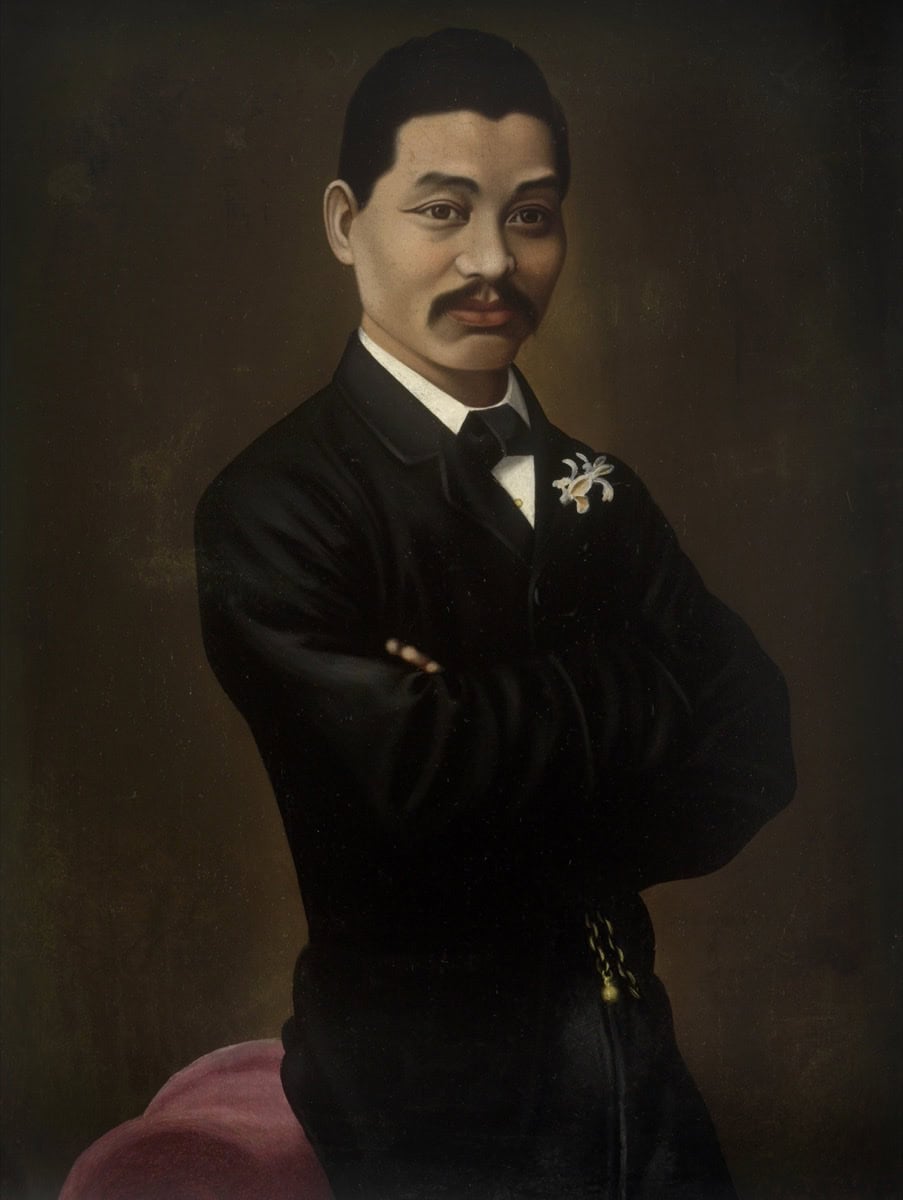
And he married a white Australian woman. In the racial landscape of colonial Australia, this was almost unimaginable. Chinese men were widely depicted as a threat to white women. Interracial marriage was socially unacceptable, legally complicated, and, in the popular imagination, dangerous. Quong Tart did it anyway. His wife, Margaret Scarlett, became his partner in building a life that defied every expectation the colony had about what a Chinese man could be.
His naturalization in 1871 made him a British subject with the full legal rights of any Australian colonist. He used those rights to advocate for the Chinese community — not as an outsider pleading for tolerance, but as an insider demanding justice. In 1902, he was recognized as de facto consul by more than twenty nations — an extraordinary diplomatic achievement for a Chinese man in a country that was actively legislating against his people.
Quong Tart’s life proved something the architects of White Australia would later deny: that a Chinese man could succeed in Australian society, participate in its public life, marry, build a family, and contribute to the nation’s prosperity. But his life was not a template. It was an exception that proved the rule. His success required circumstances — Scottish adoption, English literacy, Protestant conversion, early naturalization — unavailable to almost every other Chinese miner. The men who walked to Ararat with poles on their shoulders did not have Scottish families waiting to adopt them. And the country was about to make sure they never would.
Quong Tart died in 1903, just as the White Australia Policy took full effect. His death came from injuries sustained in a robbery at his home — a crime committed by a white man. He saw the door beginning to close. He did not live to see it fully shut.
The Door That Closed
In 1901, the new Australian Federation passed its first law: the Immigration Restriction Act. Its Chinese name — 移民限制法案 (Yímín Xiànzhì Fǎ’àn) — is more honest than its English title. The law was designed to exclude, and its mechanism was a masterpiece of bureaucratic cruelty.
The dictation test could be administered in any European language — not simply English, but French, German, Italian, or any other tongue the immigration officer chose. The test was designed to fail. Between 1902 and 1903, forty-six people passed. Between 1904 and 1909, six passed. After 1909: zero. It was race-targeted legislation wearing the mask of neutral policy — and everyone knew it.
This was the White Australia Policy (白澳政策, Bái Ào Zhèngcè), and it did not merely stop new arrivals. It froze the lives of Chinese men already in Australia. They could stay. They could work. But they could not bring their wives. They could not bring their children. They could not bring their aging parents waiting in Siyi villages for sons who had promised to return.
The two-family system (两头家, liǎngtóujiā) became permanent. Men who had come intending to earn and go home found themselves trapped — neither fully Australian nor fully Chinese, belonging to two families in two countries and unable to be present for either. The naturalization Quong Tart had received in 1871 had been an open door. By 1901, that door was bolted. Letters (侨批, qiáopī) were the only connection: a few lines on rice paper every few months, remittance amounts noted in careful script, news of births and deaths compressed into sentences that crossed the ocean.
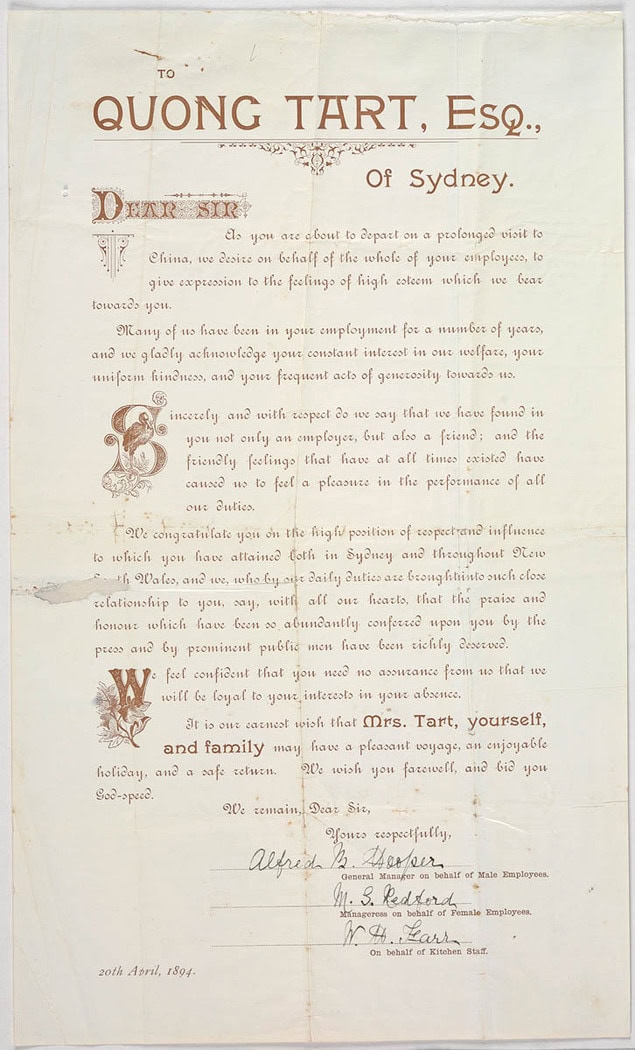
In the Siyi villages, women managed households alone. They raised children who knew their fathers only through handwriting. They grew old waiting for reunions that never came. The children of Australian gold miners learned to recognize their fathers in the envelopes that arrived from overseas, in the money that bought rice and paid school fees, in the absence that shaped their entire lives.
As gold depleted, Chinese miners shifted to market gardening, restaurants, shops, laundries. They became invisible in the Australian economy — present but unseen, essential but unacknowledged. Scholars call this “the silent period of Chinese migration” (华人移民的静默期). The Ararat goldfields emptied. The Chinese population shrank through attrition and return migration, through old age and death in a country that would not let their families join them.
The New Gold Mountain had become a prison.
What the Mountain Could Not Bury
And yet.
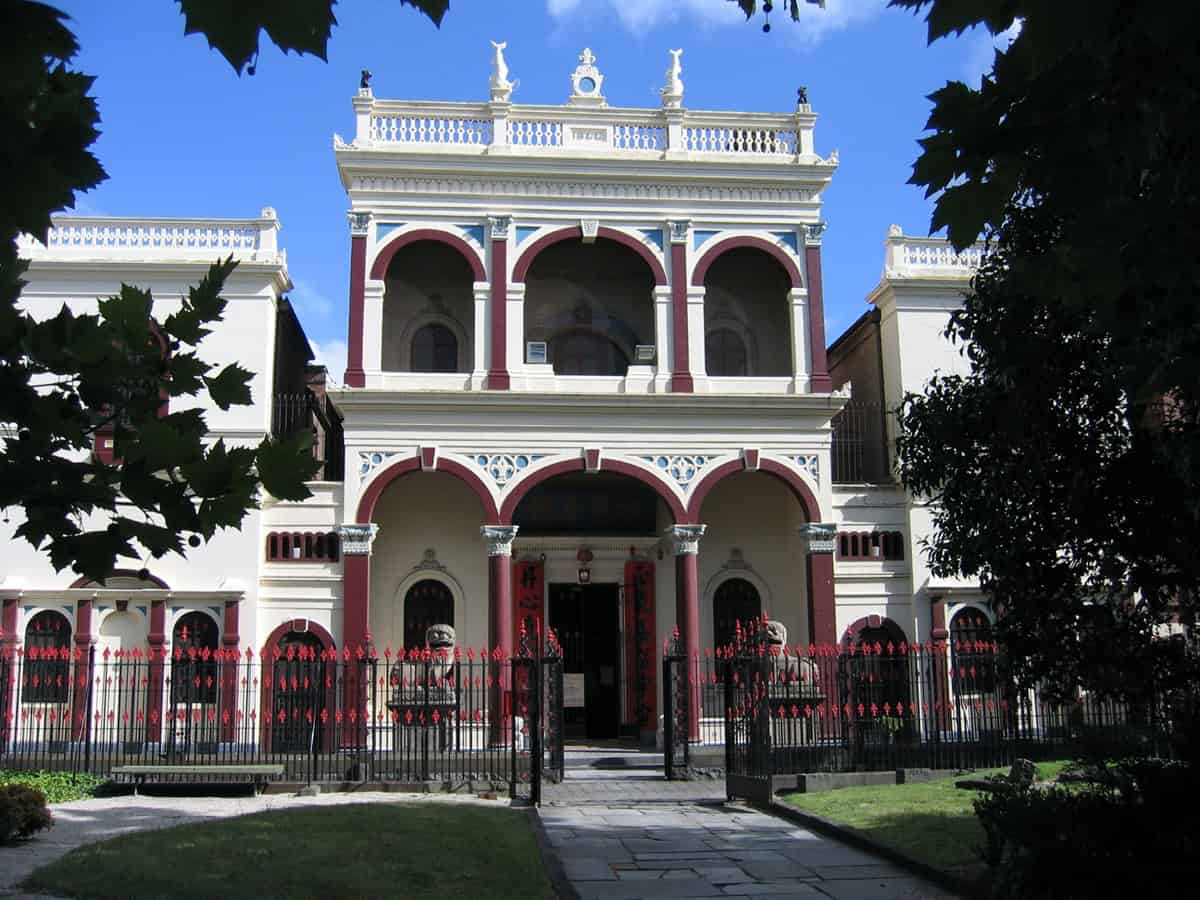
The Sze Yup Society (四邑会馆) is still active in 2026 — more than one hundred and seventy years after its founding in 1854. It survived every exclusion law, every policy designed to erase Chinese presence from Australian life. The Guan Di Temple (关帝庙, Guāndì Miào), built in Melbourne in 1864, still stands as a heritage site in South Melbourne. Its incense still burns. Its doors are still open. These institutions are not monuments to what was lost. They are evidence of what refused to be destroyed.
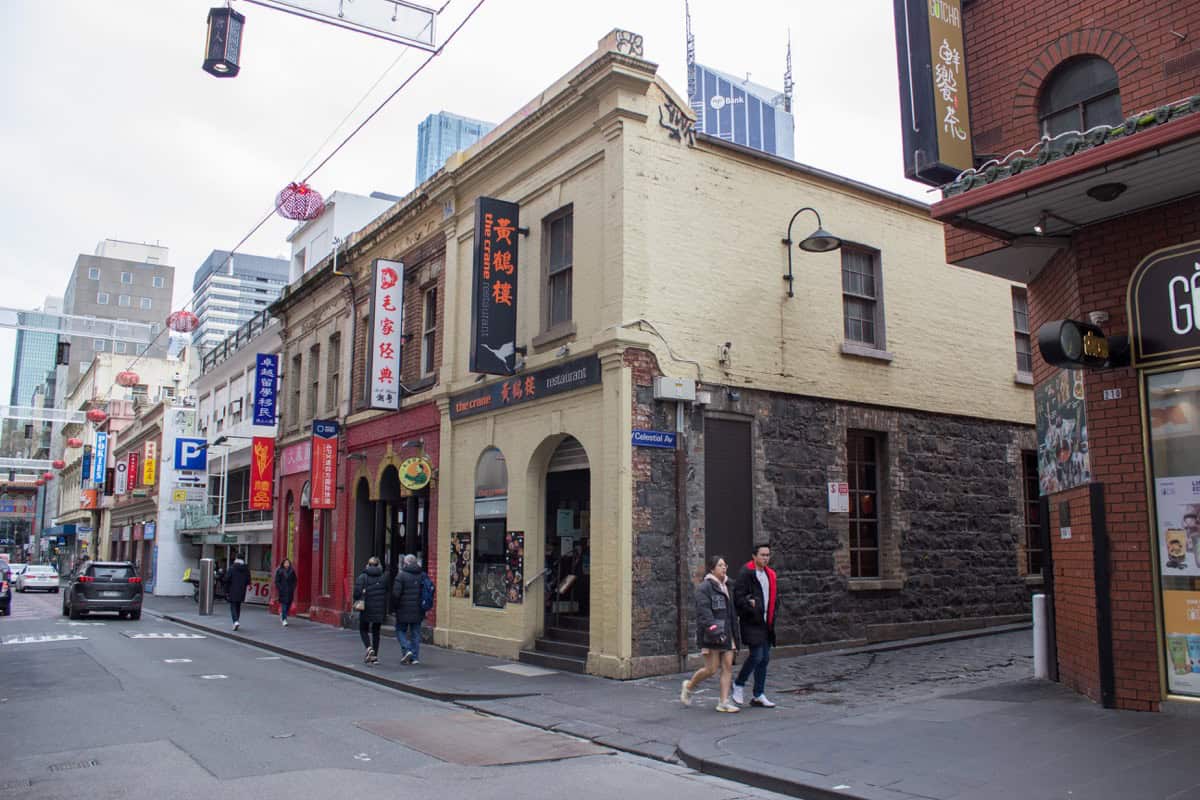
Melbourne’s Chinatown on Little Bourke Street (小伯克街, Xiǎo Bókè Jiē) — established the same year the Sze Yup Society was founded — is the oldest Chinatown in Australia. It has been a continuous Chinese presence in the heart of Melbourne for more than a hundred and sixty years.
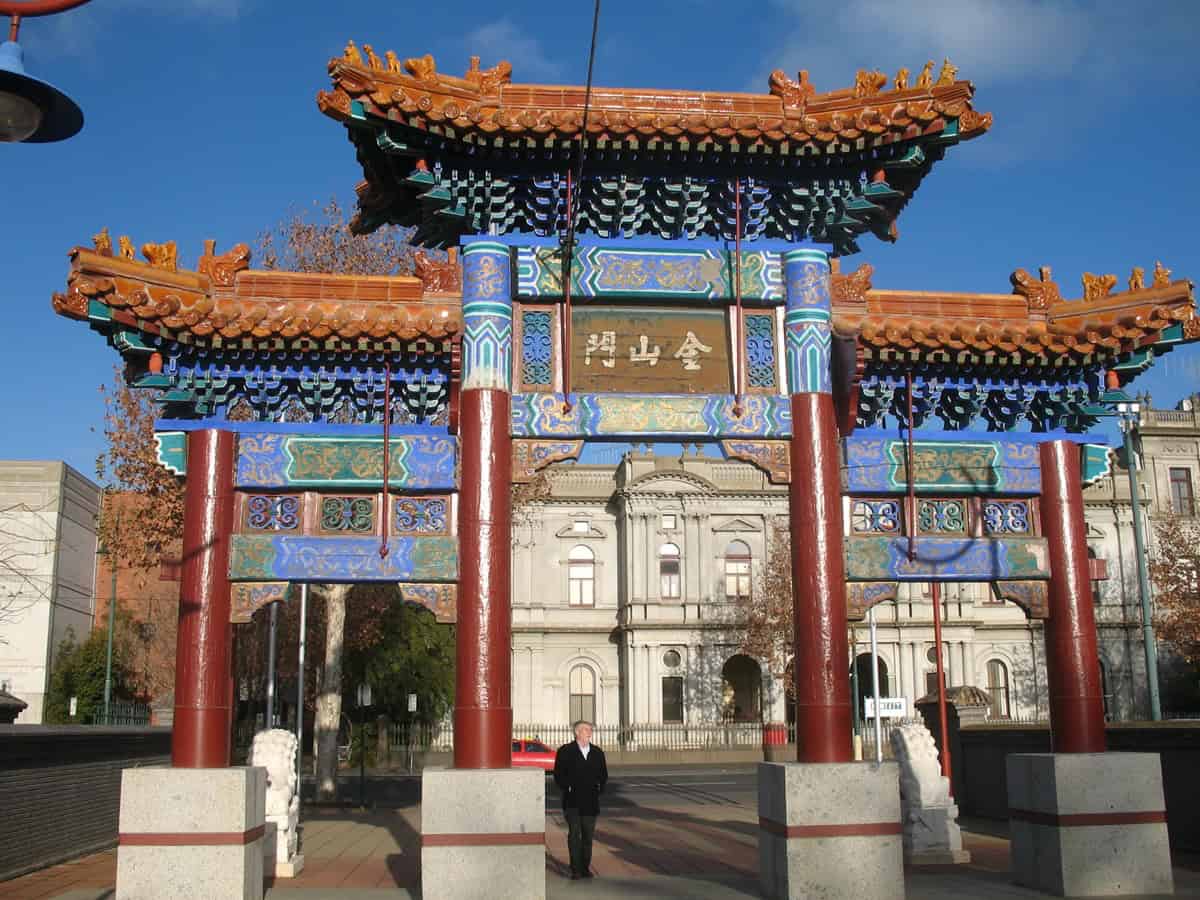
In Ararat, the Gum San Chinese Heritage Centre documents the Chinese gold rush story in the place where it happened. Historical markers stand on the goldfields. The name “New Gold Mountain” lives on in cultural memory, even though the physical gold is long gone.
The money that Australian miners sent home did not simply disappear into daily expenses. In the Siyi villages, remittances from the Australian goldfields funded diaolou (碉楼, diāolóu) — fortified towers that blend Chinese and Western architectural styles into forms found nowhere else in the world. The peak of diaolou construction came between 1900 and 1930, funded by overseas earnings that had accumulated over decades. Roughly eighteen hundred still stand in the Kaiping and Taishan countryside. UNESCO listed them as a World Heritage site in 2007. They are the architecture of absence — built by men who were not there, for families they could not join, with money earned in a country that did not want them.
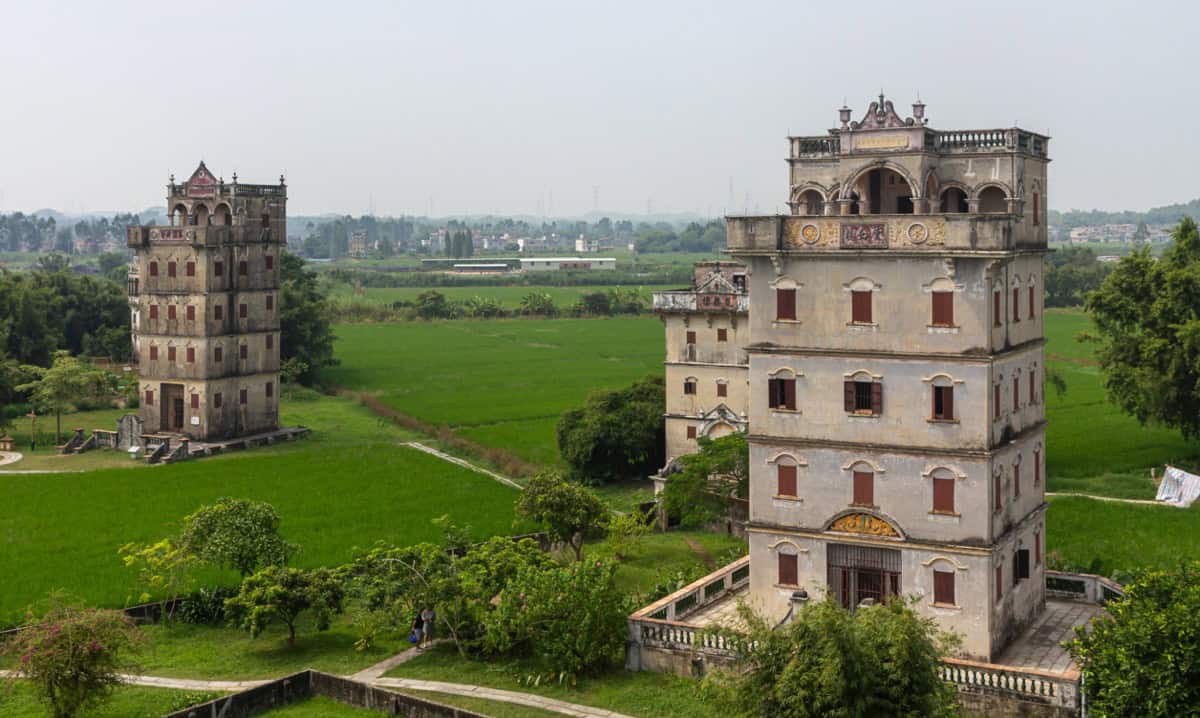
The same remittances funded schools, ancestral halls (祠堂, cítáng), and the social institutions that kept Siyi communities alive through decades of separation. The New Gold Mountain is visible in the brickwork of Wuyi villages — in the watchtowers that rise above rice paddies, in the Western flourishes carved into Chinese ancestral halls. It is a legacy built by men who were never fully able to claim either country as their own.
And Quong Tart’s bronze statue still stands at Ashfield Station in Sydney. The boy from Duanfen, Taishan, who crossed the ocean at nine and became the most prominent Chinese-Australian of his century, is still there — watching a country that once tried to erase his people now commemorate his life. His story challenges the narrative that Chinese immigrants could not integrate. They could. They did — until the law stopped them.
The Chinese-Australian community today is one of the largest ethnic communities in the country. The story of the 1850s miners is increasingly recognized — in museums, heritage trails, and a growing body of scholarship that refuses to let this history be forgotten. The memorial at Young — formerly Lambing Flat — stands as an acknowledgment, however belated, of the violence that shaped a nation’s laws.
This story does not end in triumph. The men who walked the road to Ararat with poles on their shoulders did not get justice. The two Chinese miners killed at Lambing Flat did not get convictions. The families separated by the White Australia Policy did not get reunions. The wives who grew old in Siyi villages waiting for husbands who could not return did not get to say goodbye.
But they also did not disappear. The Sze Yup Society still meets. The temple incense still burns. The diaolou still stand. And if your family name comes from the Siyi counties — if your ancestors were among the men who whispered “New Gold Mountain” before leaving everything they knew — then you are part of what survived. You might find more of their story in the echoes of home still resonating through Kaiping and Taishan today.
The New Gold Mountain took more than it gave. But it could not take everything.
Sources
Books
- 黄昆章. 《澳大利亚华侨华人史》. 广东高等教育出版社, 1998.
- Rolls, Eric. 《澳大利亚华人史(1800-1888)》 (trans. 张威). 中山大学出版社, 2017.
- 袁丁. 《跨国移民与近代广东侨乡》. 中山大学出版社.
- Kuo, Mei-fen. Making Chinese Australia. Monash University Publishing, 2013.
- Fitzgerald, John. Big White Lie: Chinese Australians in White Australia. University of New South Wales Press, 2007.
Online Sources
- Australian Dictionary of Biography — Quong Tart entry. https://adb.anu.edu.au/biography/tart-quong-2340
- National Archives of Australia — Immigration Restriction Act 1901. https://www.naa.gov.au/explore-collection/immigration-and-citizenship/immigration-restriction-act-1901
- Gum San Chinese Heritage Centre, Ararat. https://www.gumsan.com.au/
- UNESCO World Heritage — Kaiping Diaolou and Villages. https://whc.unesco.org/en/list/1112/
- State Library Victoria — Chinese-Australian Collection. https://www.slv.vic.gov.au/
- State Library NSW — Quong Tart Collection. https://www.sl.nsw.gov.au/
- 百度百科 — 兰明低地暴乱 (Lambing Flat riots)
- 知乎专栏 — 昆妮的澳洲小生活 (Gold rush demographics)
- 腾讯新闻 — 澳洲华人淘金史
