A Heart Cut Open: The Birth of the Lin Surname
In the final years of the Shang dynasty, around 1100 BCE, a minister named Bi Gan (比干) walked into the palace of King Zhou (纣王) knowing he would not walk out.
King Zhou was a tyrant — the last ruler of a dying dynasty, notorious…
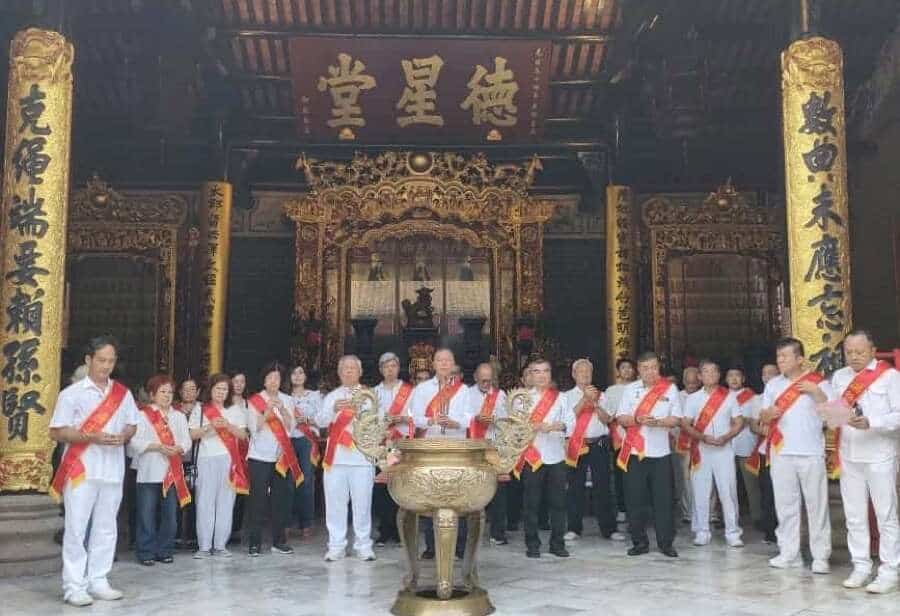
The Wu (吴) surname is the only major Chinese clan whose founding narrative is not conquest, statecraft, or military genius — but voluntary renunciation. In the 11th century BCE, a Zhou dynasty prince named Taibo (泰伯) looked at the throne he was born to inherit and chose to walk away. He yielded the succession to…
nnWhich Generation Are You? nFor the Guan clan (关, Guān shì), the answer lies in a 32-character generation poem (字诗, zìbèi shī) — a naming system carried across the Pacific, preserved across seven centuries, and shared by every branch of the family from San Francisco to Singapore to Sydney. Unlike a family tree, the poem…
China has long been recognized as a cradle of civilization and a center of intellectual and cultural diffusion across Asia. For over a millennium, its philosophical traditions—most notably Confucianism—shaped governance, ethics, and education systems in Korea, Japan, and Vietnam. The imperial examination system, which emphasized merit-based selection of officials, was among the earliest forms of…
For millions of overseas Chinese today, the story begins not in a distant city or a famous port, but in the quiet villages of a small region in southern China — Wuyi. Tucked within Jiangmen City in Guangdong Province, Wuyi is made up of five counties: Taishan, Kaiping, Enping, Xinhui, and Heshan. Though modest in…
If your family traces its roots to Taishan, Kaiping, Enping, Xinhui, or Heshan—collectively known as Wuyi (五邑) —then you are part of one of the most far-reaching Chinese diasporas in history. Across generations and continents, descendants of this small region have built lives in nearly every corner of the world. Yet for many today, especially…
F or millions of overseas Chinese whose families trace their origins to the Five Counties (Wuyi 五邑) region in Guangdong—namely Xinhui, Taishan, Kaiping, Enping, and Heshan—their ancestors’ migration was more than a physical journey. It was a saga of survival, resilience, and global identity forged from hardship and hope. A Fertile Land Shaped by Challenge…
In the 19th and early 20th centuries, the Wuyi diaspora emerged as one of history’s most remarkable migration stories. Originating from the rural counties of the Wuyi region—such as Taishan in Guangdong Province—tens of thousands of Chinese men embarked on perilous journeys abroad. Driven by economic hardship, colonial labor demands, and the chaos following…
rom the bustling streets of California during the Gold Rush to the ports of Southeast Asia, Wuyi emigrants left their mark on the world. Their journeys not only transformed their lives but also fueled economic resilience and cultural preservation in their hometowns—Kaiping, Xinhui, Enping, Heshan, and Taishan. Through hard work, philanthropy, and entrepreneurial spirit, these…
Discover the profound stories of the Wuyi (五邑) emigrants whose resilience and contributions have shaped both their adopted communities and their homeland. From the heartfelt Qiaopi letters (侨批) that connected families across oceans to the towering Kaiping Diaolou that symbolize cultural fusion, the legacy of Wuyi emigrants is a testament to courage, adaptation, and enduring…