Getting Around Wuyi: Trains, Buses, and Hiring a Driver for Your Roots Trip
The Railway the Villagers Built, the Railroad That Brought Them Home
For 150 years, the story of Wuyi (五邑, Wǔyì) — the five counties of Kaiping, Taishan, Enping, Xinhui, and Heshan that form Guangdong's great qiaoxiang (侨乡, qiáoxiāng), the "overseas Chinese homeland"…
Roots Travel
Wuyi Roots Trip Itinerary: A 10-Day Plan for Descendants \nThe Wuyi region of Guangdong sent over two million people overseas between 1840 and 1940 \— and every year, thousands of their descendants come back looking for the villages their families left. \nThat number inverts almost everything you expect from a place. The Five Counties \—…
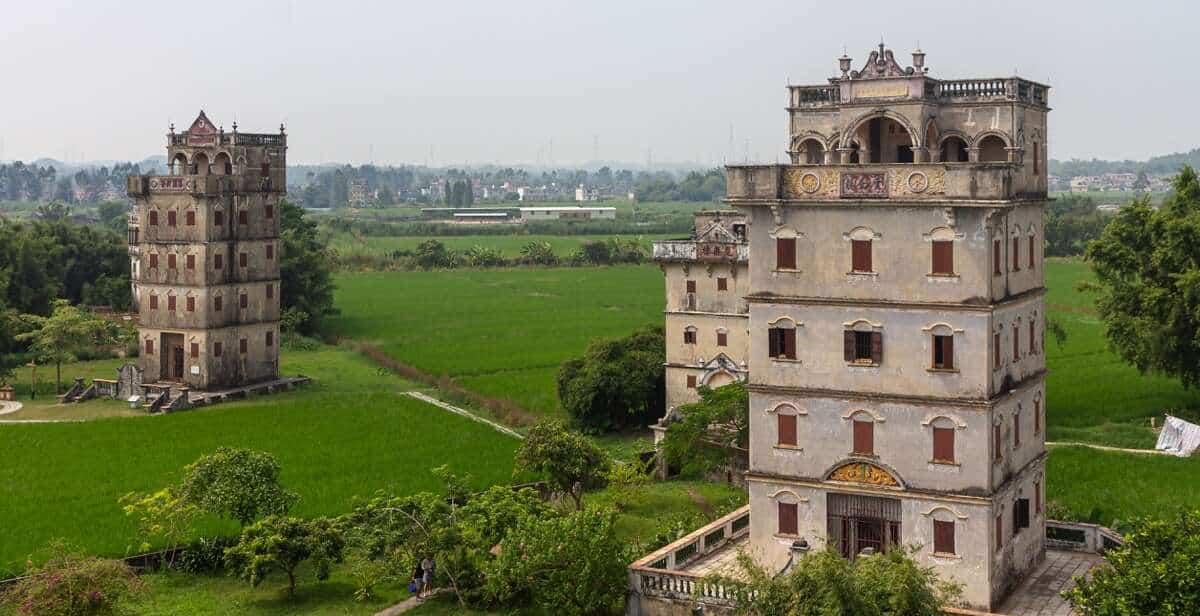
Budgeting Your Wuyi Roots Trip: What It Actually Costs \\nFor over 150 years, money has flowed from overseas Chinese communities back to the Wuyi (\\五\\邑) region of Guangdong province \\— first as remittances that built railroads, schools, and nearly two thousand fortified towers across the countryside, and now as roots-trip spending by diaspora descendants returning…
What to Eat in Wuyi: A Food Guide for Returning Diaspora
Taishanese cuisine was the first regional Chinese food to globalize. Before Sichuan, Hunan, or Shanghai cooking reached international audiences, immigrants from the Siyi (四邑) region of Guangdong had already defined what "Chinese food" meant for most of the Western world — a diaspora that…
Wuyi Roots Trip Accommodation Guide: Where to Stay in Kaiping and Taishan rnOver four million people of Wuyi (五, Wǔyì — the Five Counties) descent live outside China. Every year, thousands of them plan the journey back — a trip that may have been decades in the emotional making, passed down through family stories like…
The Surname You Already Hold
Your surname is not merely a name inherited from your ancestors. It is a compass — a pointer to a specific village, a specific migration history, a specific set of documentary holdings, and a specific overseas settlement pattern. If you know your surname, and perhaps just one fragment — “Taishan”…