

Liverpool’s Chinese Seamen: The First Chinatown in Britain
The oldest Chinese community in Europe did not begin with a gold rush, a famine, or a chain migration of villagers from one county. It began with a shipping line. In 1834 the first vessel to sail direct from China slipped into the Mersey carrying tea, silk and cotton wool, and by the 1860s a single Liverpool company was paying thousands of Chinese sailors to crew the route between the Yangtze delta and the Irish Sea. They came ashore, some of them never left, and a Chinatown grew around the docks — the first in Britain, and for a long time the only one that mattered.
That is the founding story, and it is easy to tell warmly. The harder story is what the same city did to those men when the war that had made them indispensable was over. In the winter of 1945, while Britain was celebrating victory, Liverpool police and immigration officers were driving through Chinatown rounding up Chinese seamen — many of them husbands and fathers — and loading them onto cargo ships fitted with bunks, bound for Shanghai with no goodbye and no record. Their British wives and children were never told. For fifty years, neither was the country.
A company called Blue Funnel
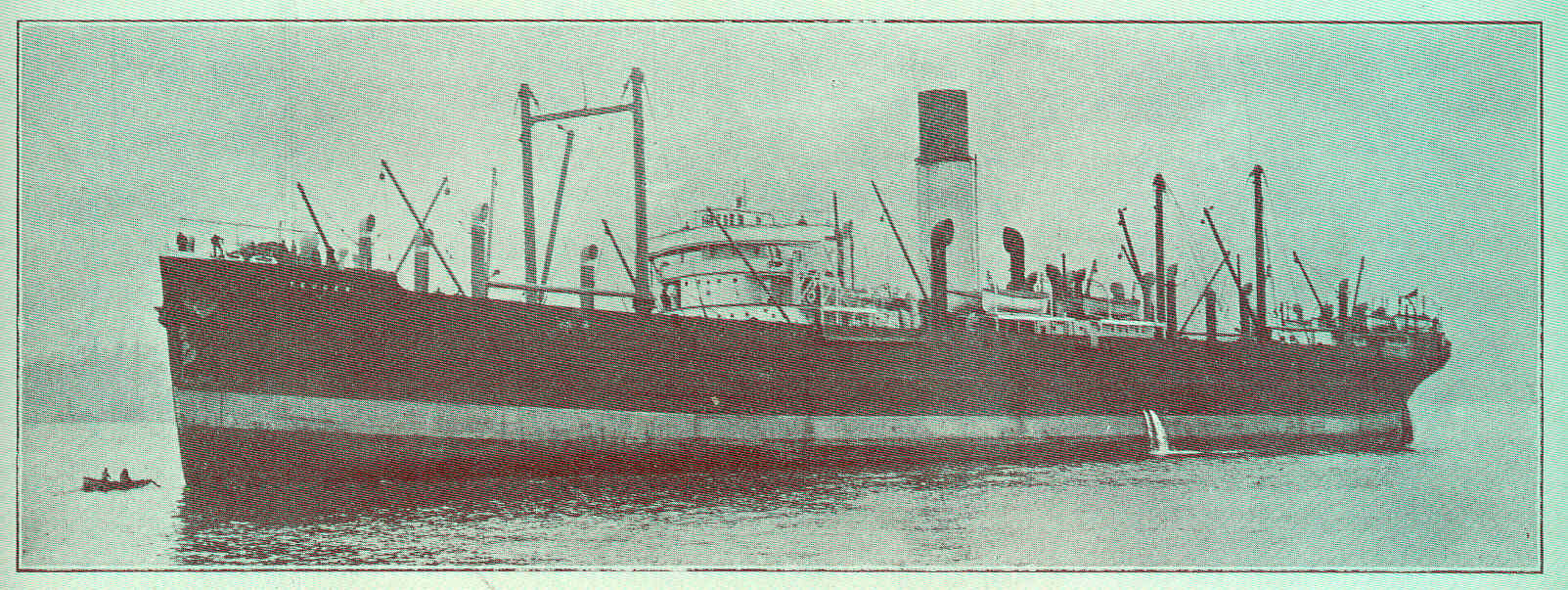
The founder of Liverpool’s Chinese community never set foot in China. Alfred Holt was a marine engineer and ship owner who, in January 1865, launched the Ocean Steam Ship Company with his brother Philip. The firm became known by the colour of its funnels — the Blue Funnel Line — and by the route it dominated: the world’s first regular long-distance cargo-liner service, running between Liverpool, Shanghai (上海, Shànghǎi) and Hong Kong (香港, Xiānggǎng).
Blue Funnel was “The China Company” to Merseyside. It imported tea, silk and cotton, and it carried Lancashire cotton goods outward. To crew those ships it hired Chinese seamen in very large numbers, recruited through its Shanghai agent, John Swire & Sons. Holt was exacting about his ships — “Holts’ class” became a term of pride — but the labour that kept them running was Chinese, and it was cheap. On paper the arrangement was a triumph of Victorian logistics. In practice it created a permanent Chinese settlement in a northern English port: men on shore leave, then men who jumped ship, then men who put down roots.
The economics were simple and ruthless. Holt’s compound steam engine made his ships the most economical long-distance carriers afloat, and Chinese crews were the cheapest skilled labour in the trade — recruited in Shanghai, signed on Chinese articles, and paid a fraction of British wages. The arrangement suited everyone except, eventually, the men themselves. The ships that carried Lancashire cotton east returned with tea, silk and, from the 1930s, rubber and tin from Malaya; the crews returned with a foothold in a foreign port. Some men arrived intending to stay only as long as the next sailing. Others, whether through marriage, debt, or simple exhaustion with the sea, stayed ashore for good.
Chinatown by the docks
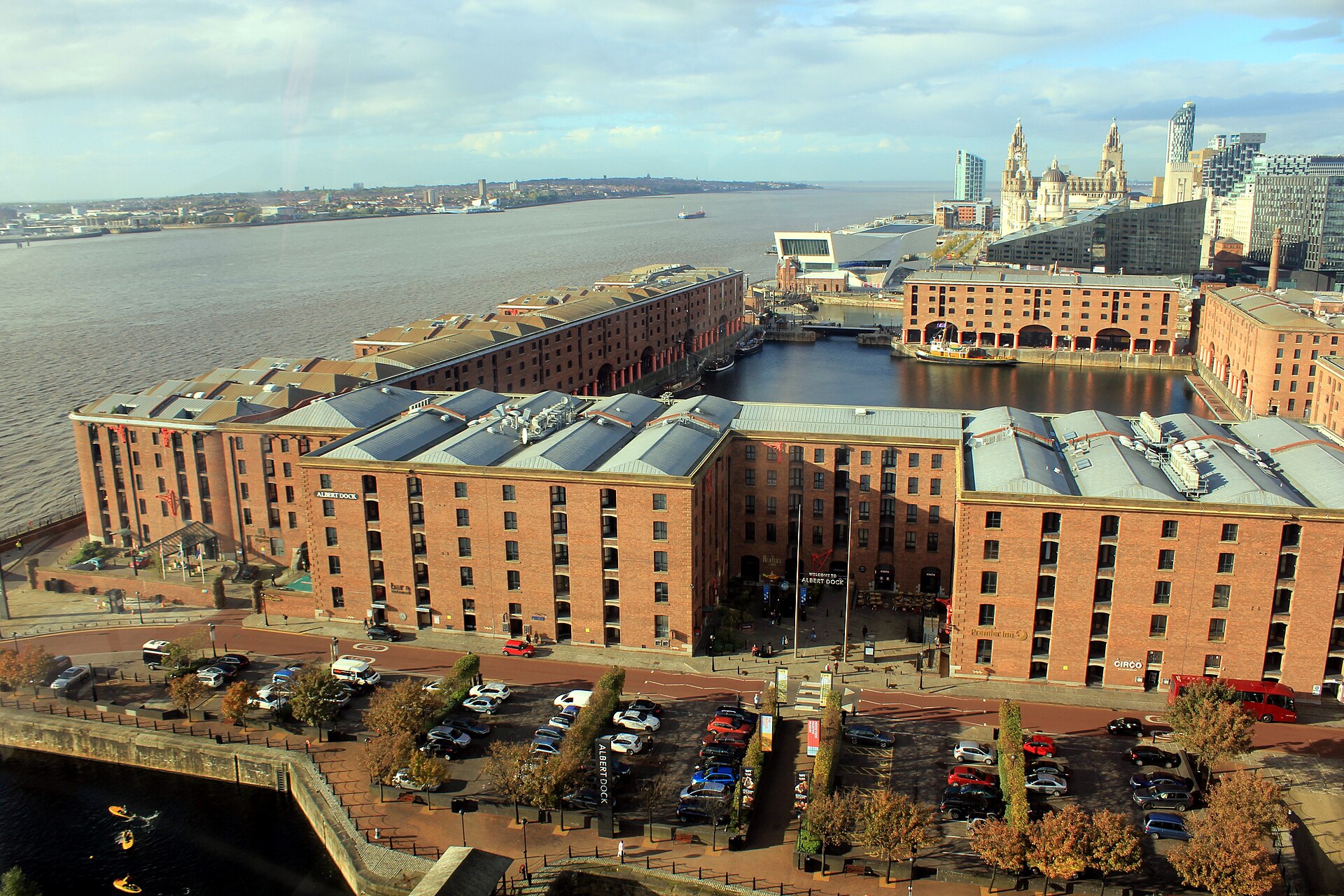
The first Chinese quarter was not in today’s Chinatown at all. It was down in the docklands, in the streets around Cleveland Square, Pitt Street and Frederick Street, where Blue Funnel and other shipping houses opened boarding houses so crews could stay together and speak their own language. One of the first Chinese shops in the city opened on Pitt Street. Slowly, from the 1890s, cafés and laundries followed, catering to sailors between voyages.
The quarter itself was a study in improvised permanence. Boarding houses were run by Chinese landlords who often charged the newer arrivals — the illegal settlers who had jumped ship — more rent than the going rate, knowing they had nowhere else to go. Men slept several to a room and waited out the weeks between sailings. It was crowded, transient, and overwhelmingly male; and yet within it, steadily, the fixtures of a settled community appeared — the shop, the café, the laundry, the school.
Life in the quarter was hard and largely male. Shore leave could stretch for weeks while a man waited for his next ship, and the vouchers seamen were paid in — nicknamed “the white duvet cover” for their thickness — were often gambled away in dockside dens, their value measured with a ruler. It was precisely to pull men away from the gambling tables that the community opened a Chinese Seamen’s Welfare Centre in 1917. A Chinese-language school and a Chinese weekly newspaper followed. A community was consolidating itself, not just enduring.
The families of the port
What made Liverpool’s Chinese quarter different from a mere seamen’s barracks was marriage. Chinese sailors were, by local reputation, hard-working, seldom drunk, and careful with their families — and from the 1890s onward they began marrying working-class Liverpool women. The result was the first British-born Eurasian Chinese community in the country, children with one foot on the Mersey and one in the Yangtze delta.
These marriages were ordinary and, to the authorities of the time, faintly scandalous. They produced families who lived between two worlds: Chinese fathers who might be at sea for months, English mothers raising children in the cramped streets behind the docks, and a generation that grew up knowing both a Liverpool accent and a Chinese surname. That hyphen — the Anglo-Chinese identity the shipping line had accidentally created — is the real reason Liverpool’s Chinese community survived as a community rather than a floating population of sailors. It had women, and it had children, and it had a future.
The marriages were not without cost to the men. A Chinese sailor’s legal status in Britain was precarious — he was an “alien”, subject to landing conditions and the arbitrary discretion of immigration officers — and marrying an Englishwoman did not fix that. Some men naturalised; many more lived inside a grey area, their right to stay renewed ship by ship, voyage by voyage. It was a fragile foundation on which to build a family, and it meant that when the state eventually decided to remove the men, the marriages it was severing had never, in its own eyes, fully counted.
Twenty thousand by war
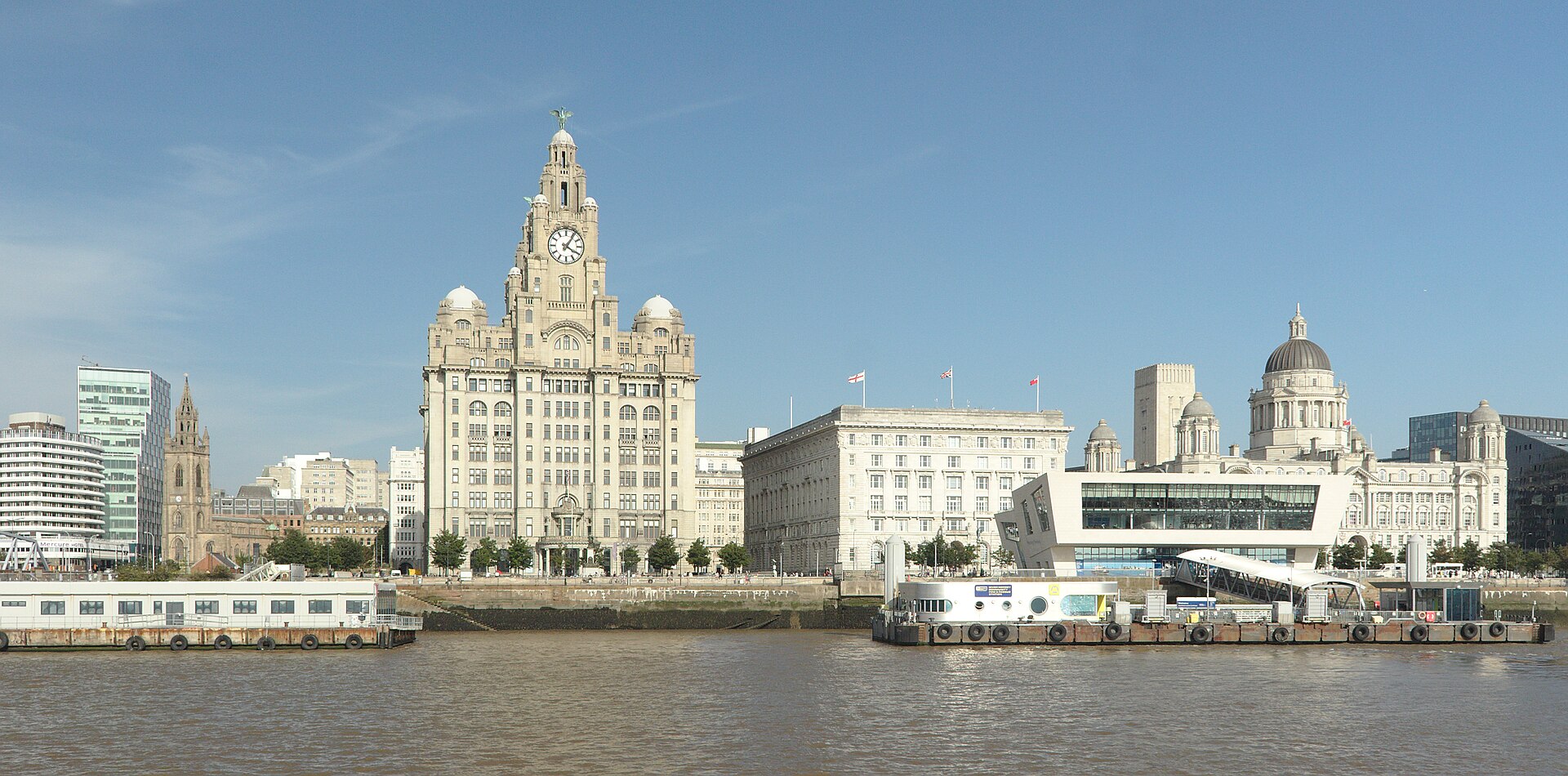
Two world wars transformed the community’s size and, later, its fate. During the First World War, Chinese mariners were recruited in numbers to replace British men joining the Royal Navy. By the Second World War, the scale was extraordinary: up to 20,000 Chinese seamen were based in Liverpool, manning the tankers and merchant ships that brought munitions and food across the Atlantic and beyond.
The First World War had already shown what Chinese labour meant to Britain. Some 95,000 Chinese men were recruited by Britain during that war as non-combatant labourers and merchant seamen, and when it ended they were not allowed to stay — a mass removal that passed almost without remark. A generation later the pattern repeated, on a larger and more personal scale. By the Second World War the Chinese seamen of Liverpool were sailing the same convoys as British sailors, exposed to the same U-boats, and their ships were being torpedoed beneath them with the same indifference from the sea. In 1944 a BBC war propaganda film singled out the Chinese merchant seamen for praise, calling them “one of those living links that are forging the unity of the new family of Nations.” It was exactly the kind of tribute the war produced in abundance — and it said nothing about the pay.
Their reward was gratitude in speeches and little else in their pockets. Files held at the London Metropolitan Archives and the Modern Records Centre at Warwick show that Chinese sailors were paid around one-third of what their European counterparts earned — and that they were denied the War Bonus, the danger money paid to British sailors for sailing through U-boat waters. They were doing the same dangerous work, on the same convoys, for a fraction of the pay. When they finally asked why, the answer came in the form of a strike that the shipping companies never forgave.
It is worth pausing on what that strike meant. In the middle of a world war, in a foreign port where they held no citizenship and enjoyed no legal standing, several thousand Chinese seamen organised — formed a union, walked off their ships, and held the line for two months until the shipping companies and the British government met their demand. It was one of the earliest recorded victories of organised Chinese labour in Britain, and it showed the community had moved far beyond the boarding-house existence of its founding decades. It could bargain, and it could refuse.
The strike of 1942
In February 1942, with the Battle of the Atlantic at its height, the Chinese seamen of Liverpool walked off their ships. Their demand was simple and radical for its time: equal treatment — the same War Bonus, the same pay, as white sailors. They were backed by their own union, the Liverpool Chinese Seamen’s Union, and the strike lasted two months, until April 1942, when the men won a pay rise of £2 a month plus the standard £10 monthly war-risk bonus.
It was a genuine victory, and it was also the moment the men were marked. Holt’s own files, held in the Ocean Archive at the Merseyside Maritime Museum, show that the Shanghai seamen who had struck were now identified, in the company’s language, as “troublemakers”. The label would outlive the war. When the fighting ended and the men were no longer needed, that file note — troublemakers — became one of the quiet justifications for what came next.
Bombs and the move inland
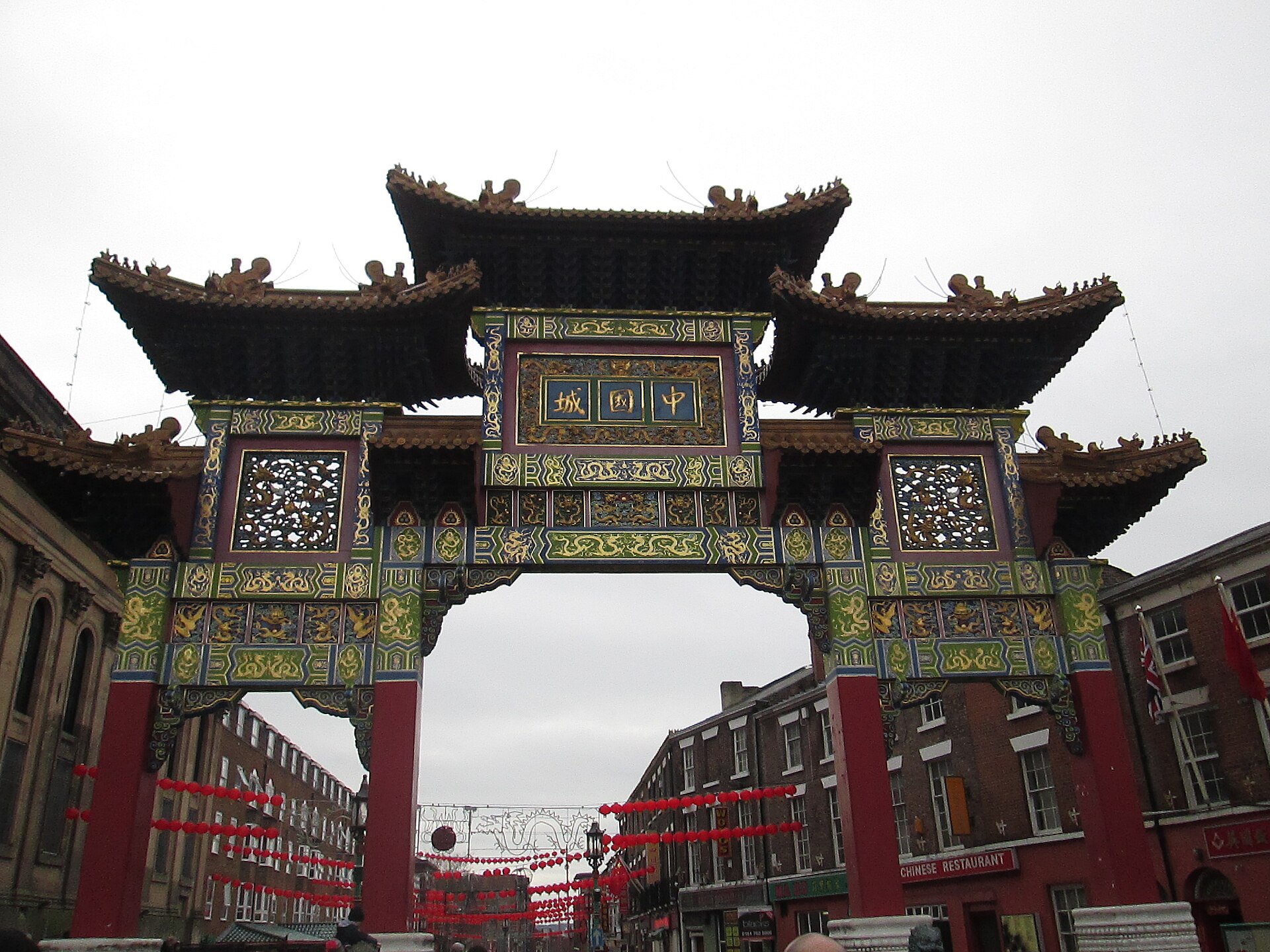
The geography of Liverpool’s Chinatown changed in a single week. During the May Blitz of 1941, German bombs fell on the dockland quarter and destroyed it — Pitt Street, Cleveland Square and Frederick Street reduced to rubble. The community that had lived by the water for three-quarters of a century moved inland, to Nelson Street, Great George Street, Upper Parliament Street, Duke Street and Berry Street.
What the bombs took was more than buildings. The dockland quarter had been the community’s whole physical world for three-quarters of a century — the boarding houses, the gambling dens, the first shop on Pitt Street, the seamen’s welfare centre, the street corners where men waiting for ships had learned to speak the city’s language. When it burned, so did the material evidence of how the community had begun. What the bombs spared was the community itself: the families, the surnames, the memory. Those moved inland and rebuilt.
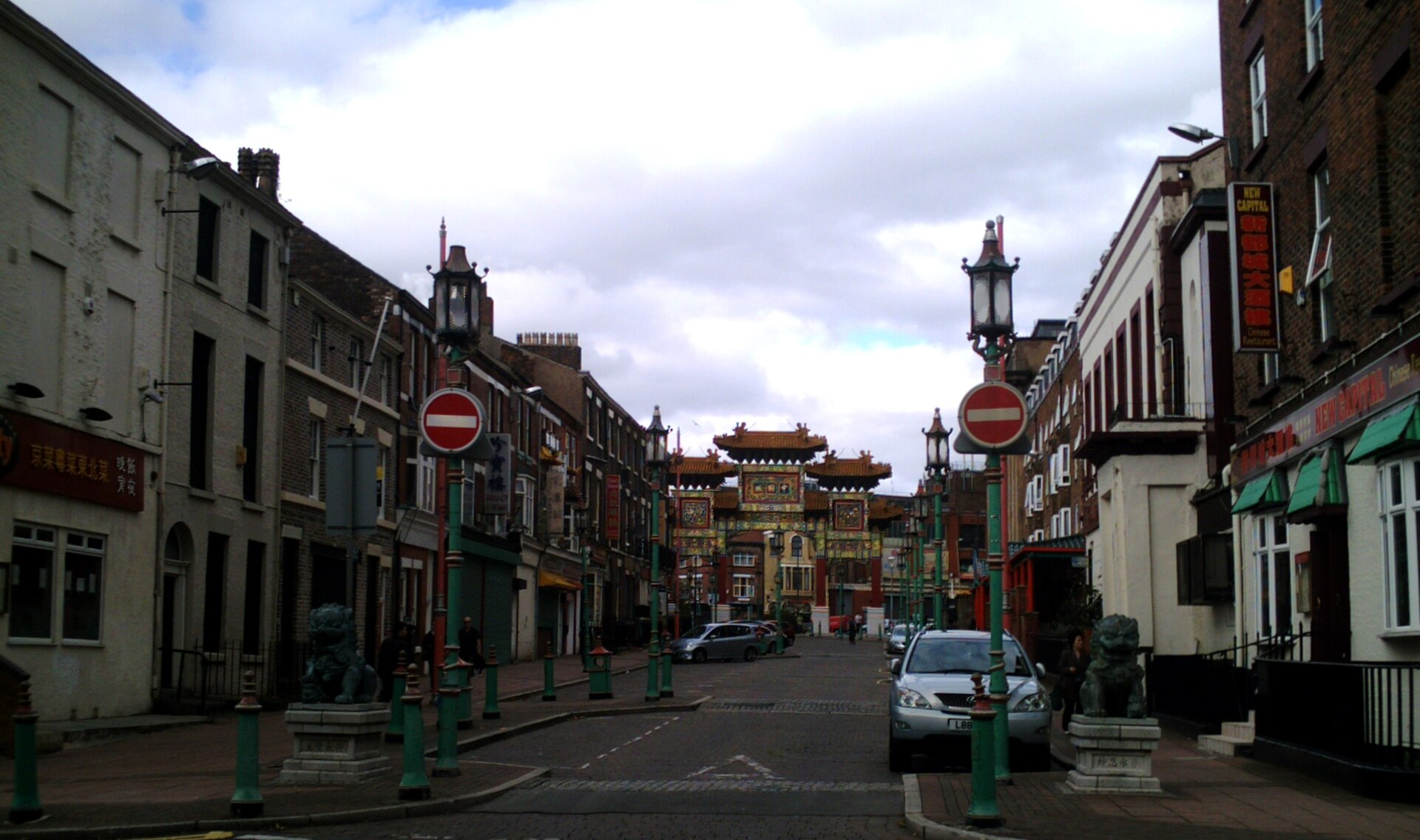
That is the Chinatown visitors know today, clustered just west of Liverpool Cathedral. The move was forced by fire, but it gave the community a permanent, recognisable centre for the first time — streets named in English, signposted in Chinese, that would later become the frame for the largest ceremonial arch outside China. But before the arch, and before any of that renewal, came the winter when the community’s men were taken.
The secret repatriation
The war ended in the summer of 1945, and with it the shortage of British labour that had made the Chinese seamen indispensable. Almost overnight the community’s usefulness ran out. Men who had been heroes of the Atlantic crossing became, in the language of the state, surplus — and, worse than surplus, unwelcome. The transition from gratitude to expulsion took less than three months.
On 19 October 1945, thirteen men gathered in Whitehall for a meeting that was never to be discussed in Parliament, never acknowledged to the press, and never revealed to the families it concerned. It was chaired by a senior Home Office official named Courtenay Denis Carew Robinson, and it opened a file with a title that would not surface for half a century: HO 213/926 — “Compulsory repatriation of undesirable Chinese seamen.”
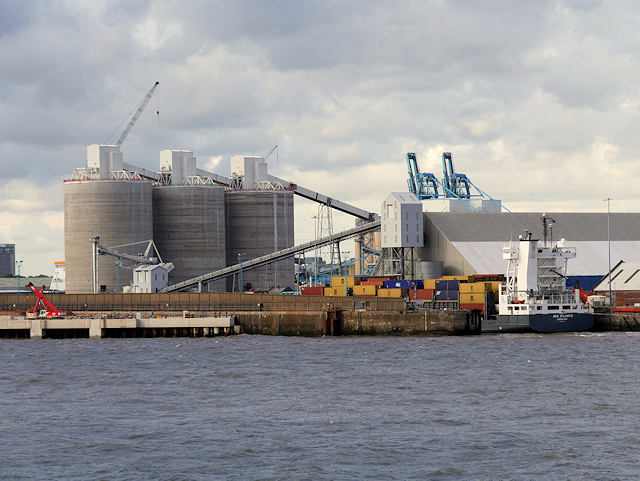
The men it targeted had, in many cases, just spent the war keeping Britain fed and armed. At the war’s end about 2,000 decommissioned Chinese seamen remained in Liverpool. Blue Funnel cut their pay back to pre-war levels — levels the company privately admitted were too low to live on — and the men were barred from taking work ashore. Then the roundups began. Liverpool police and immigration officers, working with the shipping companies, drove through the multi-occupancy boarding houses of Chinatown and took men out to cargo ships anchored in the Mersey, their holds fitted with makeshift bunks. The SS Diomed, the Menelaus, the Theseus, the Priam — Blue Funnel ships that had once carried tea and silk now carried their own crews east, one-way.
One manifest, for the Diomed‘s sailing on 8 December 1945, records the operation in a single handwritten line beneath the names of two passengers: “100 Chinese seamen shipped by the Home Office.” By the end of 1945, 208 men had been sent. The policy was secret in part because it was legally dubious. Only a seaman discharged for a criminal conviction could lawfully be deported, and the Home Office privately conceded that very few of the men targeted had ever faced charges — the gambling and opium offences common in dockside life did not warrant removal. So officials improvised: immigration officers began amending the landing-condition dates on the men’s alien papers, stamping an imminent departure date, so that anyone who failed to board “voluntarily” could then be served a deportation order for violating the conditions. The Home Office signed a batch of deportation orders in advance and sent them to Liverpool that autumn, ready to use.
By mid-1946 the figure passed 1,300, and archival research later identified more than 2,000 seamen repatriated from Liverpool between 1945 and 1949. An immigration report filed in July 1946 described “two whole days” spent searching “approximately 150 Pool boarding-houses”, and promised to “spread the net as widely as possible.”
The wives who were not told
The most damning fact in the files is not the scale of the deportation but its secrecy — and what it did to the women. Hundreds of the repatriated men were married to British women, with British children. They were given no notice, no chance to object, no chance to say goodbye. Most of the wives went to their graves never knowing what had happened to their husbands.
Some of the women did fight. On 19 August 1946 the Liverpool Echo reported, under the headline “British Wives of Chinese”, that 300 wives had formed a defence association and sent a telegram to the Chinese ambassador begging for his intervention. Their leader was a 28-year-old Liverpudlian named Marion Lee. No further record of the association, or of Marion Lee, survives.
The memory was carried instead by the children. Yvonne Foley, whose Shanghai-born father Nan Young was a ship’s engineer repatriated in 1946, spent decades campaigning in archives around the world for recognition — work that led directly to the government’s eventual admission. Perry Lee’s father, Chann Tan Yone, born in Ningbo (宁波, Níngbō) in 1903, worked as a “greaser” in Blue Funnel engine rooms, survived two torpedoings and a German prisoner-of-war camp, and was still deported in 1946, leaving behind a wife named Frances and a two-year-old daughter. These are not statistics; they are the seams where the story of the diaspora meets the story of an ordinary English port, and the joining is a scar.
The reckoning and the arch
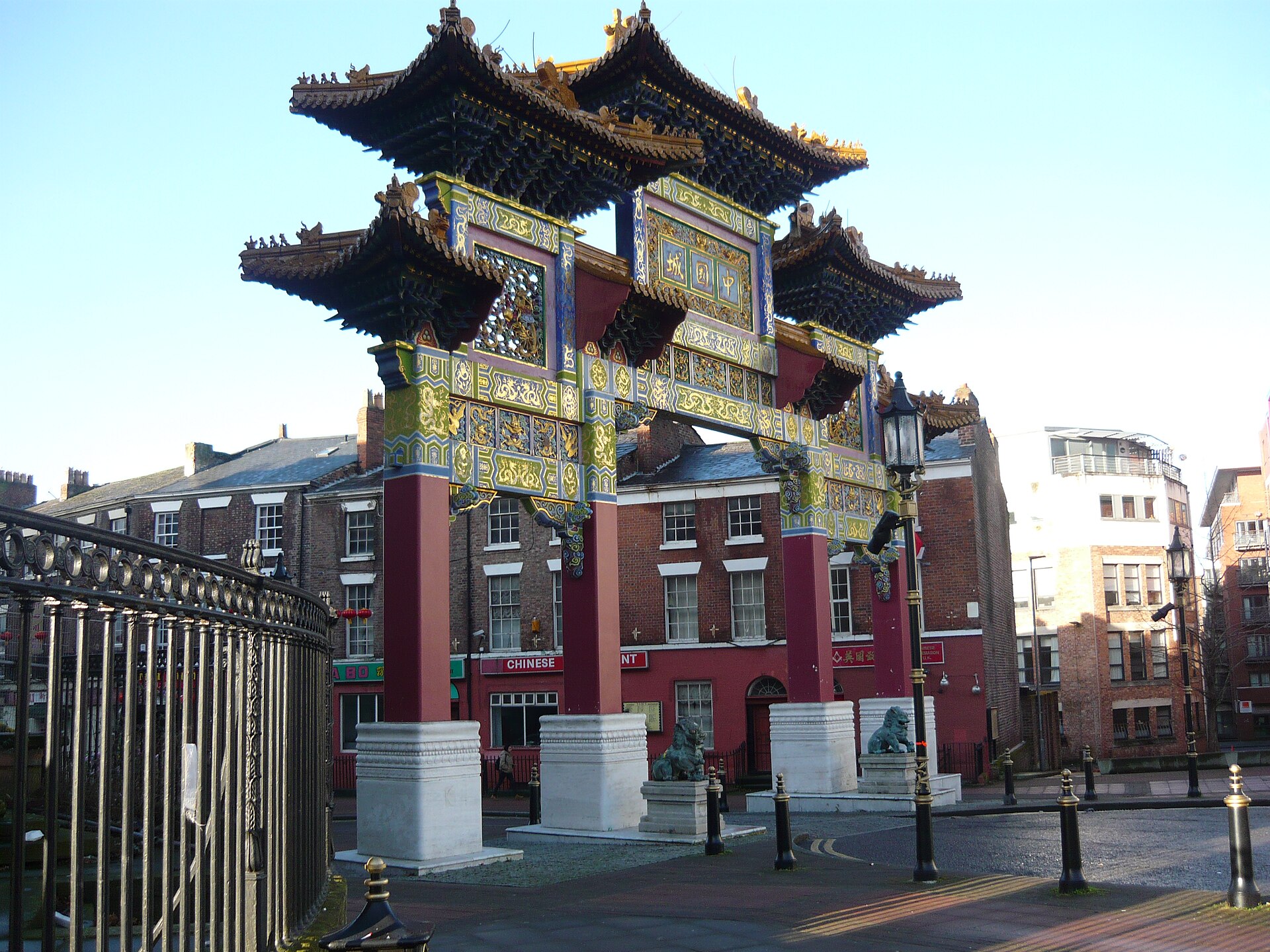
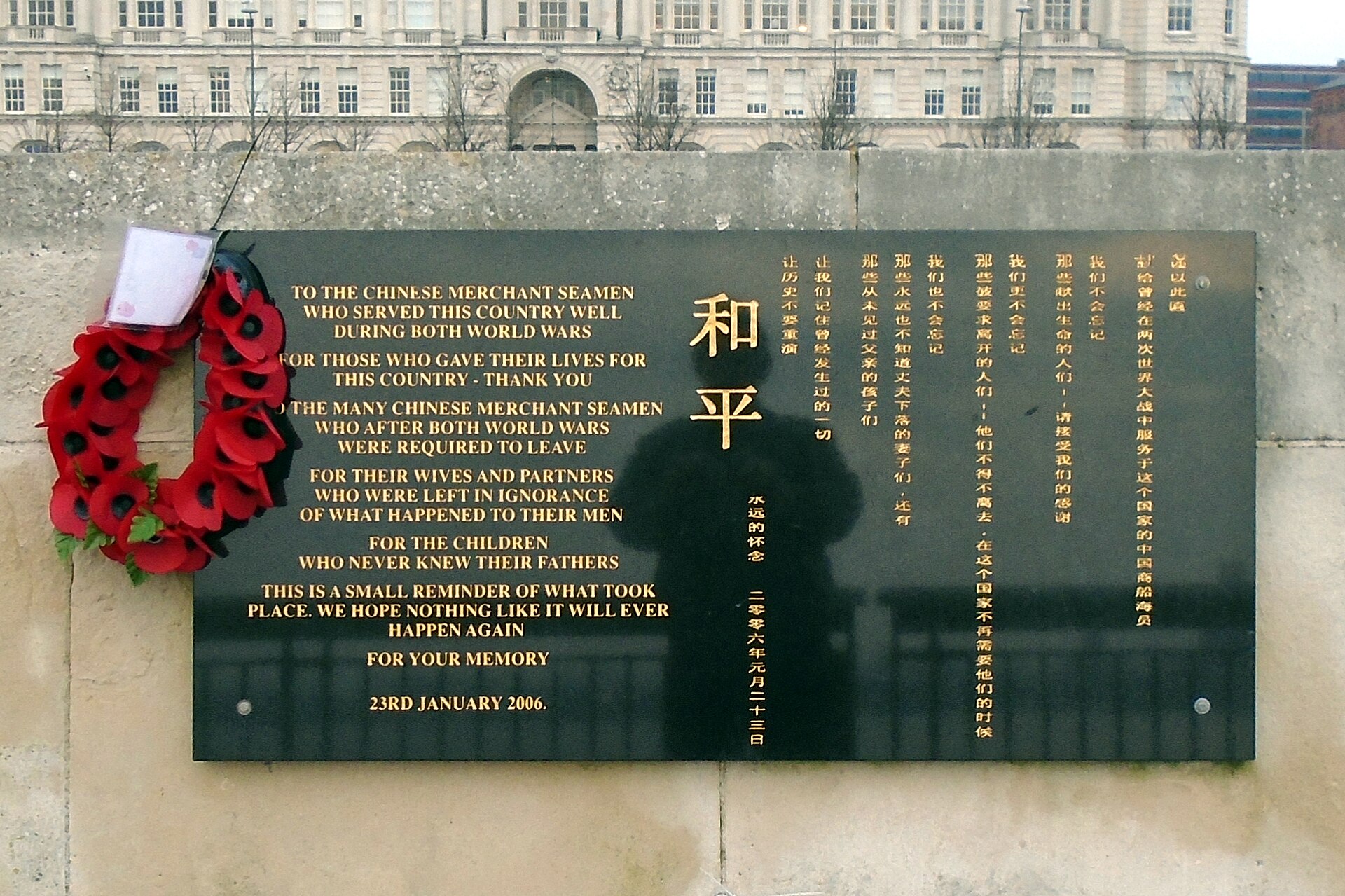
For most of the twentieth century the deportation stayed buried, until the declassification of the HO 213/926 files in the 1990s let a handful of Liverpool-born descendants begin asking what had happened to their fathers. In 2006 a memorial plaque to the Chinese seamen was installed at the Pier Head. In 2022, the Home Office published a formal review — commissioned after an adjournment-debate promise to Kim Johnson MP — that admitted for the first time that the campaign had been “racially inflected”, built on “negative racial stereotyping”, and that coercion had been used against married men. The Labour Party, in power in 1945, expressed its “deep regret” for “scars that have run deep through several generations.”
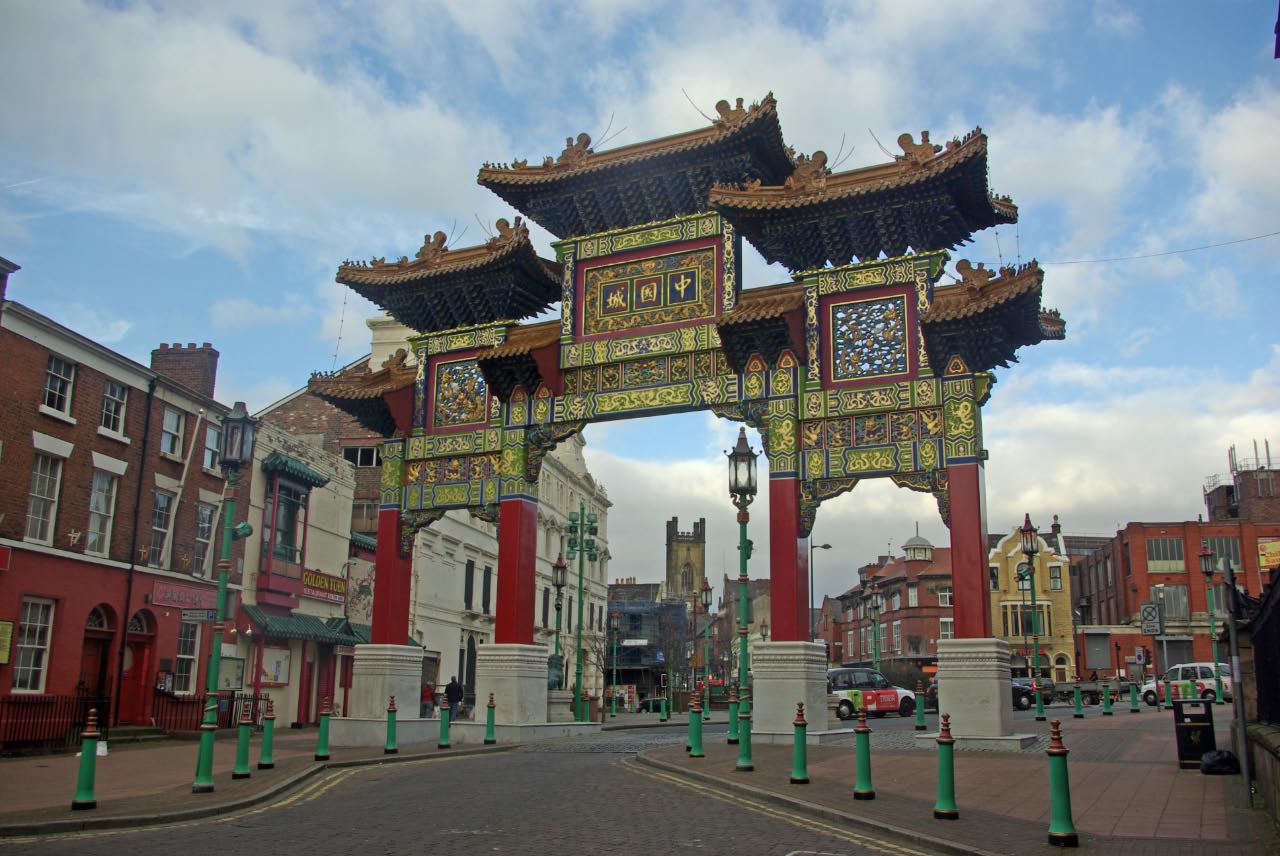
The community those men helped build is still there, and it has made its peace with the city on its own terms. In 2000, Liverpool — twinned with Shanghai since 1999 — raised a ceremonial arch over Nelson Street, a gift shipped piece by piece from Shanghai: 13.5 metres tall, some 200 hand-carved dragons, the largest multiple-span arch of its kind outside China. It is the standard-bearer for a Chinatown now more than two centuries old — the oldest in Europe — and it stands a short walk from the dockland streets where it all began. The arch says 中国城, “Chinatown.” It does not say what it cost to get there. The families remember that part.
Today the arch marks the entrance to a Chinatown that is still a working neighbourhood rather than a museum piece: restaurants, supermarkets, a community centre and, every year, one of the largest Chinese New Year celebrations in Europe. Its descendants — some still bearing the surnames of seamen who never came home — walk streets their grandfathers could not stay on. The oldest Chinese community in Europe was built by men who were, in the end, told to leave it. Their families stayed, and that is the whole of the story.
Continue Reading
- The Coolie Trade: Chinese Labour Across the Pacific and Beyond
- Gold Mountain Wives: The Women Who Stayed Behind
- When Chinese Immigrants Fought Racial Discrimination Abroad
- Guanghai: The Historic Port Town of Taishan
- How the End of Slavery Reshaped Chinese Labour Migration
- The Poems Carved on Angel Island’s Walls
Stay Connected
Sources
- SOAS Special Collections — “John Swire, Alfred Holt and Liverpool’s Chinese Community”: https://blogs.soas.ac.uk/archives/2014/11/24/john-swire-alfred-holt-and-liverpools-chinese-community/
- National Museums Liverpool — “Blue Funnel to China”: https://www.liverpoolmuseums.org.uk/blue-funnel-china
- The Guardian — “The secret deportations” (25 May 2021): https://www.theguardian.com/news/2021/may/25/chinese-merchant-seamen-liverpool-deportations
- The Guardian — “Chinese seafarers were coerced into leaving UK after war, Home Office admits” (2 Aug 2022): https://www.theguardian.com/world/2022/aug/02/chinese-seafarers-were-coerced-into-leaving-uk-after-war-home-office-admits
- BBC News — “Apology call over Chinese seamen World War Two deportations” (2021): https://www.bbc.com/news/uk-england-merseyside-57344616
- Home Office — Review of the Historical Repatriation of Chinese Seamen from Liverpool 1945–1946 (DEP2022-0717): https://data.parliament.uk/DepositedPapers/Files/DEP2022-0717/Chinese_Seamen_Repatriation_Report.pdf
- Liverpool Chinatown — History: https://liverpoolchinatown.co.uk/
- Liverpool Echo — “Where Liverpool’s original Chinatown was and why it had to move”: https://www.liverpoolecho.co.uk/news/nostalgia/liverpools-original-chinatown-move-22641559
Suggested Reading
Is this your family’s story?
Roots Of China is built from readers’ family histories. If a story here sounds like your own — a surname, a village, a journey — leave a comment below, or share your family’s story with us and we may be able to help you find your ancestral village.
