


The Chinese Head Tax: How Canada Charged Wuyi Migrants
The Price of Entry
Canada’s first restriction on Chinese immigration was not a ban. It was a price — the Chinese head tax (人头税, réntóushuì), a fee collected at the gate from every Chinese person seeking entry, from 1885 to 1923.
The ladder climbed in three steps over eighteen years: $50 when the tax began in 1885, $100 when it was raised around 1900 (some sources date the increase to 1901, depending on whether one counts the date of legislation or the date it took effect), and $500 around 1903 or 1904, for the same reason. For a laborer in Guangdong, $500 was roughly two years of wages — owed before the man had earned a single Canadian dollar.
Roughly 82,000 people paid — estimates range from about 81,000 to 82,380 — and the government collected something between C$22.5 million and C$23 million. Chinese were the only ethnic group ever taxed for the right to enter Canada, according to The Canadian Encyclopedia’s history of Chinese Canadians.
The payers were overwhelmingly villagers from the Wuyi (五邑, Wǔyì) — the “five counties” of Guangdong’s Pearl River delta, also known as Siyi (四邑, Sìyì) — with Taishan (台山, Táishān) among the largest single-county pools. How dominant? Consider what Vancouver chose to say 133 years later, when the city formally apologized for its role in the exclusion era: the apology was read in English, Cantonese, and the Siyi dialect, because early Vancouver Chinese “多来自广东台山一带” — came mostly from the Taishan area of Guangdong. The state’s own gesture conceded the demographic fact.
One payment bought two things at once: admission to Canada, and a receipt of exclusion. The same wages the tax skimmed flowed home as remittances (侨汇, qiáohuì) and rebuilt the hometowns the migrants had left — the qiaoxiang (僑鄉, qiáoxiāng), the emigrant villages. So this is a story of two ledgers. One was kept by the Canadian state, column after column of payments received. The other was kept by the families who paid — in letters, in land, in the buildings that still stand.
Why They Came: The Gold Mountain Equation
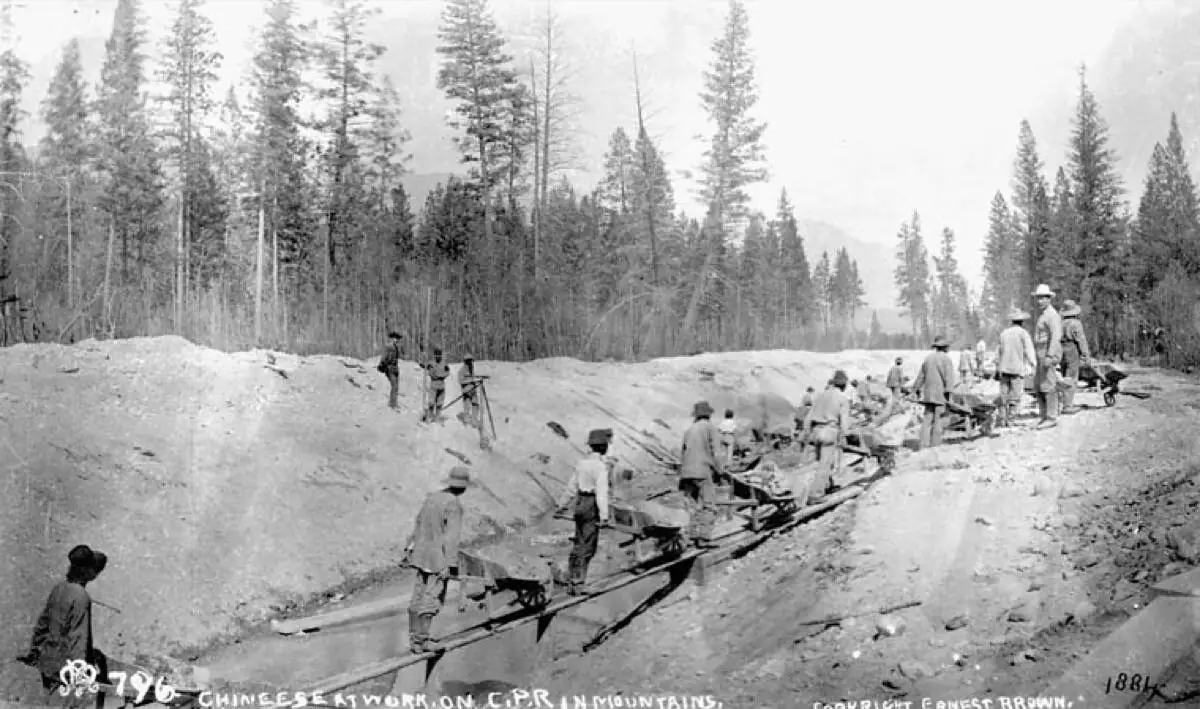
The men who paid were already in motion before the tax existed. In 1871, British Columbia joined Confederation on the promise of a railway; by 1881–85, an estimated 15,000 to 17,000 Chinese laborers were building the hardest stretches of the Canadian Pacific Railway through the mountains. The cost in lives is itself contested: Canadian estimates of deaths range from 600 to more than 2,000, while Chinese histories record 4,000 or more. Both figures circulate; the honest truth is that no one counted precisely.
The push side of the equation was land. In Siyi, population pressure against scarce arable land — 人地矛盾 (réndì máodùn), the man-land contradiction — made farming alone untenable for many families, and the mid-century upheavals of Guangdong made staying put a risk of its own. Migration was a family survival strategy, not an adventure. A son in Canada was a household asset, and the household expected a return.
The pull side had already carved the path. In 1858, gold on the Fraser River drew Siyi miners north from California, founding the Wuyi–Canada corridor a generation before the railway. By the head-tax era the route was old, proven, and crowded. 金山 (jīnshān, “Gold Mountain”) was the name the corridor’s villages used for North America, Canada included — and Taishan earned the title 中国第一侨乡 (Zhōngguó dì-yī qiáoxiāng), China’s number-one qiaoxiang, the emigrant hometown par excellence.
Passage ran on credit. Under the credit-ticket system (赊单, shēdān), kin or lineage lenders advanced the fare; the debt was repaid from Canadian wages, and a man might work for years before he owned his own labor. The arrangement kept chain migration flowing even after the tax reached its peak — the debt was already owed, and the wages were still higher than anything home could offer, often ten to twenty times as much. For the American side of the same equation — the transcontinental railroad, the Exclusion Act of 1882 — read the story of the Chinese railroad workers and exclusion. On the departure side, the hidden ports of Wuyi show where the journey began.
The Chinese Head Tax Climbs: $50, $100, $500
The tax arrived the same year the railway did. The 1885 Act to Restrict and Regulate Chinese Immigration into Canada (华人入境条例, Huárén Rùjìng Tiáolì) imposed $50 on every Chinese entrant — enacted on the completion of the CPR, after a Royal Commission on Chinese Immigration had studied the “question,” and possibly modeled on New Zealand’s 1881 poll tax, by one official account.
Then the ladder climbed, under pressure from British Columbia’s anti-Chinese agitation and a second Royal Commission in 1902 that declared Asians “unfit for full citizenship… dangerous to the state.” The increases were legislated in July 1900 and July 1903 — which is why sources date them variously to 1900 or 1901 and 1903 or 1904. What mattered on the dock was the arithmetic: $500 was about two years of a laborer’s wage, a point made across half a dozen Canadian and Chinese sources; in Vancouver, by one account, it could buy an opulent three-story house in a good neighborhood.
The gate had exceptions — six classes carved into the law: merchants, students, diplomats, clergy, tourists, and men of science. Class privilege was written into the statute itself.
The ladder did its work. In the first fiscal year after the $500 rate took effect, the number of payers fell from 4,719 to eight. And yet the corridor survived: chain migration and Canadian wages ten to twenty times home income meant the debt was worth incurring. Over 38 years, roughly 82,000 people paid — estimates range from about 81,000 to 82,380 — and the treasury took in on the order of C$22.5 million to C$23 million. British Columbia received roughly 40 percent of it, by one official accounting; the Government of British Columbia’s own pages cite “more than 97,000 arrivals” in the period — a figure that includes exempt classes and returning residents. The number of actual payers is the lower one.
And the payer could not vote. The federal Electoral Franchise Act of 1885 stripped Chinese Canadians of the federal franchise the same year the tax began, per the canada.ca timeline of Asian-Canadian history; the provincial franchise was already gone. Taxation without representation was not a slogan here; it was the system’s design.
The tax’s real weight sat on the credit-ticket debt that financed it: a man borrowed to pay the state, then spent years in Canada repaying his kin. The state’s ledger and the family’s ledger began to interleave.
The Gate at Vancouver: Certificates and Riot
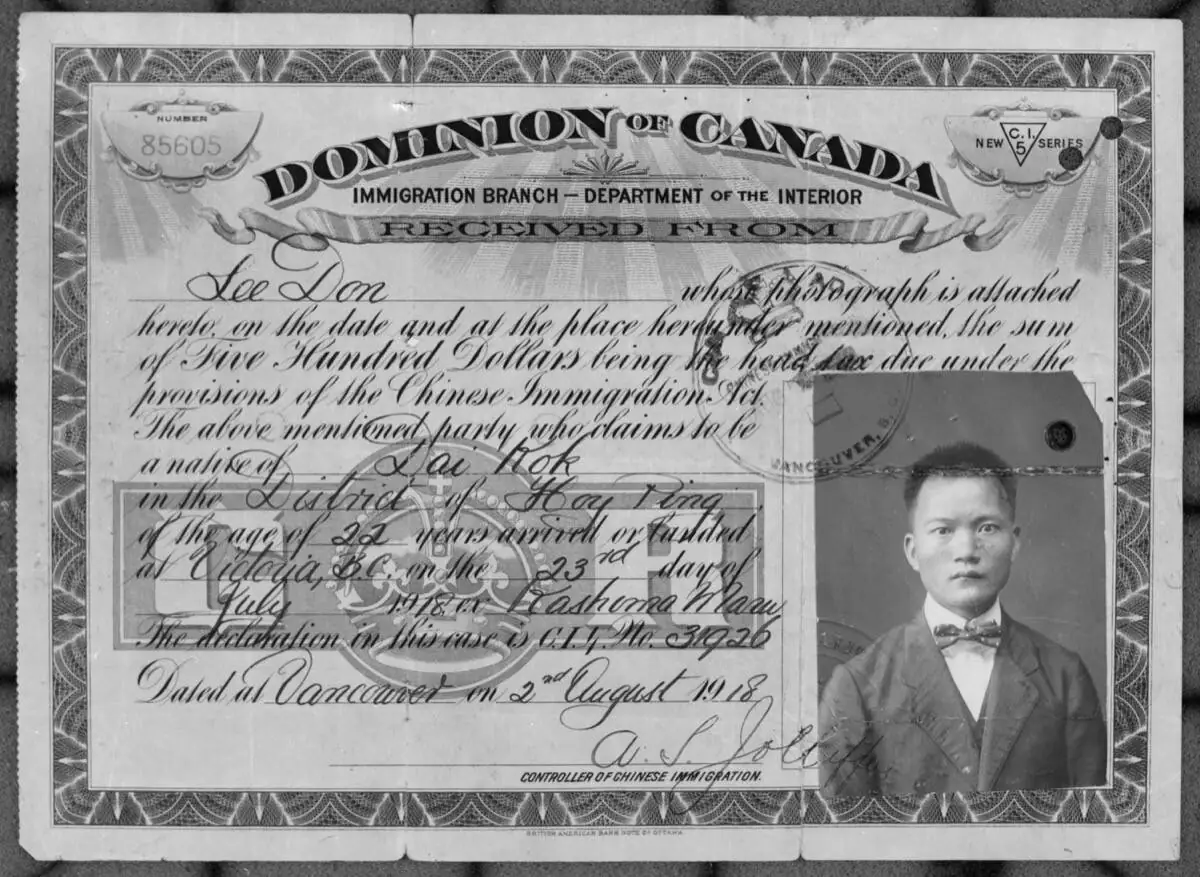
Arrival had a shape. A ship docked at Victoria or Vancouver; a man presented himself; he paid; and he received a certificate that functioned as his identity at every re-entry for the rest of his life. Two of these papers survive in public collections: the certificate of Chan Hong-Yee, issued in Vancouver in 1919, held in the Multicultural History Society of Ontario’s Lee–King Family Collection, and the certificate of Lee Don, who arrived at Victoria on July 23, 1918, at age twenty-two, held by the Vancouver Public Library. Names, ages, villages, dates — the state kept its books.
The gate stood inside a hostile city. Vancouver incorporated in 1886 and from its first charter excluded Chinese from the municipal franchise. In February 1887, the hostility turned to violence: Chinese residents were beaten and thrown into Coal Harbour (高豪港, Gāoháo Gǎng), their homes and property burned — an expulsion that, by the official record, had been planned months earlier in the city council chamber itself. The provincial government responded by suspending Vancouver’s city government (废市, fèishì): the city was, briefly, dissolved for its own riot. Twenty years later, in September 1907, an Asiatic Exclusion League rally at Main and Hastings turned into a riot that swept through Chinatown and Japantown — by some accounts nine thousand people in the mob. A royal commission under Mackenzie King assessed damages; Chinese claimants received $3,000 for property and more than $20,000 for business losses, by one account of the settlement.
But the gate was negotiated, not merely endured. As early as 1878, Victoria’s Chinese merchants petitioned Ottawa against a $60 provincial head tax British Columbia had imposed — documented in the standard histories as the first organized resistance to head taxation in Canada, seven years before the federal head tax. Petitions, litigation, consular diplomacy, and association brokering were the corridor’s standing response to exclusion — a long lineage of Five Counties resistance that runs through the whole diaspora.
The certificate was the hinge. The same paper that admitted a man marked him — for the state that collected, for the family that waited, and later for the descendants who would find the paper in a trunk.
The Vancouver–Taishan Corridor: What the Wages Built
Here is the pivot of the story. The same wages skimmed at the gate rebuilt the hometowns the migrants had left — because the money went home through a private infrastructure that operated for decades before banks served the route.
The plumbing ran Vancouver → Hong Kong → Taishan. On the Vancouver end stood the Gold Mountain firms (金山庄, Jīnshānzhuāng) — import-export houses with a remittance counter in the back. The best documented is the Wing Sang Company (永生公司, Yǒngshēng Gōngsī), founded in 1888 by the Taishan-born merchant Ye Chun Tin (叶春田) at 51–67 East Pender Street and running until the 1950s; one unverified record claims the firm recruited on the order of 7,000 workers for the CPR, and it handled remittances for a large share of the corridor. On the Taishan end stood the native banks (银号, yínhào) and remittance bureaus (侨批局, qiáopī jú): the small county town alone ran more than a hundred such houses, the 西宁市 (Xīníng Shì) market district was called the financial center of the five counties, and 台西路 (Táixī Lù) was known as “Bank Street.” Named firms — 慎信药行 (Shènxìn Yàoháng), 源益号 (Yuányì Hào), 广合源号 (Guǎnghéyuán Hào) — are on the government record.
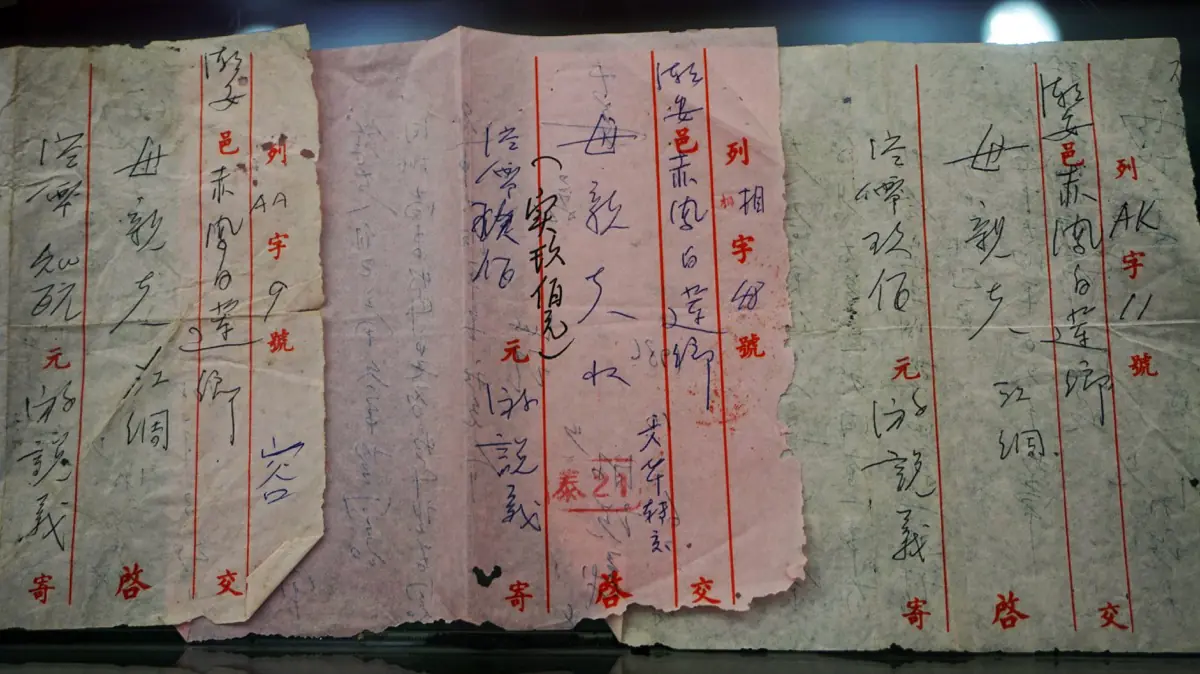
The freight was the 银信 (yínxìn, “silver letter”) — a remittance order fused with family news. School fees arrived inside the envelopes. Hand-carry couriers (水客, shuǐkè) and local couriers (巡城马, xúnchéngmǎ, “patrol horses”) covered the last miles between port and village; deliveries were reckoned in weeks, not days, over the steamship-and-courier route. For what these letters actually say, see the guide to reading qiaopi.
The volumes were enormous. Remittances were a primary income for many households across Wuyi in the 1910s through the 1930s, dwarfing county government revenue. Aggregated across the whole era, Wuyi remittances from 1864 to 1949 exceeded US$700 million, and Guangdong as a whole accounted for roughly 80 percent of China’s remittances. No corridor-specific series for 1885–1923 survives; the aggregates give the scale, not the precision.
What the taxed wages built: schools, hospitals, roads, electrical grids, and the 洋楼 (yánglóu) mansions that still line Taishan’s streets. And one monument above all: the Sunning Railway (新宁铁路, Xīnníng Tiělù), commonly described as China’s first railway financed, designed, built, and operated entirely by overseas Chinese. Its builder, Chan Yee Hee (陈宜禧, Chén Yíxǐ), born in 1844 in 朗美村 (Lǎngměi Cūn), 斗山镇 (Dǒushān Zhèn), worked on the Seattle rail lines from 1864, contracted for the Northern Pacific, and went home to build. The line ran 133.25 kilometers from 斗山 through 台城 to 北街, with a branch to 白沙; share capital stood at 3,658,595 yuan; its founding motto was 不收洋股、不借洋款、不雇洋工 — no foreign shares, no foreign loans, no foreign labor. It opened at 宁城站 (Níngchéng Zhàn) on April 20, 1909. The Sunning Railway’s full story is told elsewhere; here it stands as the corridor’s proof of what taxed wages could do. Bombed and taxed into closure in 1939, by most accounts, its remnants are now landmarks on every Taishan roots trip.

The Family Ledger: Gold Mountain Wives
The tax’s deepest price was not the one paid in cash. It was the one that priced wives and children out of migration. A man could scrape together $500 for himself; doubling or tripling it for a family was beyond reach, and the law offered no family track. So the split household became the corridor’s basic unit — the husband in Vancouver, the wife and children in Taishan — enforced by law, not merely by economics.
The women are known in the villages by a specific name: 金山婆 (Jīnshānpó), Gold Mountain wives. For decades they ran farms, households, and in-law care alone — a condition the language names precisely: 守活寡 (shǒu huóguǎ), “living widowhood.” Married, and alone.
And the same women handled deeds, land registration, debts, and money management — the remittance economy put financial power in their hands even as it denied them their husbands. The two truths stand together; neither cancels the other. The demographic record shows the scale of the separation: in 1931, of 46,519 Chinese in Canada, only 3,648 were women; in the late 1920s, Calgary had about five married Chinese women, Edmonton about six, per The Canadian Encyclopedia.
The letters carried the emotional ledger — guilt, longing, filial duty, loneliness, and suspicion, all of it. And because many village women were not literate, the letters passed through the hands of 写信先生 (xiěxìn xiānsheng), the letter-writing clerks who mediated voices: a wife’s words reached Vancouver filtered through a scribe’s brush. The Gold Mountain wives have their own story; this is its Canadian hinge.
The Canadian-side mirror of the empty chair was the bachelor society — Chinatown’s male boarding houses, where men cooked for themselves, saved for remittances, and waited out the years. The tax had made wives’ entry prohibitive; the household survived as two halves of one economy.
In one family’s telling, recorded by Chinese-language newspapers, a daughter remembers a father who left Xinhui (新会, Xīnhuì) at seventeen, paid $500 at landing, returned home to marry, and left again when she was three months old. Her mother, at 104, received survivor compensation in 2006. The dates of that family’s ledger — the departure, the marriage, the second departure — are the dates of the tax itself.
1923: The Tax Becomes Total Exclusion
On July 1, 1923 — Dominion Day, Canada’s national holiday — the Chinese Immigration Act (排华法案, Páihuá Fǎ’àn), given royal assent days earlier, came into force, and the tax gave way to something worse: near-total exclusion. Chinese Canadians renamed the day 耻辱日 (Chǐrǔ Rì), Humiliation Day. Community flags flew at half-mast on the national holiday. Five weeks earlier, Sun Yat-sen had telegraphed the Interior Minister in protest; by the community’s account, no reply came. The 2023 centenary project documents both the day and the telegram.
The numbers speak. Between 1923 and 1947, admissions of Chinese immigrants numbered fewer than one hundred — by some counts, as few as forty-four. The Act also required every Chinese person in Canada, including the Canadian-born, to register with the state and carry identification to remain — a national identity system aimed at one community, its paperwork the legal twin of the old tax’s certificates.
The corridor froze. Family reunification became legally impossible; the route narrowed to letters and remittances. A Chinese-language account of the era puts it plainly: 大量加拿大华人劳工从此与妻儿天各一方、团聚无门 — a great many Chinese laborers in Canada were henceforth separated from their wives and children, with no door to reunion. Yet even under exclusion, Vancouver’s Chinatown remained a thriving economic and social center — the era was negotiated, not merely endured.
Repeal came through service. Chinese-Canadian veterans of the Second World War — including roughly 150 who served in Force 136, the British special-operations unit in Southeast Asia — lobbied hard, and in 1947 the Act fell. The franchise was restored; six veterans received their citizenship certificates in February 1947. Vancouver, last of the cities, kept its municipal exclusion bylaws until 1949.
One note on periodization: this article treats the head-tax era as 1885–1923 and the exclusion era as 1923–1947, which is the standard Canadian historiography. Some Chinese-language sources date the tax’s end to 1967; that was when the last residual restrictions of the era were lifted by a new immigration framework — the tax itself ended in 1923.
Redress: The Apology and the Ledger’s Return
The reckoning took decades to build. In 1979, a CBC television program alleging a “campus giveaway” of university seats to foreign students ignited community outrage; the Chinese Canadian National Council formed in 1980, the Head Tax Families Society followed, and national protests pushed the head tax back onto the country’s agenda.
On June 22, 2006, Prime Minister Stephen Harper apologized in the House of Commons — in English, and in Cantonese. The government offered a symbolic C$20,000 to living head-tax payers and the surviving spouses of deceased payers. The number of recipients was small, because the wait had been long: about twenty payers and roughly two hundred widows in the first accounting, with some reports putting the total of claimants near four hundred. A Community Historical Recognition Program ran from 2006 to 2013 with a budget in the range of C$24 million to C$25 million for commemorative projects.
The apology then moved down the ladder of governments, each one closer to the ground of the story. New Westminster apologized in 2010 — the first city to do so, after a Chinese burial ground was rediscovered. British Columbia’s province followed in 2014. And on April 22, 2018, Vancouver apologized — in English, in Cantonese, and in the Siyi dialect, in a text of some 2,200 characters that took about twenty-two minutes to read, because early Vancouver Chinese, the city said, “多来自广东台山一带” — came mostly from the Taishan area, as the 侨务办公室’s account of the ceremony records. A century after the certificates, the state finally spoke the payers’ home dialect.
The certificates meanwhile became what they always were: heirlooms and evidence. 张叶善和 (Zhāng Yèshànhé), a 107-year-old Torontonian, donated nine head-tax artifacts to the Guangzhou Overseas Chinese Museum in 2014, as reported at the time. Others rest in the Lee–King Family Collection and the Vancouver Public Library. The memory infrastructure grew up around them: the 台山市华侨文化博物馆 (Táishān Shì Huáqiáo Wénhuà Bówùguǎn), Taishan’s Overseas Chinese Culture Museum, opened in 2020 with some 1,000 artifacts; the Kaiping diaolou (碉楼) towers were named a UNESCO World Heritage site in 2007; and the Wuyi silver letters were inscribed in UNESCO’s Memory of the World register (Asia-Pacific) in 2013. On the centenary of the Exclusion Act in 2023, commemorations drew thousands to Parliament Hill.
What the state once used to tax, families now use to remember. The ledger came home.
Coda: Finding the Name in the Register
The descendant’s path is real, and it is digital. Library and Archives Canada holds 98,361 digitized Chinese immigration records covering 1885 to 1949 — names, ages, birthplaces, travel data — opened to public search in 2014. Historians Peter Ward and Henry Yu (于亨利, Yú Hēnglì) led the UBC/VPL Head Tax Project, which digitized the Register of Chinese Immigrants: more than 80,000 names held at the Vancouver Public Library, indexed by surname, birthplace, and arrival date, with origins recorded down to county and village level, by the project’s own account. That last detail is the key to the whole corridor: a register entry can name the village.
The steps are concrete. Search the LAC register for a family name and a year. Match the entry to a certificate that may still be in a drawer or a trunk — the paper the state issued as proof of payment is now the proof of belonging. Find the village named in the register. Then walk the corridor’s two ends on a Taishan trip: the Overseas Chinese Culture Museum, the silver-letter archives, the Sunning Railway’s remnants, the 洋楼 that line the streets — every one of them paid for in Vancouver wages. The ancestral-village guide walks through the how.
The two Taishans remain one community: 两个台山 (liǎng gè Táishān) — by one 2022 tally, more than 1.8 million Taishanese abroad against roughly 900,000 at home. The split household of the head-tax era has become the demographic shape of the county itself.
The receipt of exclusion became proof of belonging. Ordinary people documented an injustice in receipts, letters, and buildings, and their descendants can still read it. The register waits; the village stands; the corridor’s two ends are one community — and the door is open for the next name to be found.
Continue Reading
- The Forgotten Builders: Chinese Railroad Workers Exclusion and America’s Hidden Legacy
- Reading Qiaopi: What Remittance Letters Reveal About Wuyi Families
- The Women Who Built Gold Mountain: Jinshanpo Wives and the Hidden Architecture of Qiaoxiang
- How to Find Your Chinese Ancestral Village: A Practitioner’s Guide
Stay Connected
Follow RootsOfChina on Facebook and Instagram for new article updates, behind-the-scenes from Kaiping, and stories from the Chinese diaspora.
Sources
- Library and Archives Canada — Chinese Immigration Records, 1885–1949 — 98,361 digitized head-tax-era records, opened to public search in 2014; the descendant’s first stop.
- The Canadian Encyclopedia — “Chinese Canadians” — the standard English-language survey of the tax, exclusion, and redress; source for payer totals and demographics.
- Government of British Columbia — “Federal Head Tax” (Chinese Legacy BC) — official account of the rate ladder, exempt classes, and the “more than 97,000 arrivals” figure.
- Multicultural History Society of Ontario — Head Tax (1885) — record of the Chan Hong-Yee certificate in the Lee–King Family Collection.
- canada.ca — Significant events in the history of Asian communities in Canada — federal timeline of the 1885 disenfranchisement, the 1923 Act, and redress.
- Chinese Exclusion Act Centenary (2023) — centenary project documenting Humiliation Day and the 1923 Act.
- 国务院侨办, “温哥华迟来的道歉” (2018) — Chinese-government account of the 2018 Vancouver apology read in English, Cantonese, and the Siyi dialect.
- The Head Tax Project — Mining the Register of Head Tax Records — account of the UBC/VPL digitization of the Register of Chinese Immigrants by Peter Ward and Henry Yu.
Chinese-language scholarship consulted in research: 梅伟强、张国雄《五邑华侨华人史》(广东高等教育出版社, 2001); 张应龙《广东台山华侨史》(广东人民出版社, 2010); 刘进《银信与五邑侨乡社会》(广东人民出版社, 2011); 黄昆章、吴金平《加拿大华侨华人史》(广东高等教育出版社, 2001); 黎全恩、丁果、贾葆蘅《加拿大华侨移民史(1858—1966)》(人民出版社, 2013); Lisa Rose Mar, Brokering Belonging: Chinese in Canada’s Exclusion Era, 1885–1945 (Oxford University Press, 2010).
Suggested Reading
Is this your family’s story?
Roots Of China is built from readers’ family histories. If a story here sounds like your own — a surname, a village, a journey — leave a comment below, or share your family’s story with us and we may be able to help you find your ancestral village.
