


Chinese in Canada Before the Head Tax: BC Gold Rush, Victoria, and the Road to 1885
For roughly a quarter-century — from the spring of 1858 until the summer of 1885 — a Chinese migrant could walk off a ship in British Columbia and simply enter. No tax at the door, no certificate to carry, no exclusion act waiting in Ottawa. That window is easy to miss because the story everyone knows comes after it: the fifty-dollar head tax of 1885, the escalation to five hundred dollars, and the 1923 act that shut the door entirely. But before the head tax (人头税, réntóushuì) there was a gold rush, a city, and a community — and a politics that was already, quietly, moving to close the door. This is the origin story the tax was built to answer.
The Free Window
When gold was found on the Fraser River in 1858, roughly thirty thousand fortune-seekers surged north from California. Chinese miners, most of them already working the California diggings, made up a significant share of the newcomers — by the estimates of the day, as much as a third of the non-native population of the goldfields. They did not cross the Pacific first. They came overland and by ship from the California goldfields, where tens of thousands of Guangdong men had already been digging since 1849, following the same gold (黄金, huángjīn) north into what would become British Columbia.
This was not the first time Chinese hands had touched the place. In 1788, the English captain John Meares brought about fifty Chinese shipwrights to Nootka Sound, on the west coast of Vancouver Island, to build the North West America, the first European-style vessel launched on the Pacific Northwest coast. They were artisans, not settlers, and they left no community behind. The 1858 rush was different: it was the arrival of a population.
It began with a single documented shipment. On 24 June 1858, the San Francisco firm Hop Kee & Co. commissioned a sailing ship to carry three hundred Chinese men and fifty tons of merchandise to Victoria, at a cost of $3,500. Before that, a California-based scout named Ah Hong had been sent north to verify the reports of gold, and had returned in May with confirmation. The men who followed him came as miners, but also as merchants, cooks, launderers, and laborers — the entire support structure of a gold rush, already formed in California and transplanted north.
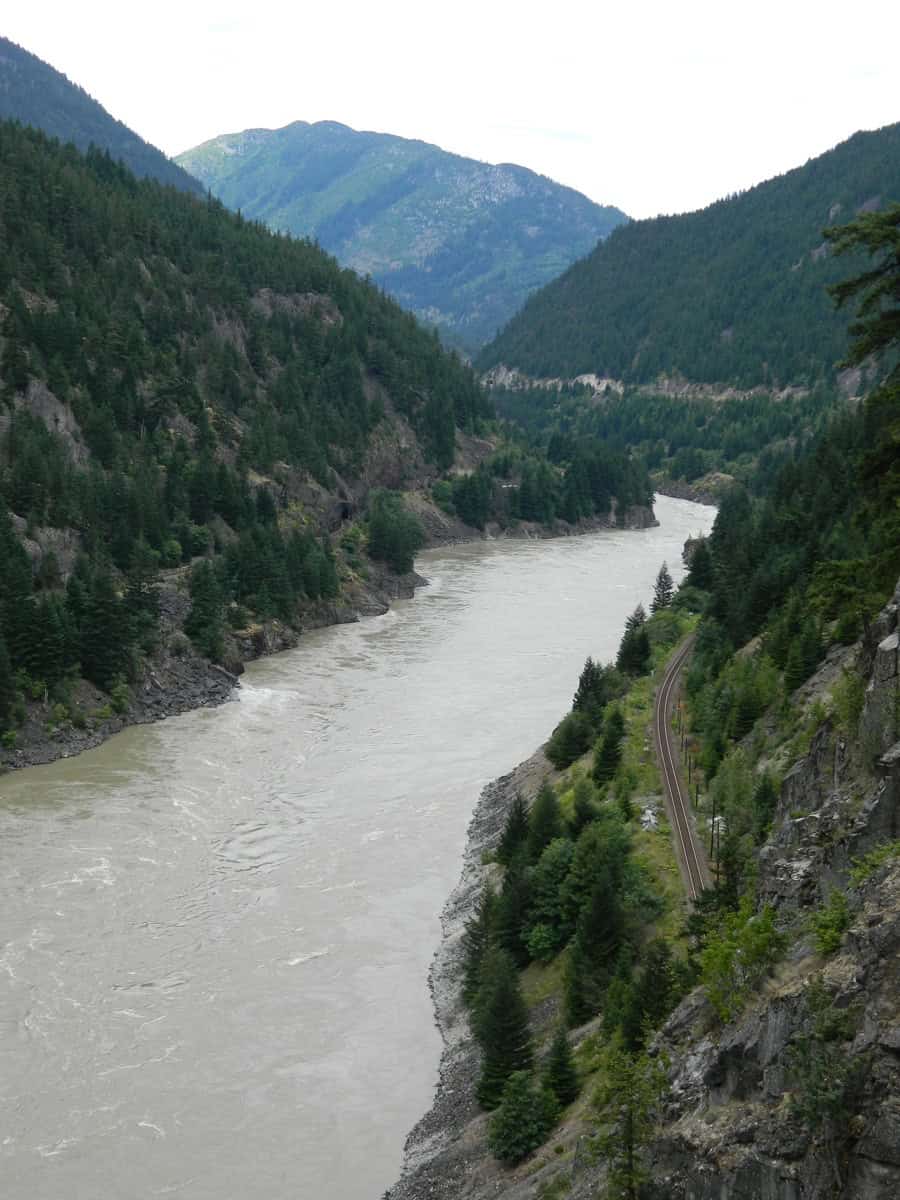
The window was real, and for a moment it was even welcomed. British Columbia’s colonial government, short of cheap labor for roads and railways, accepted the arrivals. The rush that year was fevered and brief — the surface gold played out fast — but it fixed a permanent shape on the region: Victoria as the port of entry, the Fraser and Cariboo as the gold country, and a Chinese population that would not be a passing wave.
From California, Not Canton
The first wave came from California. Only later did the ships begin loading in Hong Kong. In the spring of 1859 the first migrants arrived in Victoria directly from Hong Kong, and from then on the two streams flowed together — men who had already learned English words and mining law in California, and men fresh off the boat from the villages of the Pearl River Delta.
The legal ground shifted under their feet in 1860, when the Convention of Peking, the treaty that ended the Second Opium War, formally opened China’s ports and legalized emigration. Before that, leaving China had been technically a crime under Qing law. After 1860, a man from Taishan (台山) or Kaiping (开平) could book passage to “Gold Mountain” (金山, Jīnshān) with a broker’s ticket and a debt to be worked off in wages — the credit-ticket system that would carry the next century of migration.
Victoria was where the ships came in, and Victoria became the heart of Chinese Canada before Vancouver existed. In the spring of 1860, Vancouver Island held 1,577 Chinese residents against 2,884 white ones — more than a third of the colony. The gender balance, from the very first year, told the story of what kind of community this would be: of that 1,577, fewer than one percent were women.
Victoria’s Merchants
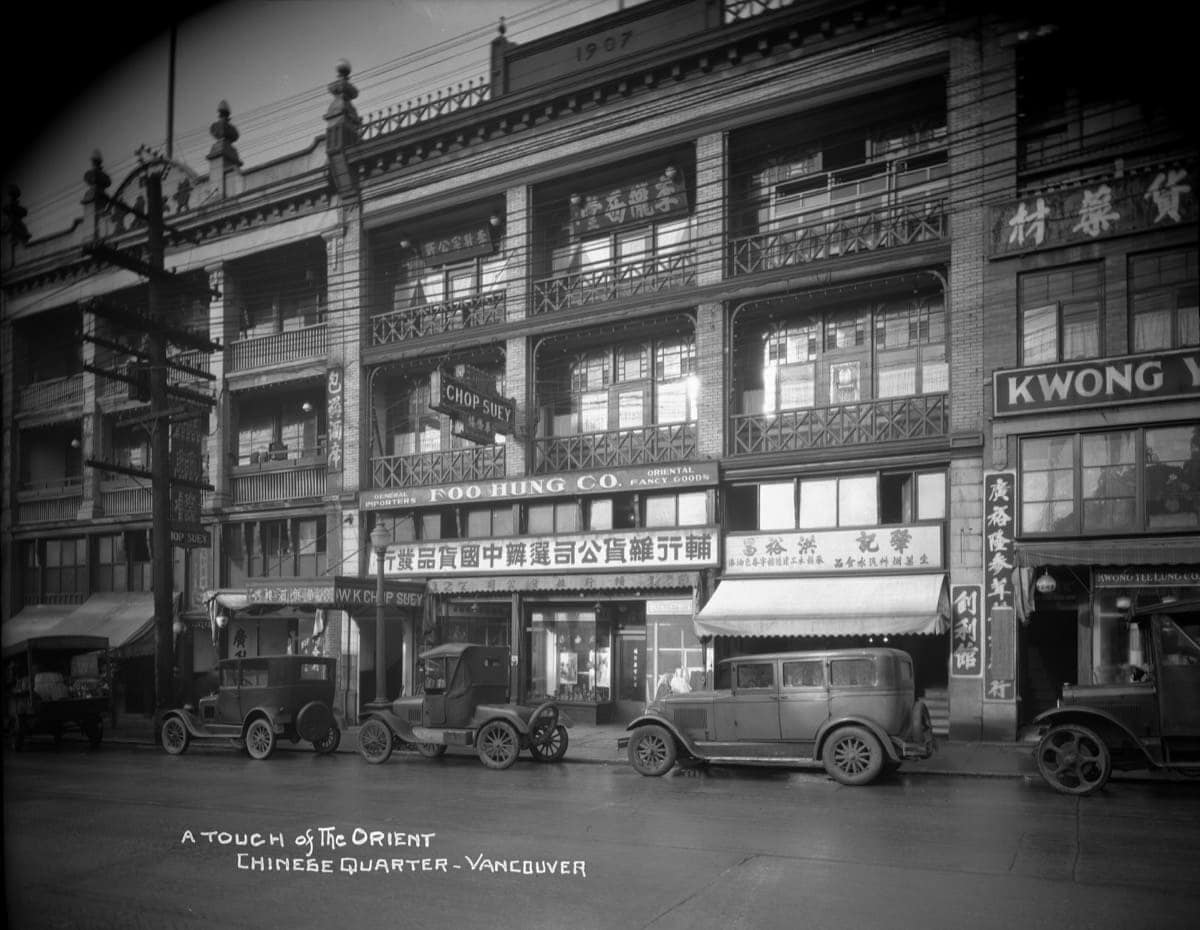
The first Chinese institution in Victoria was not a mine or a labor camp but a store. In 1858, a merchant from San Francisco named Lee Chong opened the Victoria branch of the Kwong Lee company (广利, Guǎnglì) on Cormorant Street. By 1862, Kwong Lee was the second-largest company in Victoria, behind only the Hudson’s Bay Company.
That ranking captures something the later history of the head tax would work hard to erase: the early Chinese presence was not simply a reserve army of cheap labor. It was a commercial class. By one historical account, Victoria’s first tax register listed eight Chinese among the ten richest men in the city. Within four years of the rush, Chinese merchants had built an import trade that reached up the Fraser Canyon to Yale, Quesnel, and Barkerville, supplying rice and tea, tools and blankets, and the labor contracts that moved men inland.
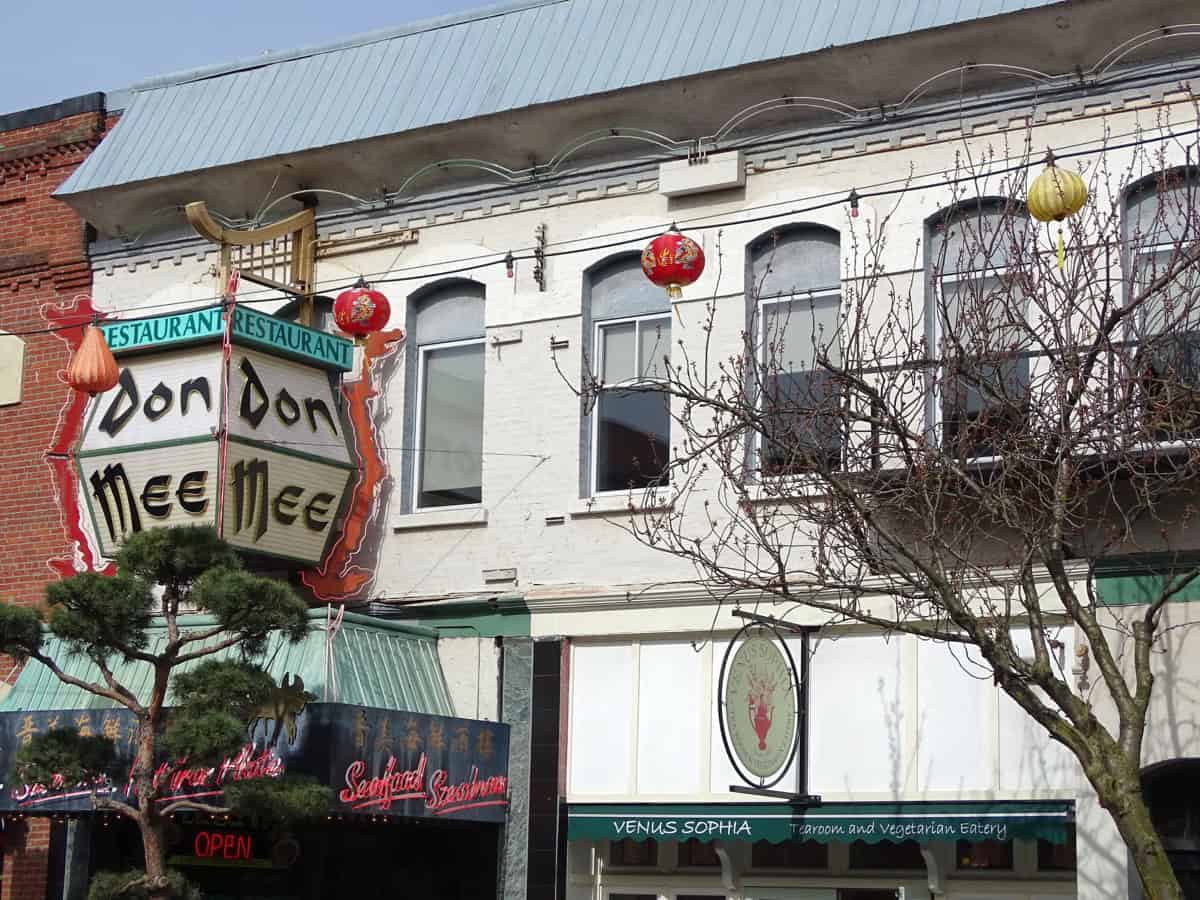
The community that gathered on Cormorant Street and Fisgard Street was Victoria’s Chinatown (唐人街, Tángrén jiē) — widely recognized as the oldest in Canada and the second oldest in North America after San Francisco. In 1860, a woman known in the record simply as Mrs. Lee, the wife of the Kwong Lee merchant, arrived from China with their child — by the surviving records, the first Chinese woman in Victoria. The year before, a man named Ay Kay had arrived to set up practice as what appears to have been the city’s first Chinese doctor. The outlines of a settled, self-sufficient community were already visible before the gold rush had cooled.
Barkerville and the Interior
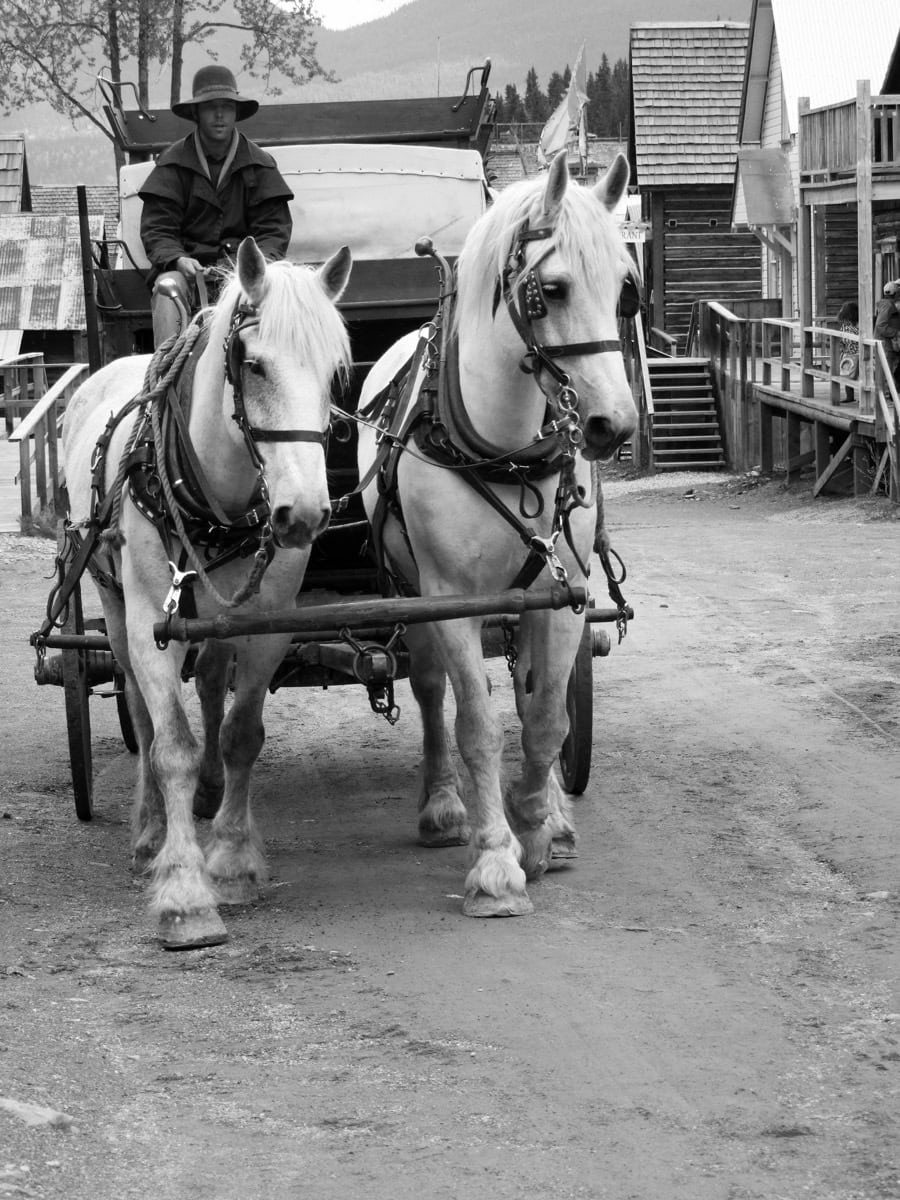
If Victoria was the coast, Barkerville was the gold country. The Cariboo gold rush of the early 1860s drew miners inland from the played-out Fraser bars, and Barkerville — a town thrown up almost overnight after Billy Barker’s strike — became the rush’s capital. Barker’s claim alone eventually yielded 37,500 ounces of gold.
At Barkerville’s peak, roughly half the town was Chinese. Estimates put the population near five thousand, with about three thousand of them Chinese. They dug the claims white miners had abandoned, using placer techniques refined over a decade of California experience, and they often pulled out gold the first wave had left behind.
The town had an “official” Chinatown, but in practice Chinese miners and merchants dominated the whole district, and nearby Richfield was almost entirely Chinese.
It was here, in 1863, that the Hongmen Society — the Chinese Freemasons, the fraternal order (洪门, Hóngmén) that would become the backbone of mutual protection across the Chinese diaspora — established its first Canadian branch, the Hong Shun Tang. Three years later, in 1866, Kwong Lee acquired retail and wholesale licences in Barkerville, and the town’s Chinese stores were selling rice, tea, cigars, matches, boots, blankets, and even patent medicines across the Cariboo. Chinese men had built the wagon roads and were building the towns at the end of them.
The Cariboo was not the end of the trail. As each rush played out, Chinese miners moved on to the next — the remote Omineca and Peace River diggings of the late 1860s, the Cassiar goldfields of the 1870s, and by the 1880s the Cayoosh rush at Lillooet, which was almost entirely Chinese. In many of these towns there was no separate “Chinatown” at all, because the Chinese were simply the majority. The pattern held wherever the gold led: white miners moved fastest from bar to bar, and Chinese miners came behind, working the claims they left with a patience and technique honed over a decade.
Where They Came From
The founding cohort was not a cross-section of China. It came from a narrow band of counties on the Pearl River Delta in Guangdong — and overwhelmingly from the Four Counties (四邑, Sìyì) of the region the site calls Wuyi: Taishan, Kaiping, Xinhui, and Enping.
By the early 1880s, about 64 percent of the Chinese in Canada came from those four counties. Taishan was the largest single source — nearly a quarter of the whole — followed by Kaiping, Xinhui, and Enping. A smaller but significant share came from the Three Counties (三邑, Sānyì) of Panyu, Shunde, and Nanhai, and a scattering from counties east and west of the delta. This was the same population that had filled the California goldfields and the Australian diggings — a single regional diaspora, spread across three gold rushes on three continents.
The 1881 census counted 4,383 Chinese in all of Canada, and 4,350 of them — more than 99 percent — lived in British Columbia. The number had actually fallen from the rush years: the 1860s peak of perhaps six or seven thousand had drained back toward California and China as the surface gold gave out, down to 1,548 by the 1871 census, then rebuilt toward three thousand by 1878 as the railway approached.
What did not change was the gender imbalance. In 1871 the province held 1,548 Chinese residents, of whom just 53 were women. By 1881 the ratio stood at roughly 28 men for every woman. The bachelor society that the head tax would later be blamed for hardening was already the shape of the community — a product of sojourning, not yet of exclusion law.
The Community They Built
Against this lopsided, transient population, the remarkable fact is how quickly the community built permanent institutions. The most important was the Chinese Consolidated Benevolent Association (中华会馆, Zhōnghuá Huìguǎn), founded in Victoria in 1884 by 31 local groups with the blessing of the Chinese consul-general in San Francisco — the first organization of its kind in Canada.
The CCBA was born directly out of the province’s hostility. Its published constitution, issued in July 1884, set out four objectives: to inform Chinese residents of Canadian law, to protect them from discrimination through legal means, to arbitrate disputes within the community, and to assist the sick and the weak. It was, in effect, an unofficial consulate — a self-governing body for a people the state had already begun to strip of standing. By August 1885, the association had raised enough to complete a three-storey building at 554–560 Fisgard Street, with a temple on the top floor and, behind it, a “Peaceful Room” (太平房, Tàipíngfáng) where the sick, the poor, and the elderly could find shelter.
Around the CCBA, a dense network of smaller associations replicated the social grammar of the Guangdong villages: clan halls for the Lees and the Wongs, county associations organized by place of origin, and temples that anchored religious life. The Tam Kung Temple (谭公庙, Tán Gōng Miào) began in the 1860s as a wooden roadside shrine, where a Hakka (客家, Kèjiā) miner had placed a statue of the sea deity Tam Kung by a ravine on Johnson Street. In 1877, Hakka residents pooled money to buy the property outright, and the shrine grew into a proper temple — one of the oldest Chinese temples in Canada, in near-continuous use ever since and still standing today.
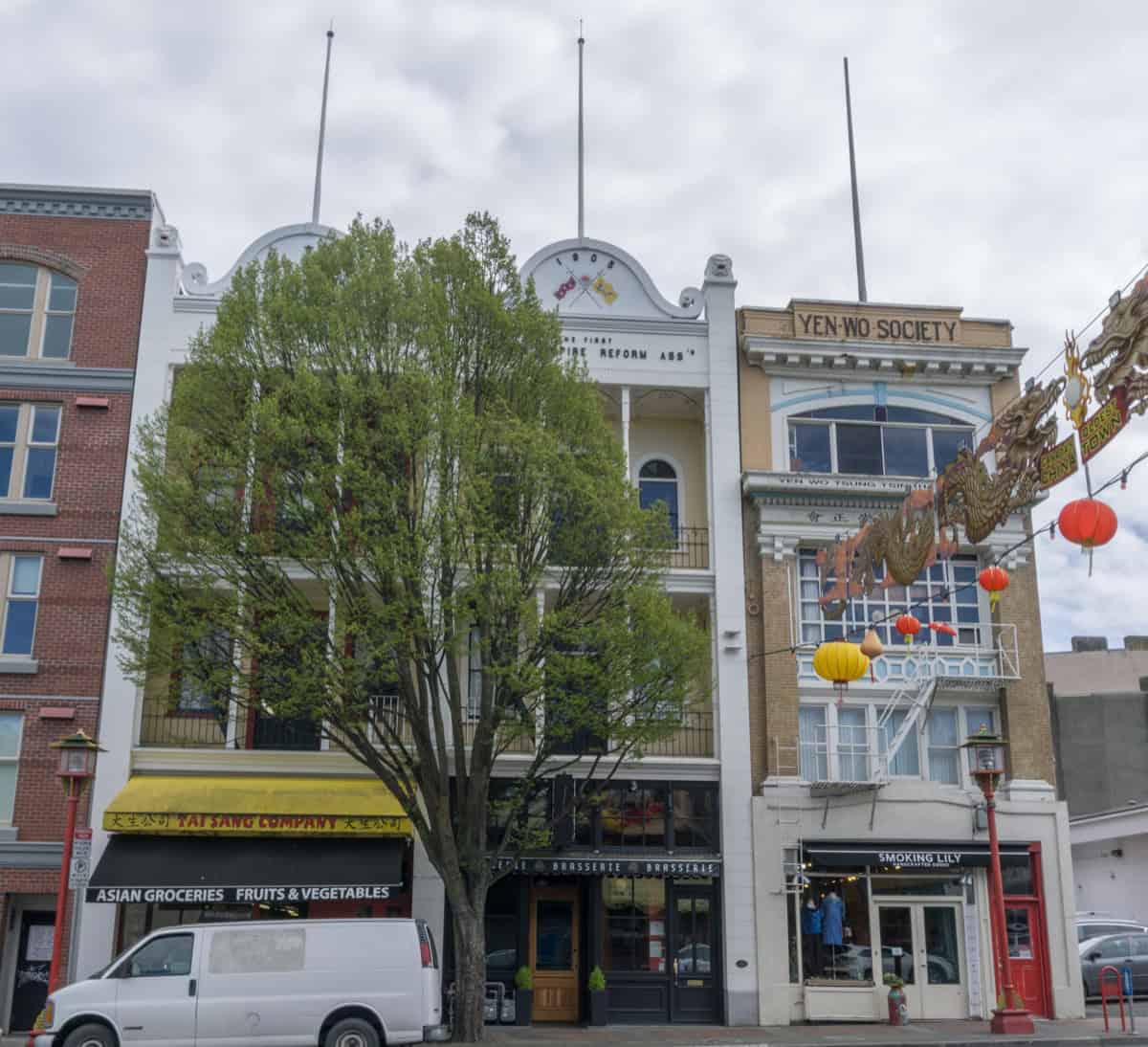
These were not the marks of men waiting to go home. They were the marks of men building a home.
Losing the Vote
The politics that would close the window began almost as soon as the window opened. The first push was over the vote.
In the early 1870s, the British Columbia legislature removed the provincial franchise from Chinese residents — and from Indigenous residents in the same stroke. (Sources date the act to either 1871 or 1872; what is certain is that by the mid-1870s the exclusion was firmly in place.) Without a name on the voters’ list, a Chinese resident could not enter the professions that required the franchise — law, medicine, pharmacy, teaching — and, more importantly, held no leverage over the politicians who made the rules about his life.
The exclusion was reaffirmed in 1875, the same year Victoria passed a by-law barring Chinese from employment on municipal works. By 1873 an Anti-Chinese Society had already formed in the city. The pattern was set: a growing population with no vote, and a political class that had discovered the issue could win elections. Every election cycle after 1875, the “Chinese question” became a louder, more reliable drumbeat in British Columbia politics.
The Province Tries and Fails
Blocked at the ballot box, the exclusionists tried the tax and the ban — and found, repeatedly, that the province lacked the power to act.
In 1878, British Columbia passed a Chinese Tax Act, imposing a quarterly tax on Chinese residents. Victoria’s Chinese merchants protested it all the way to Ottawa, and the measure was struck down as beyond provincial authority — ultra vires, a Latin phrase meaning the province had overstepped a power that belonged to the federal government. Immigration was a federal matter, and British Columbia could not tax people out of the country on its own.
In February 1884, the province tried again, passing legislation that would stop Chinese immigration entirely, tax Chinese residents yearly, and block them from purchasing land. This time the federal government formally reserved and disallowed the act. The message was clear: if Chinese exclusion was to happen, it would have to be Ottawa that did it. British Columbia spent the next year demanding exactly that.
The Railway and the Threshold
What finally moved Ottawa was the railway — and the fact that, for a while, it needed Chinese labor.
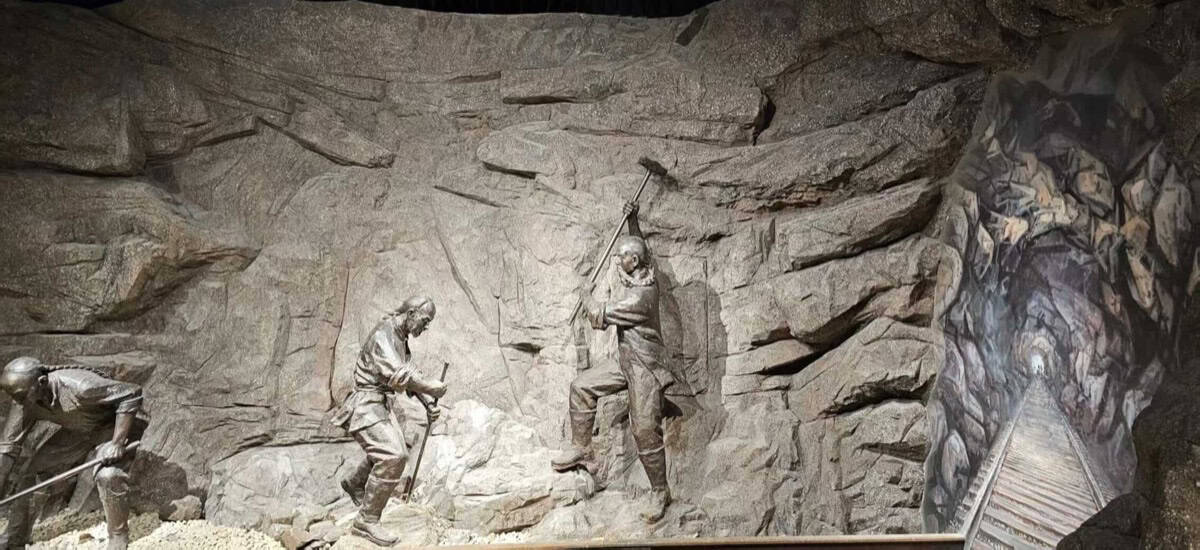
Between 1881 and 1885, the Canadian Pacific Railway employed somewhere between 15,000 and 17,000 Chinese workers to build the westernmost and hardest stretch of the line through the mountains of British Columbia. Andrew Onderdonk, the chief contractor, recruited men from California and then, as workers deserted for the goldfields, directly from Guangdong through Chinese labor contractors. The men earned about a dollar a day — less than their white counterparts — and did the most dangerous work: blasting rock, hauling, and grading cliff faces. An estimated six hundred died during construction; Chinese-language accounts place the toll far higher, in the thousands.
The irony that sits at the center of this story is that the railway both employed the Chinese and then became the argument against them. As the line neared completion in 1884, the federal government bowed to British Columbia’s pressure and appointed a Royal Commission on Chinese Immigration.
The commission’s report, when it came, was awkward for the exclusionists: it concluded that Chinese immigration actually benefited British Columbia, especially its labor market, and recommended a modest ten-dollar tax.
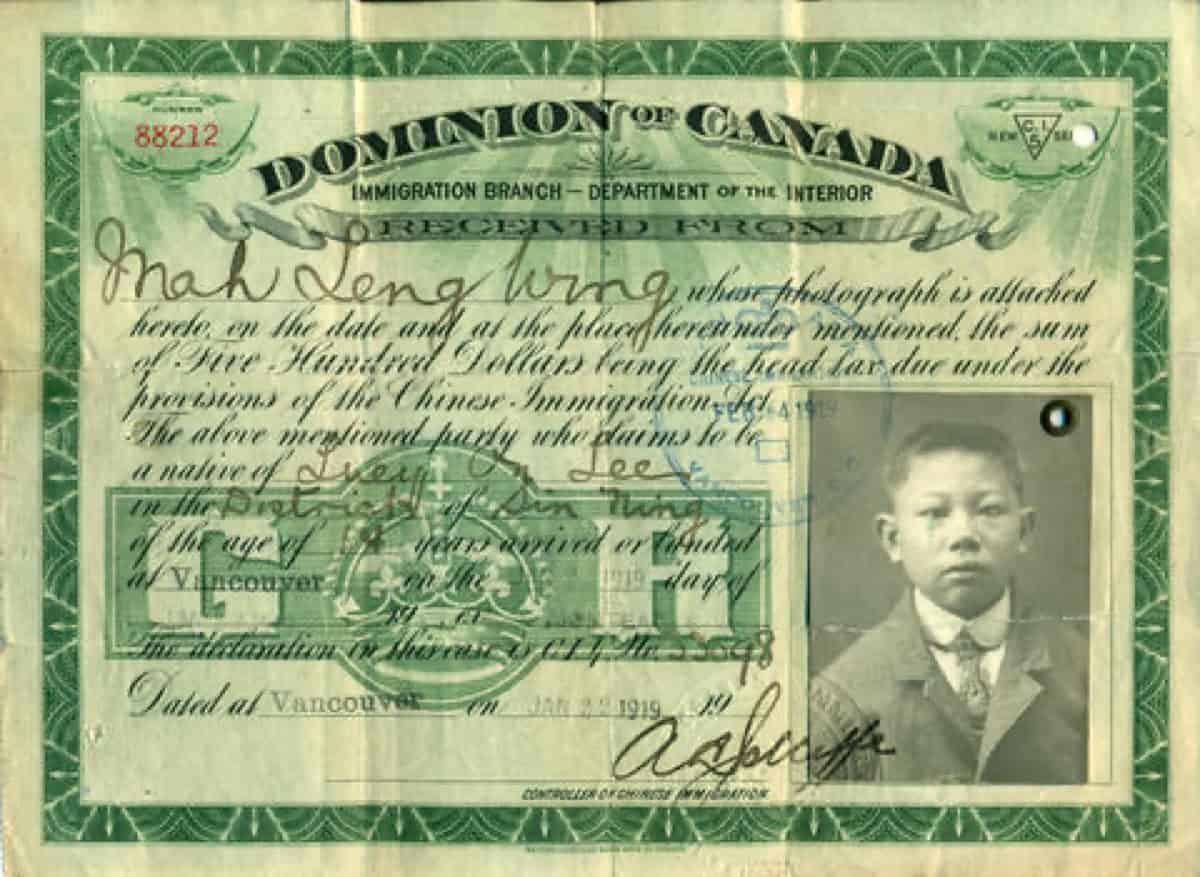
Parliament ignored the recommendation. On 20 July 1885 — a few months before the last spike was driven at Craigellachie — the federal Chinese Immigration Act imposed a fifty-dollar head tax on every Chinese worker entering Canada. Merchants and students were exempt; laborers, the men the country had just spent four years depending on, were not. It was the first time Canadian law had restricted immigration on the basis of nationality or ethnicity, and it was aimed at exactly one people.
The Road’s End (and Its Beginning)
The head tax did not come out of nowhere. It was the federal enactment of an agenda British Columbia had been pressing since the 1870s — a political project built on the gold rush, sharpened by the disenfranchisement, rehearsed in the 1878 tax and the 1884 act, and finally given force once the railway no longer needed the labor that had built it.
For the men who had come in the free window, the summer of 1885 was the hinge. Everything before it — the California passage, the Fraser bars, the stores on Cormorant Street, the temples and the association halls, the railroad camps — belonged to one era, when entry was possible and wealth was within reach. Everything after it belonged to another: the era of the certificate and the tax, the exclusion acts, and the long wait for an apology. That later story — how the fifty dollars became five hundred, and how the community fought back — is told in detail in The Chinese Head Tax: How Canada Charged Wuyi Migrants.
But the founding era deserves to be remembered on its own terms, not merely as the backstory to a tax. In the space of a single generation, migrants from four counties in Guangdong had built a community at the far edge of the Pacific — a port city’s richest merchants, a majority-Chinese mining town in the Cariboo, a benevolent association, and a temple that is still standing. They had done it while the door was still open. The head tax was the door closing; this is the story of what came through before it shut.
Sources
- Chronology of Victoria’s Chinatown — University of Victoria (primary chronology of the founding era)
- The Chinese Consolidated Benevolent Association — Victoria’s Chinatown, University of Victoria
- Tam Kung Temple National Historic Site — Parks Canada
- The Chinese Head Tax — British Columbia: An Untold History, Knowledge Network
- Anti-Chinese Politics — Province of British Columbia
- Gold Rush & Chinatowns — Chinese Canadian Museum
- Chinese Canadians in British Columbia — Wikipedia (survey of the founding era)
- Home County and Clan Origins of Overseas Chinese in Canada in the Early 1880s — BC Studies (county-origin data)
Continue Reading
- The Chinese Head Tax: How Canada Charged Wuyi Migrants — what happened after 1885: the tax, its escalation, and the exclusion era.
- Chinese Immigration Records in Canada: How to Find Your Wuyi Ancestor — how to trace a family member who came through Victoria, including the head-tax register.
- What Wuyi Workers Built: A Labor Migration Atlas — the railways, mines, and farms built by Wuyi labor across the world.
- Siyi Market Gardeners of Australia: From Gold Pick to Garden Hoe — how gold-rush miners in another British colony turned to farming when the gold ran out.
- Reading Qiaopi: What Remittance Letters Reveal About Wuyi Families — the letters the gold-rush generation sent home.
- Angel Island Chinese Immigration: The Wooden House and the Carved Poems — the parallel exclusion on the American side of the Pacific.
Suggested Reading
Is this your family’s story?
Roots Of China is built from readers’ family histories. If a story here sounds like your own — a surname, a village, a journey — leave a comment below, or share your family’s story with us and we may be able to help you find your ancestral village.
