

When the gold ran out, the Siyi miners did not go home. They picked up hoes instead of picks — and transformed Australian agriculture. By 1900, Chinese market gardeners from five counties in Guangdong’s Pearl River Delta — the Five Counties, or Wuyi (五邑, Wǔyì) — supplied an estimated 75 to 80 percent of Sydney’s fresh vegetables. From a corrugated iron hut on a two-acre leased plot at La Perouse to a greengrocer’s counter in Belmore Markets, these men — overwhelmingly from Taishan (台山, Táishān) — built a hidden agricultural empire that fed a nation while maintaining families they saw only a handful of times in a lifetime. Their story is one of extraordinary skill and unbearable sacrifice, written in the raised beds and furrow irrigation of gardens that ringed every Australian town — and in the stone diaolou towers their remittances raised seven thousand kilometres away.
1. The Great Pivot — From Goldfields to Garden Plots
By the 1870s, the alluvial gold deposits that had drawn tens of thousands of Chinese miners to the Australian colonies were exhausted. The easy gold was gone. Surface deposits that had yielded fortunes in the 1850s now required deep-shaft mining and heavy machinery — capital-intensive operations that excluded small-scale Chinese miners working with little more than pans and persistence. The 1891 Victoria census offers a precise snapshot of the pivot already in motion: of 9,377 Chinese recorded in the colony, 2,095 — 22 percent — were market gardeners, making it the single largest Chinese occupation. A third of all Chinese in Victoria would soon follow them into the soil. The transformation was underway before the census takers could fully capture it.
The goldfields had never been safe, and by the late 1860s they had become actively hostile. The Buckland River riot of 1857 saw European miners drive Chinese from their claims with clubs and firearms — a foretaste of worse to come. The Lambing Flat riots of 1860–61 were the largest organised anti-Chinese violence in Australian history: approximately two thousand Europeans attacked roughly one thousand Chinese miners, cutting off queues as trophies, burning tents, and driving survivors into the bush. All European rioters were acquitted. The 1855 Victorian Chinese Immigration Act — the first restrictive colonial legislation — imposed a £10 poll tax on Chinese arrivals and limited the number of Chinese passengers per ship tonnage. Mining was becoming both physically dangerous and legally precarious.
Market gardening, by contrast, occupied a different kind of space: leased land at the edges of towns, away from the violent concentrations of the goldfields, in an occupation European Australians did not contest because they did not yet understand its potential. The colonial government of Victoria issued garden licences written in both English and Chinese — a unique administrative acknowledgment of who was doing the work. The garden was not safe, exactly — no Chinese life in colonial Australia was safe — but it was safer than the diggings.
The men who walked off the goldfields and onto garden plots carried knowledge they did not advertise. The Siyi region — the five counties of Taishan, Xinhui (新会), Kaiping (开平), Enping (恩平), and Heshan (鹤山) in Guangdong’s Pearl River Delta — was one of the most intensively farmed landscapes in the world. For centuries, Pearl River Delta farmers had practised raised-bed cultivation, furrow irrigation, night-soil fertilisation, crop rotation, double-cropping, and hand cultivation on small plots. These were precisely the techniques that would make Chinese market gardeners extraordinarily productive on leased Australian plots of two to five acres. The skills transferred directly. What looked to European Australians like primitive manual labour — men bent over rows, two buckets slung from a shoulder pole — was in fact a sophisticated intensive farming tradition that could extract more vegetables from a half-acre than a European farmer could from five.
The same credit-ticket (赊单, shēdān) system that had financed passage to the goldfields now financed passage to the gardens. Labour brokers in Hong Kong advanced passage money — typically two hundred silver dollars — to peasants from Taishan and the surrounding counties. The debt was repaid through three to five years of mining or gardening wages. But the system was also a chain: one successful migrant sponsored five to forty subsequent villagers, creating self-sustaining migration streams from specific Wuyi villages to specific Australian garden locations. A gardener who established himself at Botany Bay would send for his brother, then his cousin, then his village neighbour — each arriving with a debt to repay and a clan sponsor waiting. By the 1880s, the infrastructure of recruitment, financing, and placement that had served the gold rush was fully repurposed for market gardening.
Market gardening functioned, in the end, as what scholars call a protected ethnic economic niche — an occupation requiring minimal English, little capital, and no formal qualifications, into which the White Australia Policy and its colonial precursors paradoxically concentrated Chinese workers by excluding them from most other occupations. A Chinese man could not become a lawyer, a civil servant, or a bank clerk. He could lease a two-acre plot, grow vegetables, and sell them to a Chinese wholesaler. The restrictions that closed doors elsewhere opened this one — and the Siyi gardeners walked through it by the thousands. What they found on the other side was not prosperity, exactly, but a kind of economic foothold carved from soil and sweat and an almost unbearable arrangement of distance.
But what did it feel like to actually be one of those men — to wake before dawn in a corrugated iron hut, to work a raised bed with nothing but a hoe and your own two hands, to carry a harvest to market in a horse-drawn cart, and to do it all for a family you had not seen in ten years?
2. The Garden at Dawn — A Day in the Life of a Siyi Gardener
The gardener rises before light. His bed is a wooden plank in a corrugated iron hut — galvanised iron walls that sweat condensation in summer and offer no insulation against winter cold. A fire burns outside; food is cooked over open flame. By the time the first grey light touches Botany Bay or the Merri Creek, he is already in the garden, a wooden bucket over each shoulder, walking between the raised beds. Watering is done by hand, two rows at a time, the buckets refilled from the furrow channels that web through the plot. There is no machinery. Every task — sowing, transplanting, weeding, watering, harvesting, packing — is performed by human hands on two to five acres of leased land. He will work until dusk, seven days a week, for years.
The gardener is rarely alone. The garden is worked by a partnership (合伙, héhuǒ) of two to ten men, almost always from the same clan or the same village. They pool capital to lease the land, share labour and equipment, and divide profits proportionally. One partner sows seeds; another weeds; another waters; another handles transport to market. The arrangement is governed by unwritten but rigidly observed rules — the Australian News for Home Readers noted with admiration in 1865 that “these arrangements once made are rigidly adhered to, and are universally carried out in the most amicable spirit.” When a partner travels to China for a year or two — the rare return visit to a wife and children — his share passes to another gardener and resumes on his return. The partnership is not just an economic arrangement; it is a clan institution transplanted across the ocean. Disputes are resolved according to genealogical seniority. The system works because everyone in the garden shares a surname and a village of origin — reputations travel, even across the Pacific.
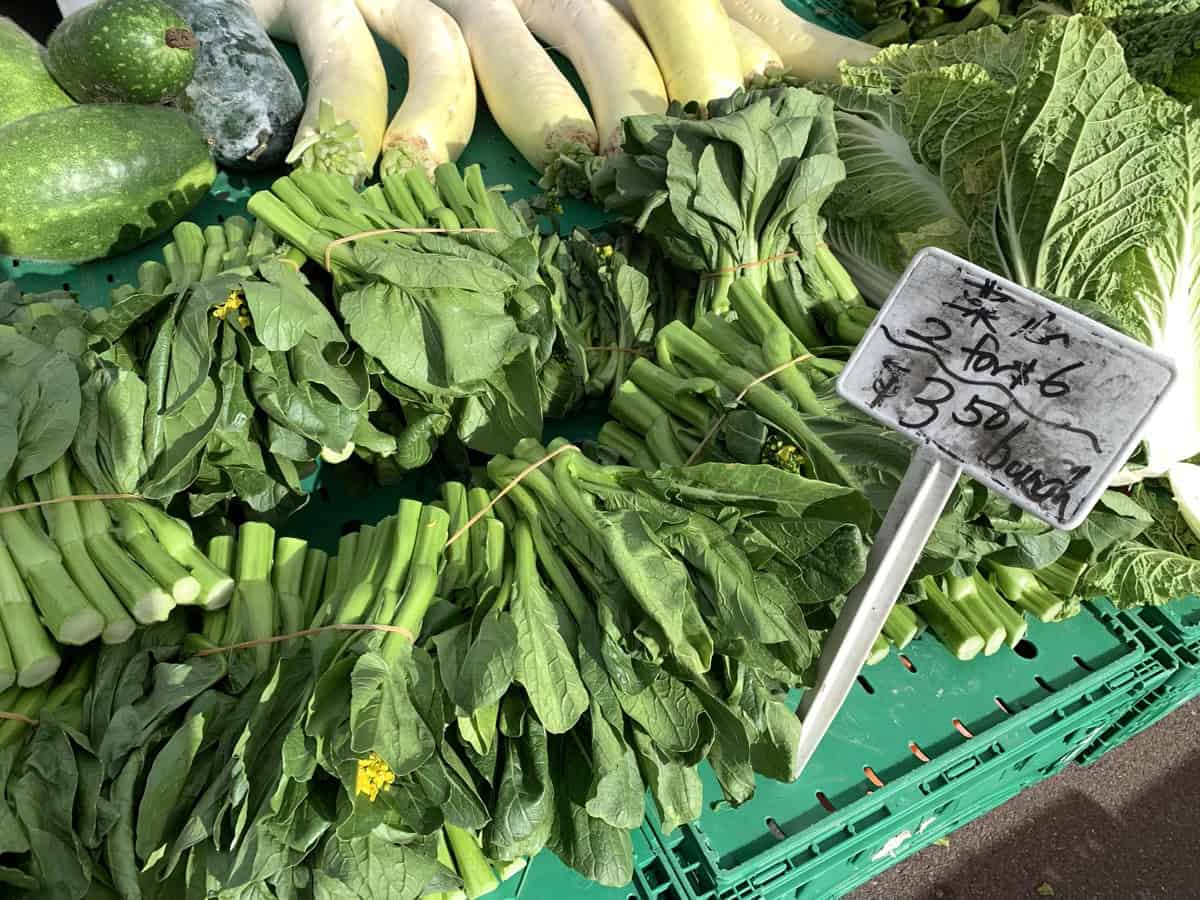
The plot itself is a grid of raised beds — soil mounded into long parallel ridges separated by furrow channels for irrigation. The beds are fertilised with night-soil collected from nearby towns, a practice European Australians found distasteful but that produced extraordinary soil fertility. Crops are rotated and double-cropped: a bed that grew tomatoes in summer will grow Chinese cabbage in winter. Seeds are saved from year to year — Chinese vegetable varieties brought from the Pearl River Delta and carefully maintained across decades: bok choy (白菜, báicài), Chinese broccoli or gai lan (芥兰, jièlán), water spinach (空心菜, kōngxīncài), winter melon (冬瓜, dōngguā), bitter melon (苦瓜, kǔguā). These are crops European Australians had never seen, grown in Australian soil with techniques that predate the Ming dynasty. The seeds crossed the ocean in luggage; they have been crossing ever since.
Harvest days are the longest. Produce is packed into baskets, loaded onto a horse-drawn cart, and driven to market — to Belmore Markets in Sydney, to the Victoria Market in Melbourne, or to a Chinese wholesaler in Little Bourke Street. Gardeners with limited English sell entire loads to Chinese vegetable dealers, who resell to greengrocers. Those who speak some English hawk door-to-door in suburbs. The cart returns to the garden late, the horse stabled, and the cycle begins again before dawn. In a good season, each partner might earn £50 a year — a modest sum in Australia, but enough to send £10 to £15 home to a wife in Taishan, where it could support a household for months.
Most of these men are single in Australia — not by choice, but by law. Their wives are in Taishan. The White Australia Policy will not permit them to bring their families. The garden hut is a male space, a bachelor society sustained by the occasional visit of Chinese prostitutes to the Matraville gardens, by gambling on fan-tan and pakapu, by the opium pipe that some use to dull the ache of separation. European and Aboriginal locals sometimes join the gambling. The gardeners are called “Old Chow” by the local community — a term that carries both respect (they are known as men of honour, dependable, their word their bond) and distance (they are not quite neighbours). They are respected and isolated in the same breath.
The sojourner mentality (侨居心态, qiáojū xīntài) shapes everything. The gardener maximises savings for village investment, minimises expenditure in Australia, and always plans to return to China. The corrugated iron hut is never upgraded because the money belongs to the village. Every pound saved is a pound that will buy land, build a house, educate a child, or fund an ancestral hall in Taishan. He is not building a life in Australia; he is building a life in China with Australian soil under his fingernails. Most will die trying.
But the gardener is only half of the story. Seven thousand kilometres away, in a grey-brick house in a Taishan village, a woman is managing the household that his remittances sustain — a wife he married in a ceremony where a rooster stood in his place.
3. The Wife Across the Ocean — The Gold Mountain Wife and the Qiaopi Lifeline
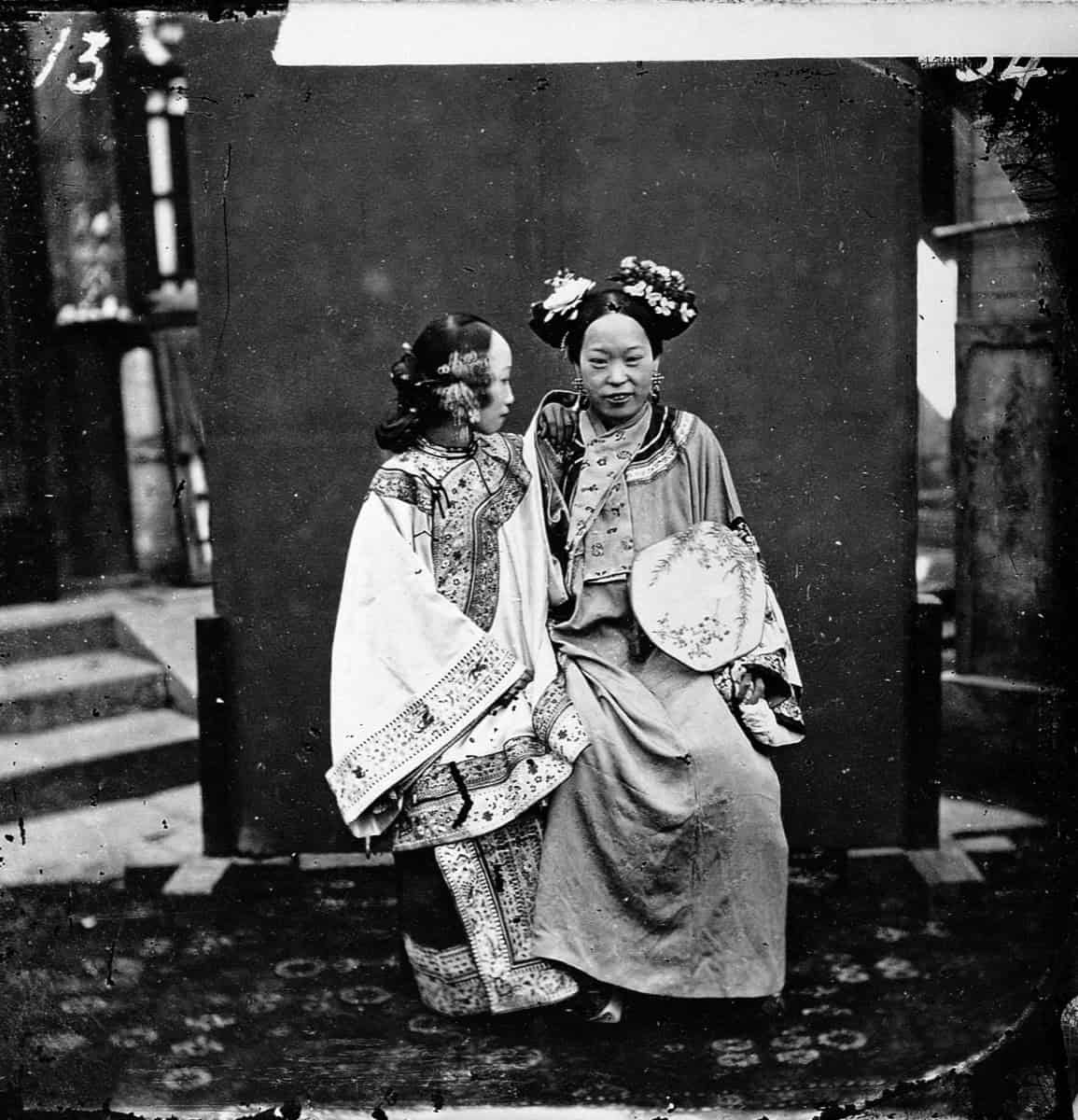
She was a bride and a widow on the same day. The ceremony was formal — a matchmaker had arranged it, the sedan chair had carried her to the groom’s village, the rituals were observed. But the groom was in Australia, seven thousand kilometres away. In his place, a rooster stood at the altar — feathers ruffled, comb bright red against the white of her wedding dress. This was the rooster proxy wedding (公鸡拜堂, gōngjī bàitáng), the ultimate symbol of a migration system that separated husbands from wives for decades. She was now a Gold Mountain Wife (金山婆, Jīnshān Pó), legally and economically bound to a man she had never met, whose face she knew only from a photograph, whose voice she would not hear for years.
Her husband — the Gold Mountain Uncle (金山伯, Jīnshān Bó) — would return to the village two to four times in a lifetime. Each visit lasted months, sometimes a year: long enough for a child to be conceived, for a house to be built, for the village to see that the Gold Mountain Uncle was real and his money was real. Then he was gone again, back to the corrugated iron hut, back to the raised beds and the furrow irrigation, back to the bachelor society of the garden. She remained. She raised their children — or adopted sons, if she had none of her own — alone. She managed the household finances, invested remittances, defended family interests against village rivals, and navigated a life of de facto widowhood that the Chinese called living widowhood (活寡, huóguǎ). By the time her husband returned for good — if he returned at all — she would be entering old age, the decades of her youth spent managing a house that was always, except during festivals, too quiet.
Two to four times a year, the silver letter — the qiaopi (银信, yínxìn), also called qiáopī (侨批) — arrived. It was a single document combining letter, envelope, and remittance notation: the lifeline between the Australian garden and the Taishan village. The delivery chain was a marvel of informal financial infrastructure. The gardener handed cash and a letter to a remittance house (批信局, pīxìnjú) in Sydney or Melbourne. The remittance house sent it by steamship to Hong Kong. Hong Kong consolidated the transfers and forwarded them to a village remittance house in Taishan. A courier on foot (批脚, pījiǎo) carried the letter and silver the final miles to her door — often walking through rural areas with large sums of cash and no security beyond his reputation. A letter from La Perouse could reach a Taishan village in two to three weeks, often faster than the official postal service. The return receipt (回批, huípī) confirmed arrival.
What did the letter say? The husband’s communication was typically practical — instructions on how the enclosed £15 to £30 should be allocated: so much for food, so much for the children’s school fees, so much for the ancestral rites, so much toward the new house. The wife’s return letter confirmed receipt and reported on local conditions: the price of rice had risen, the eldest son was doing well in his studies, the roof needed repair before the rainy season. The letters were formal, the language of a business partnership conducted across an ocean. But between the lines — in the handwriting, in the regularity, in the absence — was the record of a marriage. This was the two-family system (两头家, liǎngtóujiā): one household in Australia sustained by male labour, one household in China sustained by Australian remittances, connected by silver letters that said, in effect: I am still here. The money is enclosed. Build the house. Educate the children. Wait for me.
The qiaopi system was gendered at every level. Husbands sent instructions; wives were expected to execute them. Yet the gap between instruction and execution was real — the husband in Australia did not know local prices, local needs, or local politics. The wife exercised significant discretion in how remittances were spent. She knew which merchant gave fair prices, which neighbour could be trusted, which official required a gift. She was, in practical terms, the chief financial officer of a transnational household enterprise — managing the flow of Australian pounds into Chinese village life, making allocation decisions that would shape her family’s future for generations. She was not waiting passively; she was managing actively.
The folk songs of Wuyi’s emigrant homeland recorded what the official record did not. The Gold Mountain Wife Sighs Through the Five Watches of the Night (《金山婆叹五更》) catalogued the burdens watch by watch: household finances, children’s needs, the empty bed, the uncertain future. Twelve Months of Longing for My Husband (《十二月思夫哥》) traced a year of agricultural and household labour performed alone. These were not songs of passive waiting; they were songs of active management under conditions of permanent absence. The Gold Mountain Wife was not a victim — she was the operational backbone of a system that separated her from the man whose name she carried.
The personal stories are now in place: the gardener in his corrugated iron hut, the wife in her grey-brick house, connected by silver letters and decades of absence. But these individual lives added up to something structural — a system that, at its peak, fed a nation.
4. Feeding a Nation — How Chinese Gardens Supplied a Continent
By the 1880s, Chinese market gardens ringed every Australian town of any size. In rural New South Wales, the pattern was so consistent it became a cliché: nearly every town of a thousand or more people had at least one Chinese garden on its outskirts. In Dungog, the local paper noted in 1883: “We have two parties of Chinamen cultivators in the suburbs; in consequence, vegetables are plentiful and cheap.” The same was true in Clarence Town, Paterson, Wagga Wagga, Bathurst, Goulburn, Albury. An observer of Victoria remarked as early as 1863 that there was “scarcely a town but is now well supplied with all kinds of household vegetables by these celestial gardeners.” The gardens were everywhere — and they were supplying everything.
The distribution system was a ladder of integration. At the bottom was the garden — the two- to five-acre leased plot where the partnership grew the vegetables. From the garden, produce moved to a hawker — often one of the partners with enough English to sell door-to-door in suburbs. From the hawker, produce moved to a greengrocer — a Chinese-run shop in town that sold directly to the public. And from the greengrocer, produce moved to the wholesale markets — Belmore Markets in Sydney, Victoria Market in Melbourne — where Chinese merchants “almost monopolised fruit and vegetable wholesaling” during the peak period of 1901 to 1921. Each level of the ladder was increasingly controlled by Chinese operators, and increasingly dominated by men from Taishan.
The scale is staggering. By 1900, Chinese market gardeners supplied an estimated 75 to 80 percent of Sydney’s fresh vegetables. Chinese-language sources record that in 1901–1902, half of all vegetables consumed in Victoria and New South Wales — the two most populous colonies — were supplied by Chinese growers. By 1901, there were 799 Chinese storekeepers in New South Wales alone, more than half operating in the Sydney area, overwhelmingly as greengrocers. Taishanese operators controlled an estimated 70 percent of Sydney’s fruit and vegetable wholesale trade by 1920. In Victoria between 1910 and 1920, Chinese market garden syndicates attained what historian Joanna Boileau calls “a virtual monopoly of the business.” This was not a niche — this was the mainstream. Australian families sat down to dinner with vegetables grown, distributed, and sold by Chinese hands, and most of them never knew it. The dominance was so complete, so taken for granted, that it barely registered in the broader Australian consciousness.
The genius of the system was vertical integration. Over time, the same syndicates that grew vegetables also hawked them, retailed them, and wholesaled them — controlling every step from soil to plate. A partnership that started with a two-acre garden plot in Willoughby might, a generation later, own a greengrocer’s shop in Haymarket and a wholesale stall at Belmore Markets. The progression from gardener to greengrocer to merchant was the Taishanese Australian dream — and it was realised by thousands. Dormitories above Haymarket stores accommodated gardeners on market days before they returned to their corrugated iron huts; the dormitories were temporary homes in a city where the men could work but not fully belong.
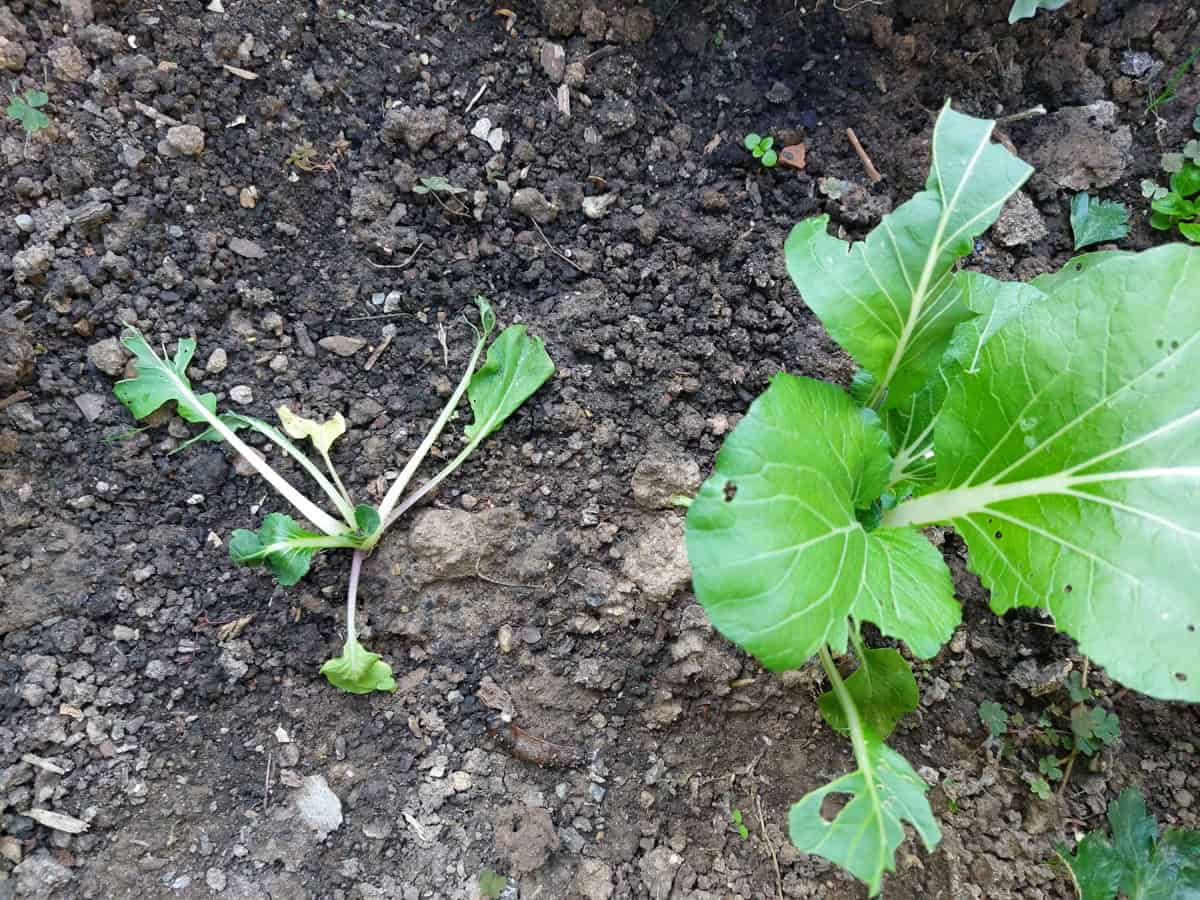
The Siyi gardeners did not just grow familiar crops — they introduced new ones. Bok choy, Chinese broccoli, water spinach, winter melon, bitter melon, and spring onions imported as seed from China permanently diversified the Australian diet. These were crops European Australians had never seen, initially grown for Chinese consumption but gradually adopted by the broader population. Today, bok choy and gai lan sit in every Australian supermarket — the living botanical legacy of men who carried seeds across the ocean in their luggage. The diversity of the modern Australian vegetable aisle is, in significant measure, a Siyi inheritance.
Yet market gardening offered Chinese Australians economic success without social acceptance. They fed the nation, but they could not join it. They dominated the vegetable supply, but they lived in corrugated iron huts at the edges of towns. Their children went to Chinese weekend schools because the broader society did not welcome them. The 1900 formation of the Market Gardeners and Fruit Growers Association — founded specifically in response to “unfair competition” from Chinese gardeners — was a reminder that economic dominance provoked political backlash. The gardens supplied the nation; the nation tolerated the gardeners.
The vegetables fed Australian families. But the money — the Australian pounds earned in those gardens — flowed in the opposite direction, across the Pacific to Taishan, where it was building something else entirely.
5. Gardens of Stone and Silver — The Remittance Architecture of Qiaoxiang
While vegetables moved from Australian gardens to Australian dinner tables, money moved in the opposite direction. Each of the two to four remittances the gardener sent home per year — typically £10 to £50 — travelled through the remittance house system: from the garden to a Chinese remittance house in Sydney or Melbourne, to a steamship, to Hong Kong’s consolidation hub, to a village remittance house in Taishan, and finally into the hands of a Gold Mountain Wife. The system charged 2 to 5 percent commission, integrated with Australian banks — the Bank of New South Wales, the Commercial Bank of Australia — by the 1890s, and moved millions of pounds across the Pacific over the decades. It was, in effect, a shadow banking system built on clan trust and Chinese institutional networks — operating parallel to and largely invisible within the formal Australian financial system.
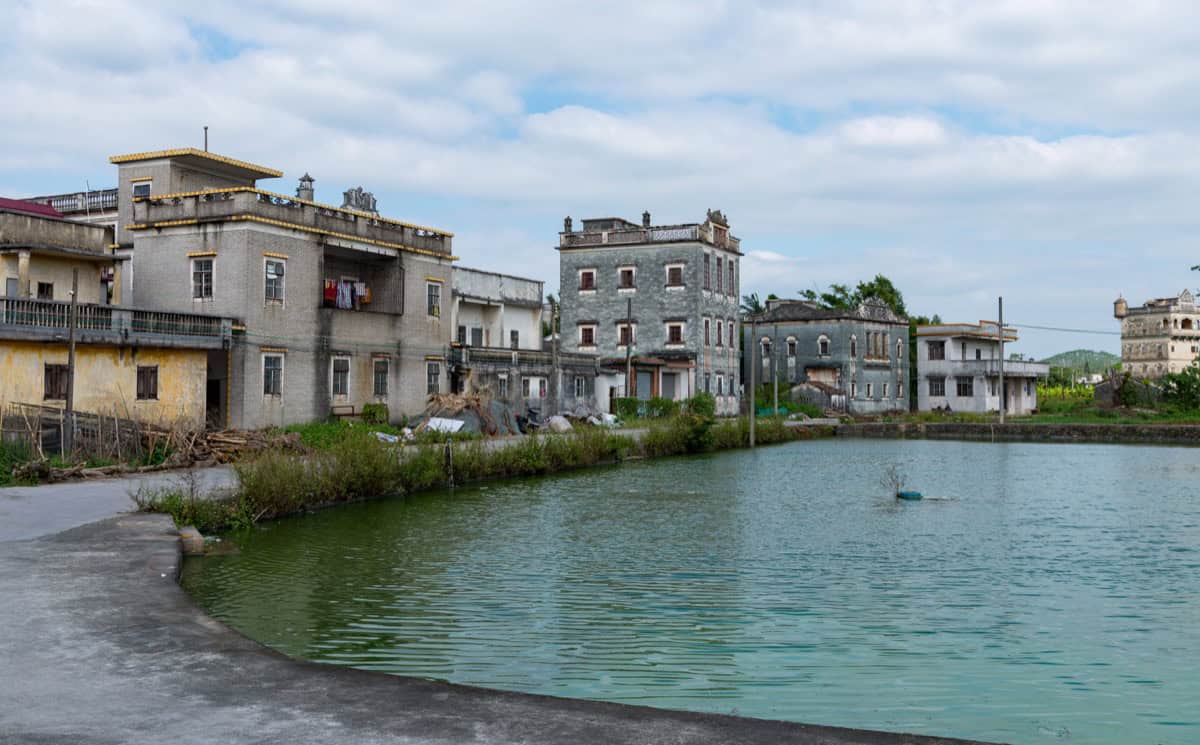
The money that arrived in Taishan did not sit idle. Taishan county received more overseas remittances than any other Chinese county by 1900. By 1930, remittances comprised an estimated 80 percent of the county’s GDP. The physical evidence of this financial flood was everywhere. Diaolou towers (碉楼, diāolóu) — fortified multi-storey structures combining Chinese defensive architecture with Western decorative elements — rose across the Wuyi landscape, funded by Australian gardening money. These were not simple watchtowers; they were statements, built with reinforced concrete, Belgian coloured glass, and imported ironwork, their upper floors ornamented with neoclassical columns and baroque flourishes. Whole Taishan villages were rebuilt with Australian earnings: grey-brick houses with Western plumbing, paved roads replacing mud tracks, electric lighting replacing oil lamps, telephone lines connecting villages to county towns, modern schools replacing temple classrooms. The emigrant homeland (侨乡, qiáoxiāng) — the remittance-dependent Wuyi landscape — was a built environment funded by Australian garden soil.
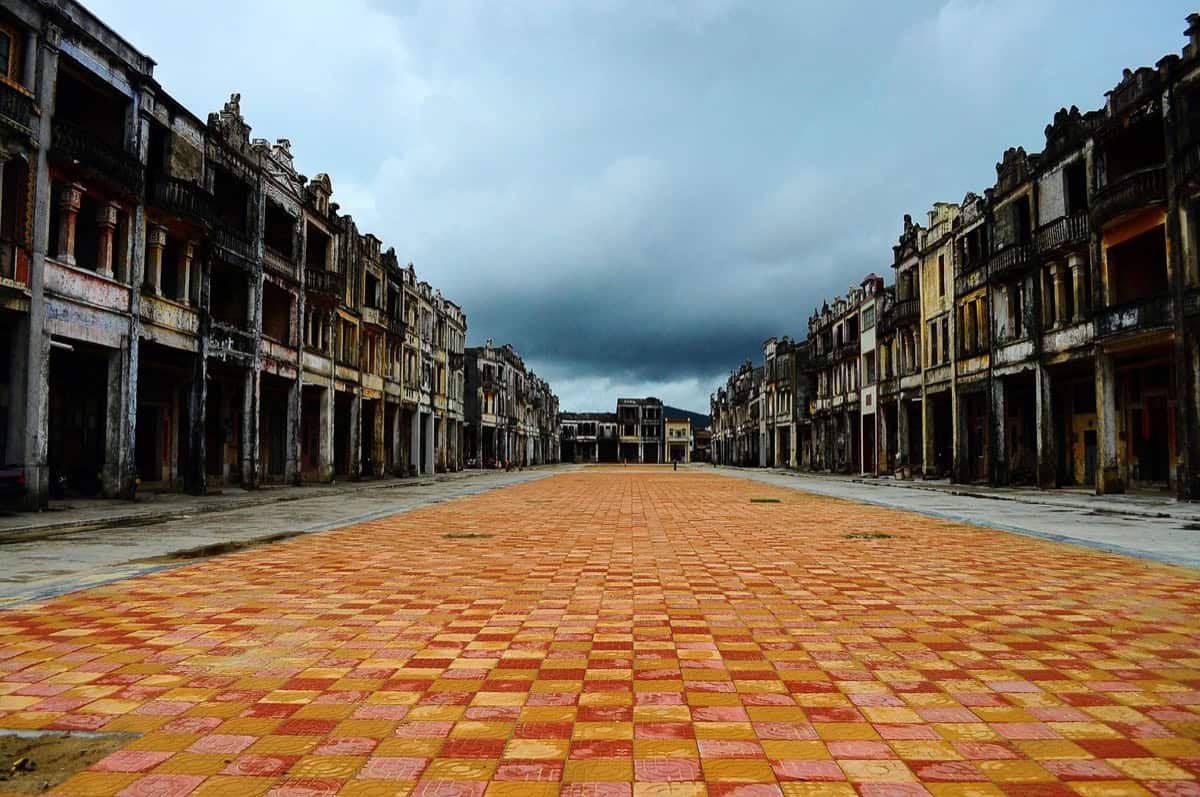
But the buildings told a double story. The diaolou and villas were monuments to Australian earnings — and monuments to absence. They were built for families whose men were largely overseas. They were occupied by wives and children and elderly parents, maintained by women who managed construction and maintenance alone for decades. A diaolou in Kaiping’s Zili Village might have been designed by a gardener in La Perouse, funded by decades of pre-dawn wake-ups and hand-watered furrows, project-managed by a wife who hired the masons and sourced the cement from Hong Kong via the Xinning Railway — and occupied by that wife alone for thirty years. The buildings were triumphs of the transnational family. They were also tombs of family life.
While their remittances built villages in China, the gardeners themselves lived in a demographic anomaly created by Australian law. The White Australia Policy and the 1901 Immigration Restriction Act prevented Chinese men from bringing wives and children to Australia. The result was a bachelor society with a male-to-female ratio of 8 to 1 among Chinese Australians in 1921. Men lived their entire adult lives in Australia without ever having their families with them. Some used the paper son (纸儿子, zhǐ érzi) system — purchasing fraudulent identity documents claiming to be sons of resident Chinese merchants or gardeners — to circumvent the restrictions, creating complex dual identities lived under assumed names. But the paper son system could bring sons, not wives. The family remained bifurcated: the village household in Taishan, funded by Australian remittances and managed by a wife who was a de facto widow; and the garden household in Australia, a bachelor society of corrugated iron huts and partnership labour. This was the cost of the system that fed a nation.
The pattern repeated across the continent. Chinese market gardens operated in every state and territory — from the Sydney gardens of La Perouse, Alexandria, Willoughby, and later Fairfield; to Melbourne’s Merri Creek, Yarra River, and Dandenong garden belts; to Queensland’s tropical coast and banana plantations; to Western Australia’s Swan River; to South Australia’s Barossa Valley; to Tasmania; to the Northern Territory. Wherever there was a town, there was likely a Chinese garden on its outskirts, and wherever there was a garden, there was a remittance stream flowing back to a specific Wuyi village. The gardens were not scattered randomly; they were clustered by clan and county. The gardens at La Perouse were worked by the Ha (夏), Leung (梁), and Tang (邓) families. The gardens at Alexandria drew from the Gao Yao (高要) district — adjacent to Wuyi, part of the broader Pearl River Delta migration, and a reminder that while Taishan dominated numerically, the garden geography was more complex than any single county’s story. Each garden was a node in a transnational family system, its profits inscribed in stone and soil on both sides of the Pacific.
An estimated 20 percent of Siyi market gardeners died in Australia, never having returned to the villages their remittances transformed. Their bones were shipped back to Wuyi for burial — the final remittance, the body following the money home. The clan genealogies (族谱, zúpǔ) recorded these deaths with precision: 卒于雪梨 (died in Sydney), 葬于美利滨 (buried in Melbourne). The genealogies functioned as migration records, documenting departures, returns, remittance contributions, and the sequential branch migration of brothers and cousins. A gardener who died in a corrugated iron hut at La Perouse was not lost — his death was recorded in a clan book in Taishan, his grave maintained by the family he had supported from seven thousand kilometres away.
The system that sustained gardens on both sides of the Pacific could not last forever. Suburban expansion, a Communist revolution, and the slow dismantling of the White Australia Policy would transform it — but not erase it.
6. What the Soil Remembers — Decline, Transformation, and Living Legacy
After the Second World War, the Chinese market gardens that had ringed every Australian town began to disappear. Suburban expansion consumed garden land — the two-acre plots at the edge of town were suddenly in the path of new housing estates. The gardeners themselves were ageing, cut off from new labour by immigration restrictions that remained in force. Second-generation Chinese-Australians, educated in Australian schools and fluent in English, exited the occupation for professional careers — law, medicine, engineering, teaching. By the 1950s, exemptions for assistants to or substitutes for market gardeners under the Immigration Restriction Act could not keep pace with retirements. The gardens that had fed the nation for three-quarters of a century were being replaced — by houses, by factories, and by the new European migrants who took over vegetable production: Italians in the Darebin area, Greeks in the Dandenong belt. The post-war migration wave was filling the niche the Chinese had created.
In China, the Communist revolution of 1949 severed the remittance corridors that had sustained the qiaoxiang economy for a century. Land reform classified many remittance-funded households as landlord (地主, dìzhǔ) — precisely because of the land they had purchased with Australian pounds. The economic assets that had marked success now marked families as class enemies. Private remittance houses were phased out; the Bank of China took over remittance processing. During the Cultural Revolution (文化大革命, Wénhuà Dà Gémìng, 1966–1976), overseas connections became dangerous — families destroyed qiaopi letters to hide “foreign” ties. The transnational circuit that had moved money, letters, and love between Australian gardens and Taishan villages for a hundred years was broken. Gardeners who had planned to return to China found they could not. Families who had depended on Australian remittances found the tap turned off. The two halves of the bifurcated family — the village household and the garden household — could no longer sustain each other.
The Australia they had left behind was changing too. The abandonment of the White Australia Policy in 1973 opened a new chapter. The Chinese-Australian population, which had fallen below ten thousand by 1947, grew to over 1.2 million by 2016. The descendants of market gardeners diversified into every sector of Australian life — restaurants, real estate, technology, the professions, politics. The greengrocer networks that had once controlled 70 percent of Sydney’s wholesale trade evolved into multi-generational family businesses spanning hospitality, property, and finance. The gardener-to-merchant trajectory that had been the Taishanese Australian dream for a century was now fully realised — not in market gardening, but in the full spectrum of Australian economic and cultural life.
At 1-39 Bunnerong Road, La Perouse, on the northern shore of Botany Bay, the last continuously operating Chinese market garden in Sydney still produces vegetables — by hand, using the same methods that arrived from the Pearl River Delta more than a century ago. Three families originally worked the three lots: the Ha (夏), Leung (梁), and Tang (邓) families. Today, Robert Tang (邓罗拔), a former high school teacher who immigrated in 1977, is the last family farmer on the seven-hectare site. He grows coriander, parsley, mint, and radish — all by hand. “Nowhere else so close to the modern, busy centre of Sydney is land still worked this way.” The gardens were added to the NSW State Heritage Register on 13 August 1999. The precise start date of Chinese cultivation at La Perouse is contested — oral memory points to the 1860s, while documentary evidence records formal Chinese sub-leases from 1909. The gap is not a contradiction but a reflection of how Chinese lives were recorded, or not recorded, in the official archives of the nation they fed.
The gardens nearly did not survive the twenty-first century. In 2008, the Eastern Suburbs Memorial Park cemetery sought to expand onto 60 percent of the garden land. A three-year campaign led by the Chinese Heritage Association of Australia, spearheaded by Daphne Lowe Kelley, mobilised the Chinese-Australian community. On 6 December 2011, Randwick Council voted to rezone the land as “RU4 Primary Production Small Lot” — ending the development threat. The victory was not just about a garden; it was about the recognition that market gardening is, in Kelley’s words, “the occupation in the majority of Chinese Australian families whose forebears settled in Australia in the second half of the 19th century and the first half of the 20th century.” The La Perouse gardens are not a relic. They are a living connection to the Siyi gardener story — and a reminder that the story is still being written.
The story comes full circle. Australian pounds transformed into Chinese village architecture — diaolou towers and Western villas that still stand in Kaiping and Taishan, now UNESCO World Heritage listed. Chinese farming knowledge transformed into the Australian vegetable supply — bok choy and gai lan in every supermarket, a permanent diversification of what it means to eat in Australia. A transnational exchange written in soil, stone, and family, sustained by men in corrugated iron huts and women in grey-brick houses, connected by silver letters that travelled seven thousand kilometres. The legacy of Wuyi extends far beyond these gardens — but the gardens are where it began, in the raised beds and furrow irrigation of men who, when the gold ran out, did not go home. They picked up hoes instead of picks. And they fed a nation.
Want More Stories Like This?
If this story of hidden agricultural history reached you, join the Roots of China newsletter for deep-dive articles on Wuyi diaspora history delivered to your inbox.
Sources
Books
- 梅伟强, 张国雄. 《五邑华侨华人史》. 广东高等教育出版社, 2001.
- 张应龙. 《广东台山华侨史》. 中国华侨出版社, 2010.
- Boileau, Joanna. Chinese Market Gardening in Australia and New Zealand: Gardens of Prosperity. Palgrave Macmillan, 2014.
- 黄昆章. 《澳大利亚华侨华人史》. 广东高等教育出版社, 1998.
- May, Cathie. Topsawyers: The Chinese in Cairns 1870 to 1920. James Cook University, 1984.
- Chan, Sucheng. This Bittersweet Soil: The Chinese in California Agriculture, 1860–1910. University of California Press, 1986.
- Shen Yuanfang. Dragon Seed in the Antipodes. Melbourne University Press, 2001.
Journal Articles & Reports
- Beattie, James, and Joanna Boileau. “‘Cultivated with great carefulness’: Chinese Market Gardening in Australasia.” New Zealand Journal of History 54, no. 1 (2020).
- Frost, Warwick. “Migrants and Technological Transfer: Chinese Farming in Australia, 1850–1920.” Australian Economic History Review 42, no. 2 (2002): 113–131.
- McGowan, Barry. “Chinese Market Gardens in Southern and Western New South Wales.” Australian Humanities Review 36 (2005).
- Stanin, Zvonkica. “From Li Chun to Yong Kit: A Market Garden on the Loddon, 1851–1912.” Journal of Australian Colonial History 6 (2004): 15–34.
Websites & Archives
- National Museum of Australia. “Harvest of Endurance: Market Gardeners, Musicians, Vendors and Cooks.” https://www.nma.gov.au/explore/features/harvest-of-endurance/scroll/market-gardeners-musicians-vendors-cooks
- eMelbourne Encyclopedia. “Chinese.” School of Historical and Philosophical Studies, University of Melbourne. https://www.emelbourne.net.au/biogs/EM00338b.htm
- Migration Heritage NSW. “Happy Valley.” https://www.migrationheritage.nsw.gov.au/exhibition/atthebeach/happy-valley/
- Chinese-Australian Historical Images in Australia. “Agriculture.” http://chinozhistory.org/index.php/agriculture/
- Public Record Office Victoria. “Vegetable Veterans” (Natasha Cantwell, 2020). https://prov.vic.gov.au/about-us/our-blog/vegetable-veterans
- 张国雄. “四邑淘金工在澳洲.” Meipian, 2026. https://www.meipian.cn/2l0gglo7
- La Perouse Market Gardens Blog. https://laperousemarketgardens.wordpress.com/
- Darebin Libraries. “Chinese Market Gardens.” https://libraries.darebin.vic.gov.au/darebinheritage/industry-business/farming/chinesemarketgardens
