The Fall of the Song Dynasty: Yamen, Mongol Conquest, and Wuyi's Origins
The Battle at the Doorstep
The battle that ended the Song dynasty was fought within sight of the villages that would one day send their people across the world. For more than three centuries the Song (宋朝, Sòng cháo) had ruled the most…
The Gong (龚) Surname: From Ancient Water Gods to the Taishan Diaspora
Few surnames in China's top hundred carry a longer remembered past — or a stranger one — than the Gong surname (龚, gōng): roughly 2.5 to 3 million bearers, ranked near 89th in the 2018 household-registry count; a name spelled Gong in pinyin,…
The Tang (唐) Surname: From the Sage Emperor Yao to the Wuyi Diaspora
The Sage Emperor and the Multi-Origin Name
The Tang (唐, Táng) surname traces its origins to the sage emperor Yao and the ancient State of Tang — a name carried from the legendary dawn of Chinese history through the archaeology of the…
Water Has Ten Thousand Branches but One Source
56|
In 1225 on a hillside in northern Guangdong, one man gathered his family and made a pact. His name was 陈辉 (Chén Huī), honorifically called 凤台公 (Fèngtái Gōng, Honorable Fengtai). He was a Song-dynasty jinshi (进士), the highest imperial examination degree, who served as Imperial…
The Liang (梁) Surname: 2,700 Years from Zhou Dynasty State to Wuyi Diaspora
In 770 BCE, King Ping of Zhou enfeoffed a loyal nobleman named Kangbo as the ruler of a small territory in present-day Shaanxi province. He named it the State of Liang (梁国, Liáng Guó). For 129 years, the state endured — a…
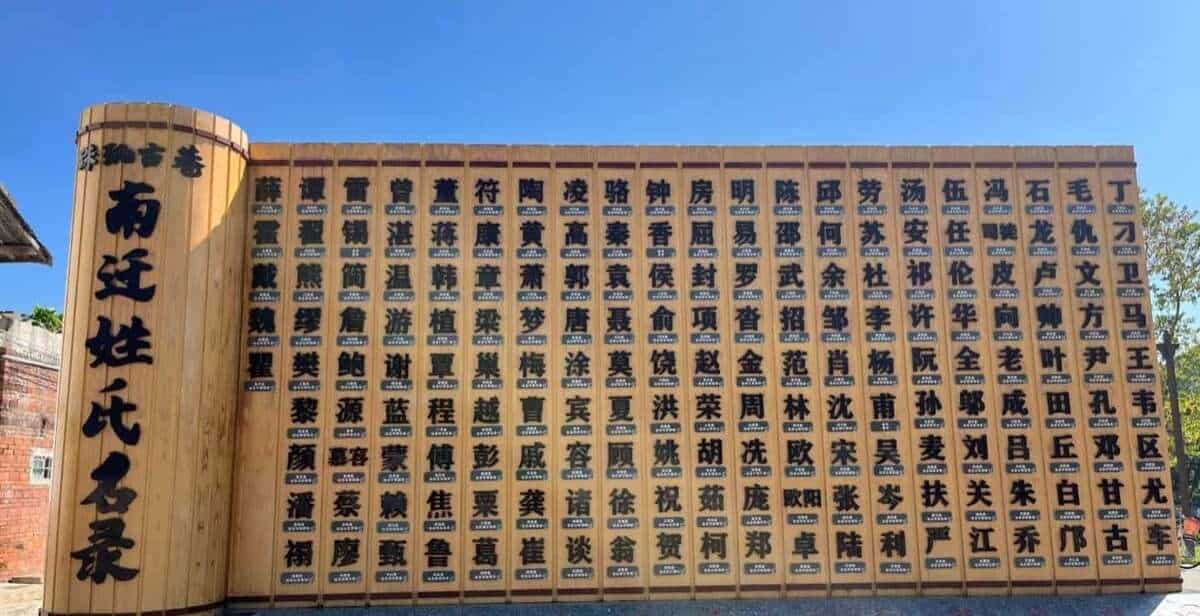
The Wuyi region—comprising Xinhui, Taishan, Kaiping, Heshan, and Enping counties in Guangdong—is renowned for its distinctive culture shaped by centuries of migration and ethnic integration. Situated at the junction between the Pearl River Delta and the rugged hills of western Guangdong, Wuyi’s unique identity is a product of diverse ethnicities and historical narratives merging into…