


Three Diaspora Routes: Wuyi, Fujian, and Chaozhou Compared
Ask most people how the overseas Chinese left China, and you will get a single answer: they crossed the Pacific to work the goldfields and build the railroads. That is true — but it is only one of the answers, and it is the newest one. Long before a Taishan farmer boarded a ship for San Francisco, a Quanzhou merchant had already sailed the same sea south, and a Chaozhou laborer had already crossed the shallows to Siam. Chinese emigration was never one story. It ran through three distinct routes, and the differences among them explain almost everything about where the diaspora lives today, what it does there, and what it built back home.
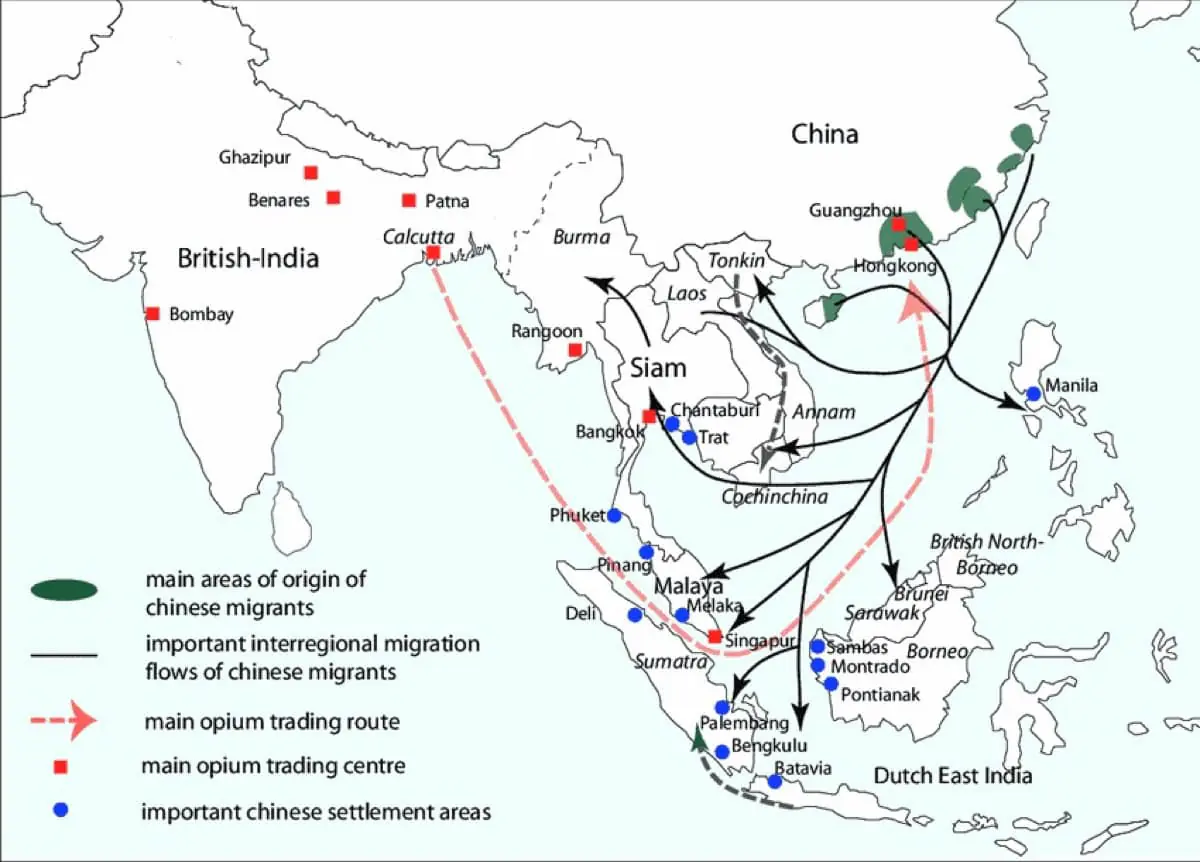
The folk memory of Guangdong and Fujian long ago drew the map for us. People spoke of two departures: 下南洋 (xia nanyang, “going down to the Southern Seas”) and 闯金山 (chuang jinshan, “rushing Gold Mountain”). The first meant Southeast Asia; the second meant the Americas and Australia. Two different words for two different lives — the 南洋伯 (nanyang bo, the “Nanyang uncle” who traded and settled) and the 金山丁 (jinshan ding, the “Gold Mountain lad” who labored and returned). There is an old saying that wherever there is seawater, there are overseas Chinese — hai shui dao chu you hua qiao. The saying is true, but it flattens the story. The seawater carried three very different peoples in three very different directions. This article is about the three coasts that fed those departures, and why they left so differently.
To be clear, these three were not the only routes. Hakka emigrants from Meizhou and the mountains of northeastern Guangdong poured out through Shantou by the hundreds of thousands; Zhejiang and Hainan sent their own streams. But the three coasts here — Wuyi, Minnan, and Chaozhou — account for the great majority of the overseas Chinese in the Americas, Southeast Asia, and Thailand respectively, and they are the routes whose differences best explain the diaspora’s shape. Set them side by side and the map of the overseas Chinese world comes into focus.
Three coasts, three worlds
The three source regions could hardly look less alike.
Wuyi (五邑, the “five counties” of Xinhui, Taishan, Kaiping, Enping, and Heshan) sits in the western Pearl River Delta of Guangdong. It is hilly, its soil thin, its farmland among the scarcest per person in the province. What it had was coast — and, after 1848, a reason to use it. Its emigrants funneled out through 海口埠 (Haikou Port) in Taishan, a river port that came to be called “the first port of the Cantonese going abroad.”
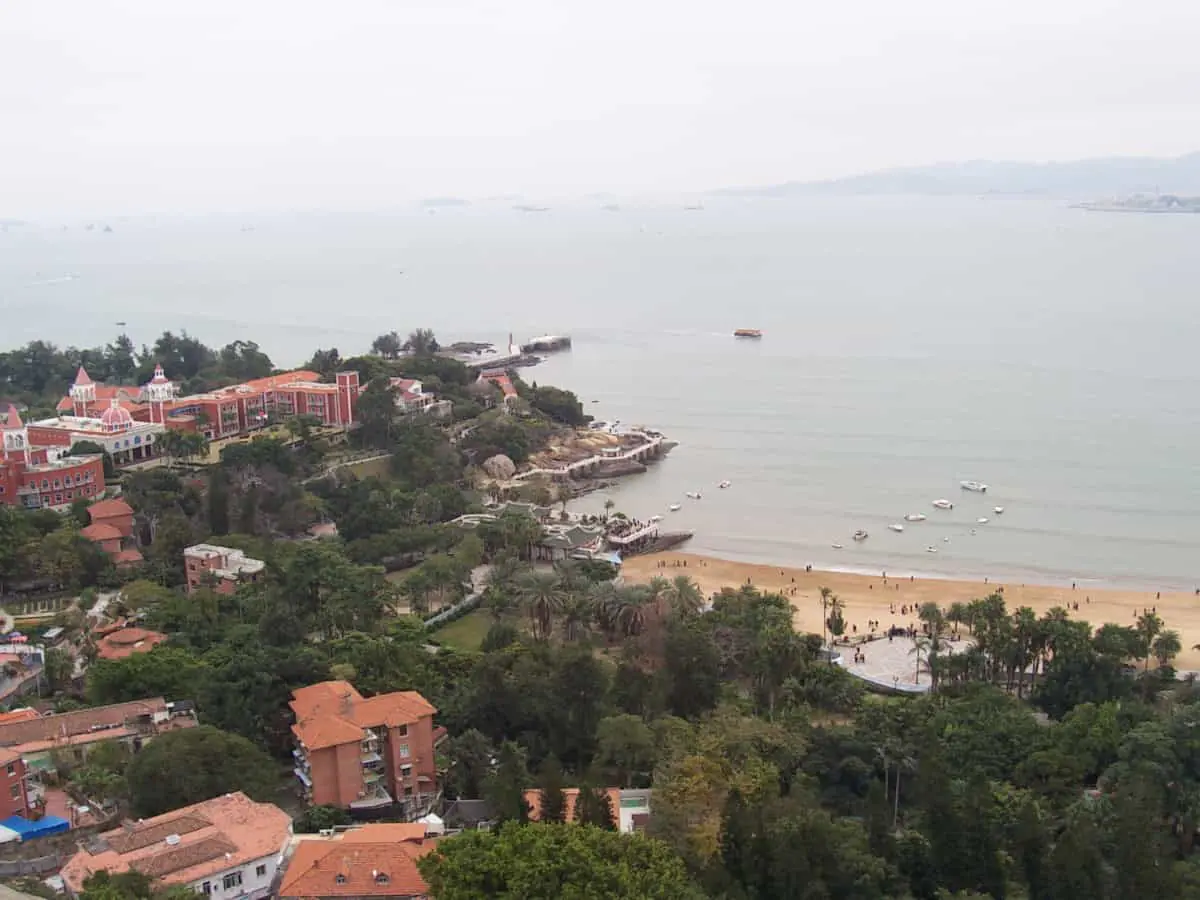
Minnan (闽南, southern Fujian) is the Hokkien-speaking coast around Xiamen, Quanzhou, and Zhangzhou. Where Wuyi faced arable poverty, Minnan faced a different inheritance: a maritime-trade culture that reached back to the Tang and Song dynasties, when Quanzhou was one of the greatest ports on earth. Fujianese did not have to be taught the sea; they already owned it. They sailed from 厦门 (Xiamen, “Amoy”) and the older anchorages of Quanzhou Bay.
Chaozhou (潮州, the Teochew-speaking corner of eastern Guangdong around Chaozhou, Shantou, and Jieyang) is a third world again — crowded, coastal, and — crucially — close. From Chaozhou’s 樟林港 (Zhanglin Port) and later the treaty port of Shantou (Swatow), Siam was nearer than Canton. Emigration there was less a leap into the unknown than an extension of a rice trade that already ran up and down the coast.
Why they left
The push behind each route was a different kind of emergency.
Wuyi’s was scarcity sharpened into violence. The mid-nineteenth century brought the Red Turban Rebellion and the Hakka–Punti clan wars, on top of land that could barely feed the people already on it. Emigration became the region’s safety valve — men left so the villages could eat. When news of California gold reached Taishan in 1848, it landed on ground that was already restive.
Minnan’s push was the ancient one: “crowded fields, barren hills” — ren chou di xia, shan ji ji pin. Quanzhou’s Jinjiang County carried the saying 十户人家九户侨 — “of ten households, nine have overseas kin.” Sea bans under the Ming and Qing made leaving a crime, and people left anyway, by stealth. When the Opium War forced the ports open in the 1840s, the trickle became a tide. By one count, millions of Minnan people were on the move within a generation.
Chaozhou’s push was density meeting proximity. “Narrow land, crowded people,” the records say. The turning point came in 1747, when the Qing court — short of grain on the Fujian-Guangdong coast — permitted merchants to sail to Siam to buy rice and timber. The red-headed junks (红头船, hongtou chuan) that had carried grain began carrying people as well, and a trade route quietly became a migration route. A Chaozhou man did not need to cross an ocean to reach a better field; Siam was a short voyage down the coast.
Where they went
This is where the routes divide most sharply — two oceans, three orbits.
Wuyi went east across the Pacific. When gold was found in California in 1848, Taishan men began leaving for it in numbers. From gold, Wuyi laborers moved to the transcontinental railroads of the United States and Canada, then to the plantations of Hawaii, Cuba, and Peru. Official Taishan county figures put its overseas population above 1.3 million by the 2000s, spread across more than ninety countries, with the great majority in the United States and Canada. This was the 闯金山 route — the Gold Mountain route.
The split was so clean that it shaped the two routes’ entire vocabularies. A Wuyi man who had prospered was a jinshan ke — a “Gold Mountain guest,” home on a visit. A Minnan or Teochew man who had settled in the south was a qiaobao or simply a tangren — a “Tang person,” a term that claimed no intention of return. The words themselves encoded two different relationships to home.
Minnan went south. An estimated 15.8 million people of Fujian origin now live overseas, clustered overwhelmingly in Southeast Asia — Manila, Singapore, Malacca, the Dutch East Indies. Quanzhou alone has an estimated six million overseas descendants, more than 4.3 million of them in just three countries: Malaysia, Singapore, and the Philippines. This was 下南洋 at its most merchant-led.
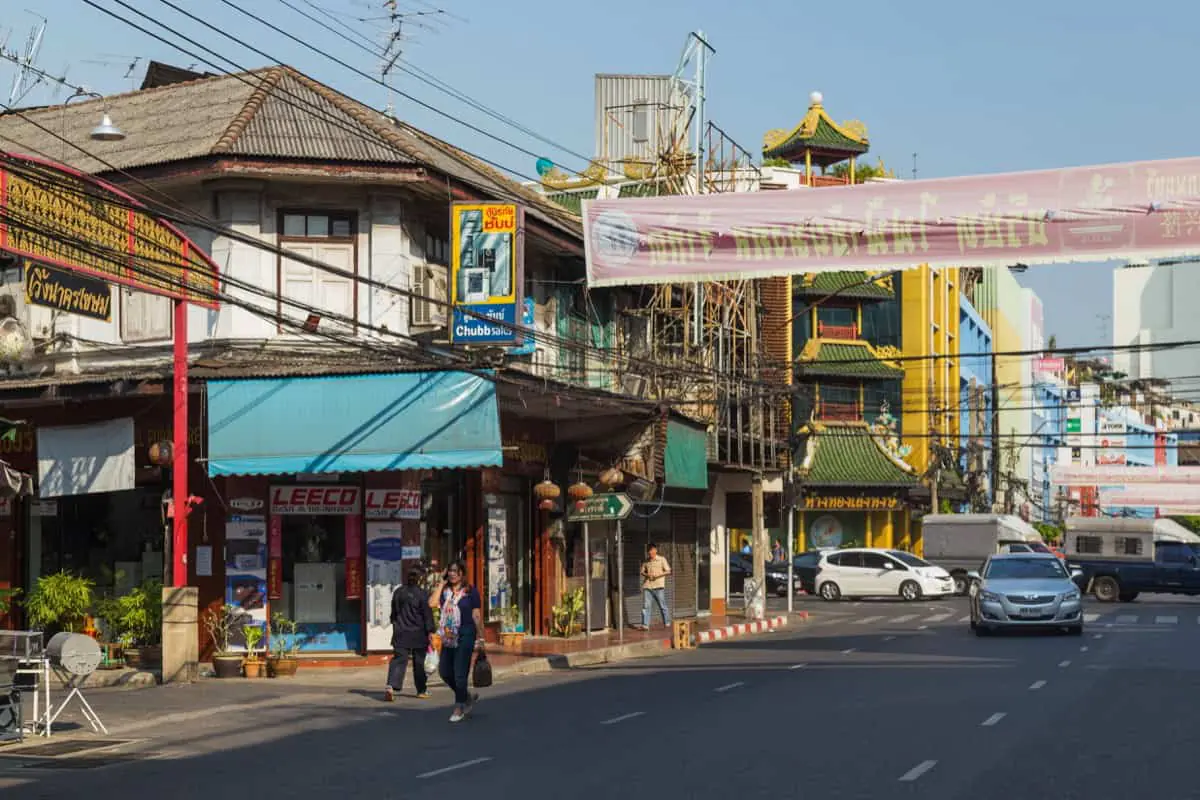
Chaozhou also went south, but to one place above all: Siam. Roughly ten million Thai-Chinese trace their roots to the Chaoshan region. Between 1782 and 1868, an estimated 1.5 million Chaozhou people crossed to Siam — carried, in the early years, on the red-headed junks that gave the route its color. The destination shaped the community’s whole character; it is no accident that Bangkok’s Chinatown, Yaowarat, is a Teochew quarter.

What they did
The work of each route was as different as its direction.
Wuyi’s was labor — hard, much of it contract-bound, and often lethal. The coolie trade (苦力贸易) and the credit-ticket system bound men to the railroad grades and mine shafts of the Pacific. The Chinese workforce on the transcontinental railroad was paid less than its neighbors and risked more; the Central Pacific’s Sierra tunnels were blasted through by men hanging in baskets over the cliffs. The Gold Mountain lad was, above all, a worker — and the folk term jinshan ding carried exactly that weight.
The cost was real and it was counted in lives. The Pacific passages were crowded and the railroad grades were lethal; contemporary observers and later historians agree the mortality among Chinese coolies on the Cuban and Peruvian plantations and the American rail lines was among the worst of any migration stream of the era. It was a labor route in the truest sense: the man went first, the remittance followed, and the return — if it came at all — came years later.
Minnan’s was trade. The Fujianese had been merchant-mariners for centuries before the diaspora existed; the Manila galleon trade and the junk routes of Southeast Asia were their inheritance. They built the kongsi (公司) — self-governing merchant associations — and the credit networks that moved goods and people together. Where a Wuyi man signed a labor contract, a Minnan man joined a partnership.
Chaozhou’s was the rice trade and everything attached to it. Where Wuyi men were recruited by contract, Chaozhou men mostly self-organized, following relatives and village contacts who had already established themselves in Bangkok. It was mercantile and agricultural — planting, milling, trading — not coolie labor. The route’s emblem was not a mine shaft but a rice mill; by the twentieth century, Teochew families ran a large share of Thailand’s rice milling and export.

When they left
The three routes also ran on different clocks.
Minnan’s is the oldest. Fujianese were trading in Southeast Asia by the Tang dynasty, and Quanzhou was a world maritime capital in the Song and Yuan. Chaozhou’s migration surged from the eighteenth century, riding the rice trade and the 1747 edict that opened it. Both were centuries old by the time Wuyi moved at all.
Wuyi’s wave is astonishing precisely because it came late and came fast. Taishan’s emigration begins in the late eighteenth century, but the real spike is 1848 — the California gold rush — and the route then crests between 1850 and 1930 before crashing under the Great Depression and the coming war. The single shared peak conceals three very different arcs: two old, steady streams, and one sudden flood. Between 1876 and 1898 alone, by one often-cited (though hard to verify) estimate, some 2.85 million people departed the ports of Xiamen and Shantou for Southeast Asia — a measure of how much deeper the Nanyang current ran.
Who stayed behind
The routes differed most humanly in what they did to families.
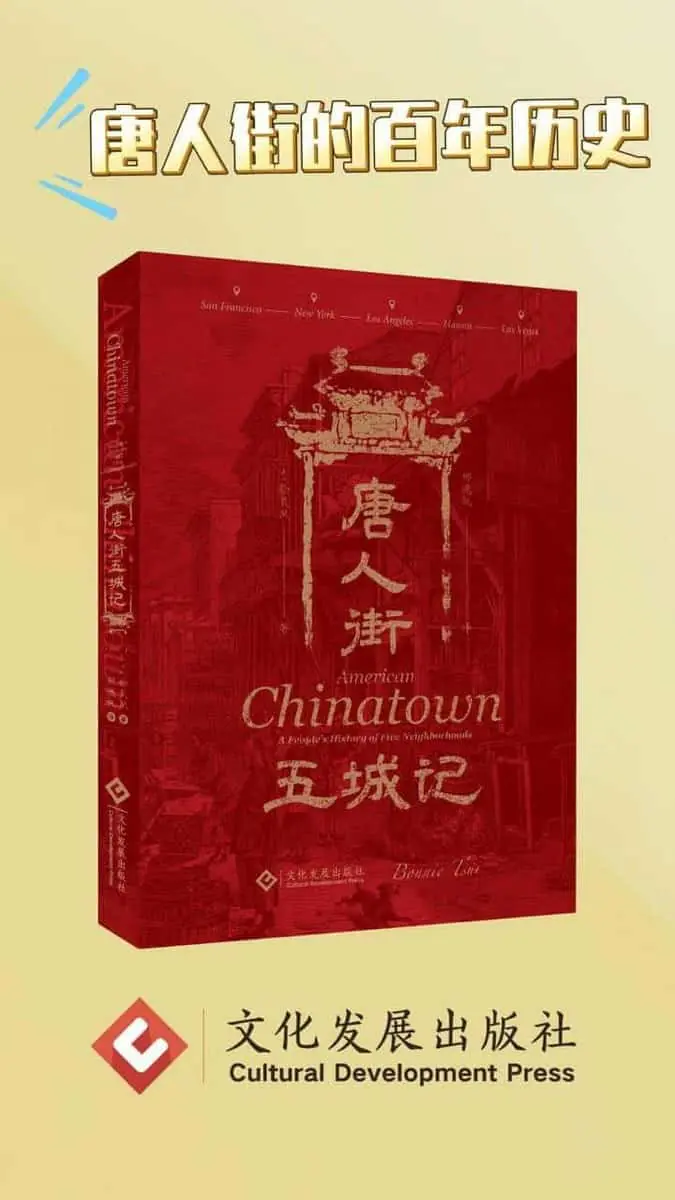
Wuyi’s was, overwhelmingly, a migration of men. Wives stayed; the village economy ran on remittances managed by women. The phrase 金山婆 (jinshan po, “Gold Mountain wife”) named a woman who might wait decades for a husband she had married days before he sailed. When the 1882 Chinese Exclusion Act slammed the door on Chinese laborer families, the separation hardened into something permanent — the “paper son” (纸生仔, zhishengzai) era, in which a man bought a borrowed identity and a fabricated place on someone else’s family tree to re-enter America. Bachelor societies filled the Chinatowns, and the transnational household — half in San Francisco, half in Taishan — became the route’s signature shape.
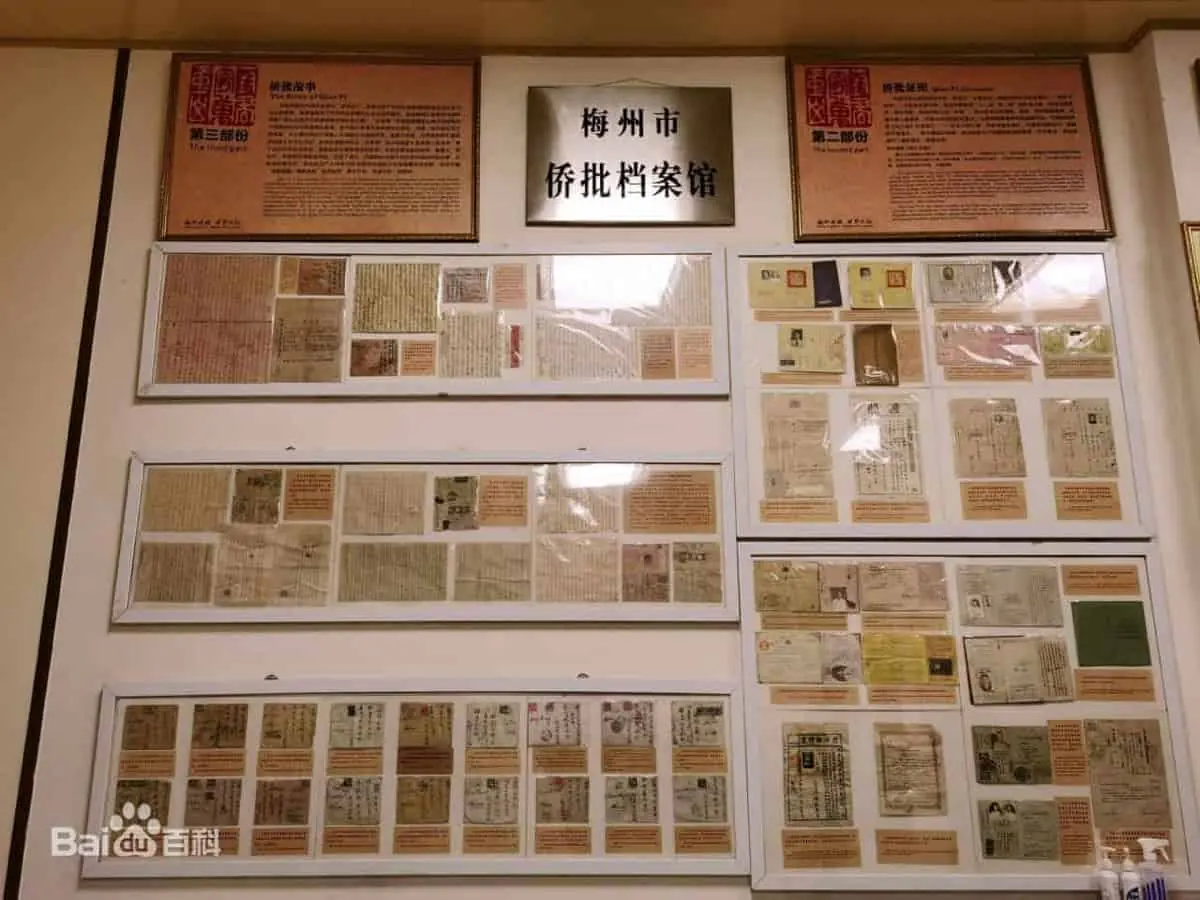
The letters tell it best. In the qiaopi archives of Taishan and Chaoshan, some remittances carry no news at all — just two characters, 平安 (ping’an, “safe and sound”), folded around a small sum. The two characters were the whole message: I am alive, I am sending money, I have not forgotten you. It is a whole marriage, a whole childhood, compressed into a single word and a banknote. No other route produced correspondence quite so spare, because no other route stretched its families quite so far for quite so long.
Minnan and Chaozhou settled differently. Because Nanyang migration allowed families to form, Fujianese and Teochew men married locally and earlier — producing the creolized communities the region is known for: the Peranakan and Baba of the Straits, the Chinese mestizo class of the Philippines. And Chaozhou, being a short voyage from home, allowed a more ordinary kind of sojourning — men went, earned, returned, and went again, without severing the home tie.
What changed
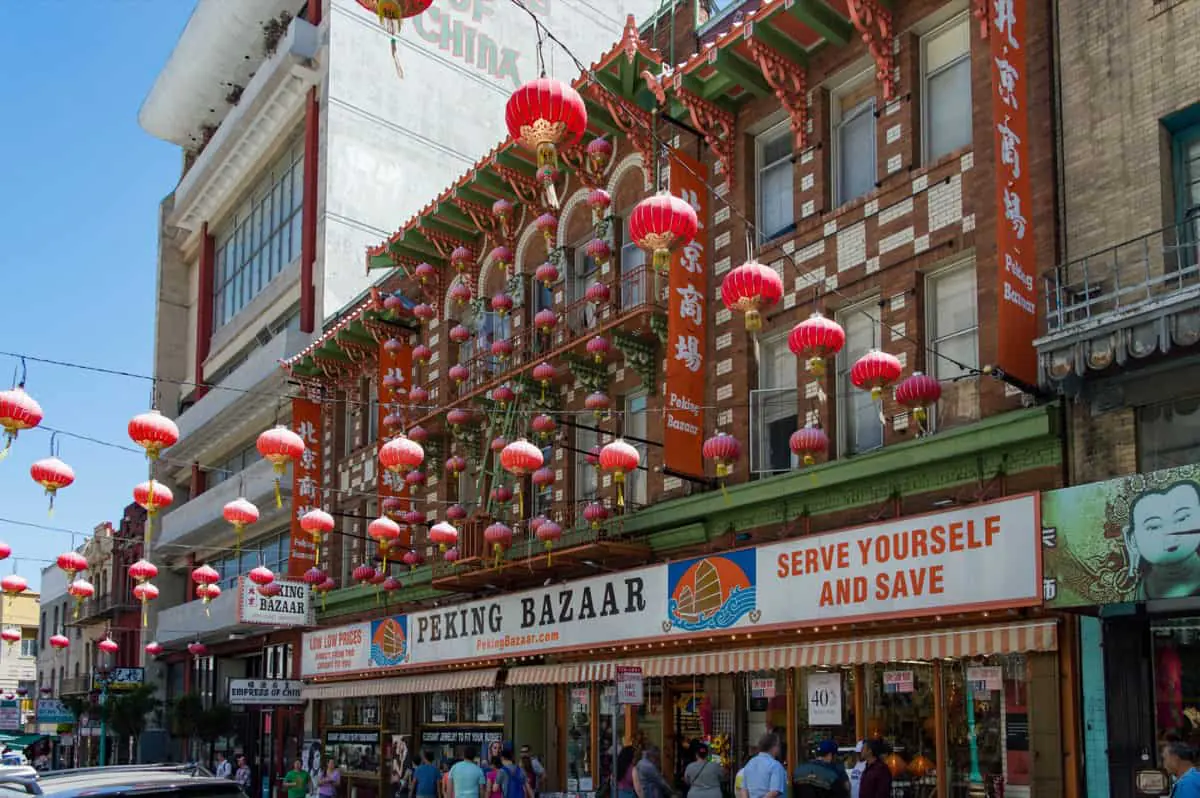
In America, the Wuyi diaspora was walled into Chinatowns by law and custom. Taishanese was the default language of Chinese America for a century; the community retained its dialect, its temples, and its separation. Assimilation was slow because the door was closed.
In Southeast Asia, the opposite happened. The Fujianese and Teochew diasporas creolized: intermarriage, local languages, new cuisines. The Sino-Thai of Bangkok assimilated most fully of the three — taking Thai surnames, joining the Buddhist clergy, and rising, in the case of the great Teochew merchant families, into the heart of Thai political and economic power. The same emigrant, a century later, was a separated “Gold Mountain guest” in one hemisphere and an integrated “Tang person” (唐人, tangren) in the other. The host society, not the emigrant’s own culture, set the terms — and the terms could not have been more different.
Look at the names. In the Philippines, the descendants of Minnan settlers became the mestizos de sangley — a legally recognized mixed class that produced national heroes and business dynasties alike. In the Straits Settlements, the Peranakan Chinese spoke a creole and kept a hybrid table. In Thailand, the Teochew-descended elite took Thai titles and Thai surnames and rose to the very top of government and commerce. None of these outcomes was available to the Wuyi emigrant in exclusion-era America, whose horizon was bounded by the walls of a Chinatown.
What they built back home
For all their differences, the three routes shared one habit: they sent money home.
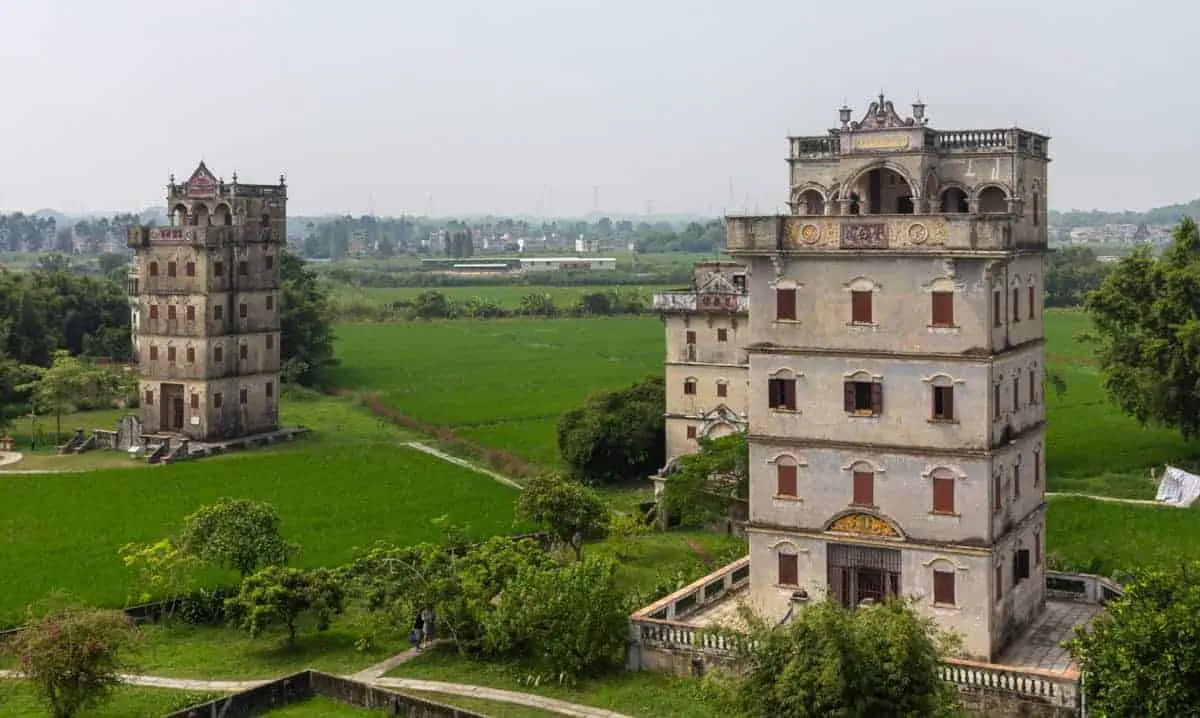
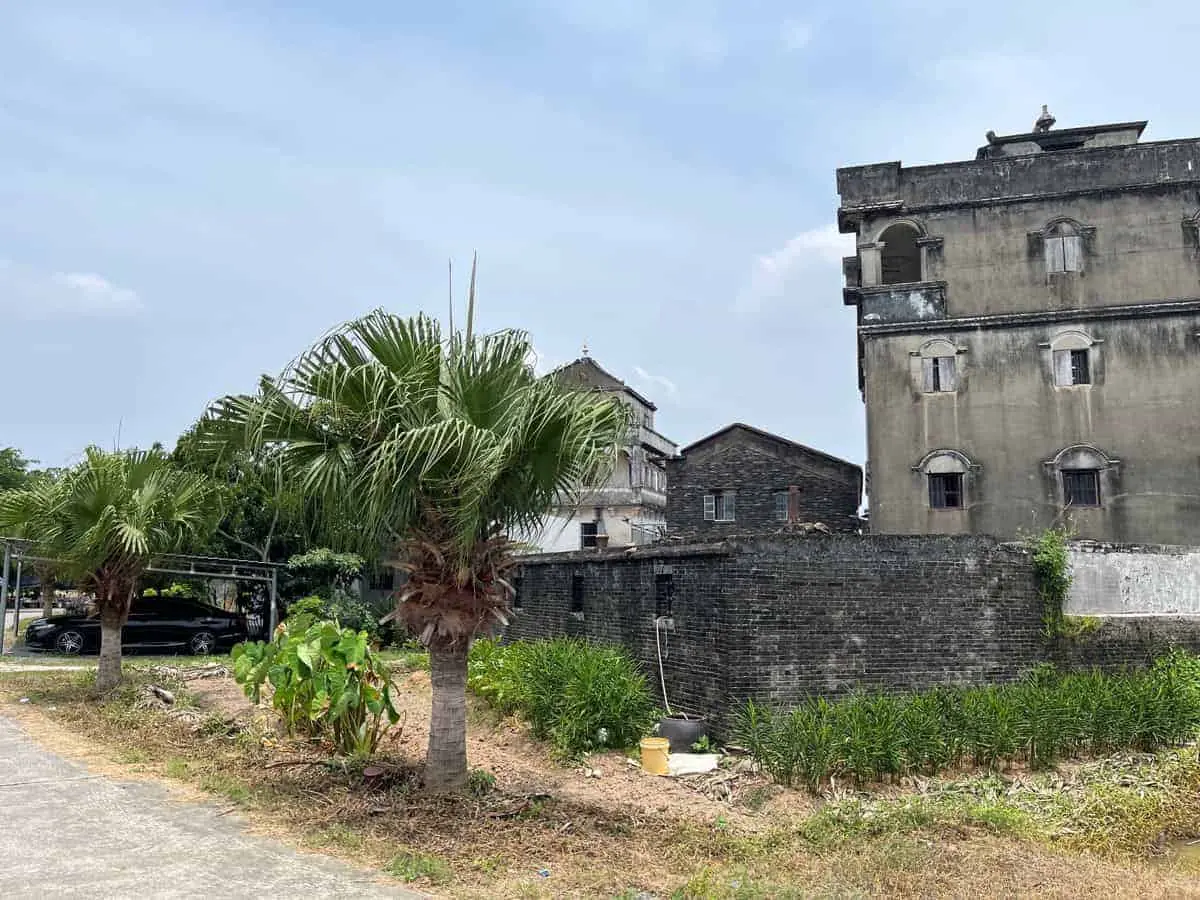
The 侨批 (qiaopi, “silver letters”) — remittances folded together with letters, delivered by private networks that reached villages no bank would touch — bound all three source regions to their emigrants. But the results on the ground were unevenly monumental. Wuyi’s remittance economy is written in stone: the 碉楼 (diaolou, fortified watchtowers) of Kaiping, now a UNESCO World Heritage site, plus the ancestral halls, schools, and emigrant market towns (侨墟, qiaoxu) that remittances financed. Taishan’s economy itself ran on remittances; by the 1920s the money sent home rivaled what the county could produce.
The diaolou are the clearest proof. Some three thousand of these fortified towers still stand in Kaiping, built in the 1910s and 1920s with remittance money and a curious, confident fusion of styles — Cantonese brickwork under Roman arches, a Chinese courtyard beneath a Western tower, gun slits alongside stained glass. They were watchtowers against bandits and flood, but they were also, unmistakably, monuments to the men overseas: the taller and finer the tower, the more prosperous the emigrant who paid for it. Wuyi’s remittance economy did not just sustain the villages; it rebuilt them in the image of the gold mountains that paid for them. The emigrants even built their own railway — the Sunning Railway, funded and engineered by returned emigrants to carry people and goods inland to the ports — and their own newspaper, the Xinning Magazine of 1909, among the first hometown journals (侨刊) anywhere.
Minnan and Chaozhou built gateways instead of towers. Xiamen (Amoy) and Shantou (Swatow) grew into the emigrant ports through which the Nanyang routes funneled people, goods, and remittances — and each port reshaped the hinterland behind it. The remittance wealth of all three regions underwrote a shared modernizing project: schools, hospitals, and roads that tied the villages to the wider world.
Beneath the three routes ran a single shared machinery. Wherever the emigrants landed, they organized by native place and surname — the huiguan (会馆) and tongxianghui (同乡会) that ran the remittance networks, settled disputes, and buried the dead. A Taishan man in San Francisco, a Quanzhou man in Manila, and a Teochew man in Bangkok each joined a different association with a different dialect, but all three joined for the same reason: because the village had followed them across the sea, and they meant to keep it alive at the other end. That machinery — not any single destination or trade — is what made the overseas Chinese world a world, rather than a scatter of individuals.
There was one more shared moment. For most of its history, the Qing state treated emigration as a crime — an emigrant was, in effect, an outlaw who had “abandoned the king’s teaching.” In 1893 the court reversed itself and repealed the ban, and within a generation the overseas Chinese had been transformed from fugitives into patriots. The 1905 boycott of American goods — a protest against the exclusion laws — and the 1911 revolution were both financed and led from abroad, and the remittance networks that carried qiaopi letters became the arteries of a new Chinese nationalism. All three routes, however different their departures, converged on this single point: the people who left became, in time, the people the homeland claimed as its own.
Finding your route today
This is where the comparison stops being history and becomes a map.
If your family’s surname points to Taishan or Kaiping, the first places to look are usually San Francisco, Vancouver, or Sydney — in railroad payrolls, exclusion-era case files, and the paper-son confessions tucked into immigration records. If it points to Quanzhou or Jinjiang, look instead to Manila, Singapore, and Kuala Lumpur — to the kongsi ledgers and the ports your ancestors sailed from. If it points to Chaozhou, look to Bangkok, and to the qiaopi letters that crossed from Swatow for a century.
The archival trail differs with the route. Wuyi emigrants left paper everywhere the exclusion era reached — ship manifests, detention-center interrogations, the “coaching books” that paper sons memorized to pass their entry exams. Minnan and Chaozhou emigrants left their trace instead in the kongsi and huiguan ledgers of Southeast Asia, and in the qiaopi remittance archives that have since been inscribed, along with the Wuyi letters, on UNESCO’s Memory of the World register. Knowing the route tells you which archive to open first.
The post-1978 reforms opened a fourth, newer migration — from all three regions at once, to everywhere at once, with Fujian’s Fuqing and Changle counties echoing Wuyi’s old Pacific labor patterns in a new key. But the old routes have not disappeared. They are the grooves the diaspora still runs in.
Three coasts, three emergencies, three oceans, three ways of leaving — and one habit that never changed: the money kept going home, and the people never quite stopped belonging to the village. Somewhere on one of those three routes is your family’s name. The question the routes answer is which one — and once you know, the archives open.
Continue Reading
- Fujian and Chaozhou: The Other Chinese Diaspora — the companion piece on the two Nanyang routes.
- From Haikou Port to the World: 200 Years of Wuyi Diaspora — the Gold Mountain route in depth.
- The Wuyi Workers’ Labor Migration Atlas — the coolie labor that built the Pacific.
- Guanghai: A Historic Port of the Taishan Diaspora — one of the ports the emigrants left from.
Sources
- Taishan, Guangdong (reference) — Taishan’s overseas population and distribution.
- UNESCO World Heritage — Kaiping Diaolou and Villages — the Wuyi qiaoxiang’s UNESCO-listed architecture.
- Xinhua — “Xia Nanyang” vs. “Chuang Jinshan”: the two branches of maritime emigration — the comparative framing of the two departure routes.
- Xinhua — Quanzhou, a qiaoxiang’s past and present — the Minnan emigration wave.
- Guangdong Provincial Government — Guangdong as a qiaoxiang — the province’s overseas Chinese population.
- Yangcheng Evening News — the history of Chaozhou migration to Thailand — the red-headed junk route and King Taksin.
Suggested Reading
Is this your family’s story?
Roots Of China is built from readers’ family histories. If a story here sounds like your own — a surname, a village, a journey — leave a comment below, or share your family’s story with us and we may be able to help you find your ancestral village.
