


Cao Surname Wuyi Diaspora: Three Thousand Years from Zhou Dynasty State to Gold Mountain
n
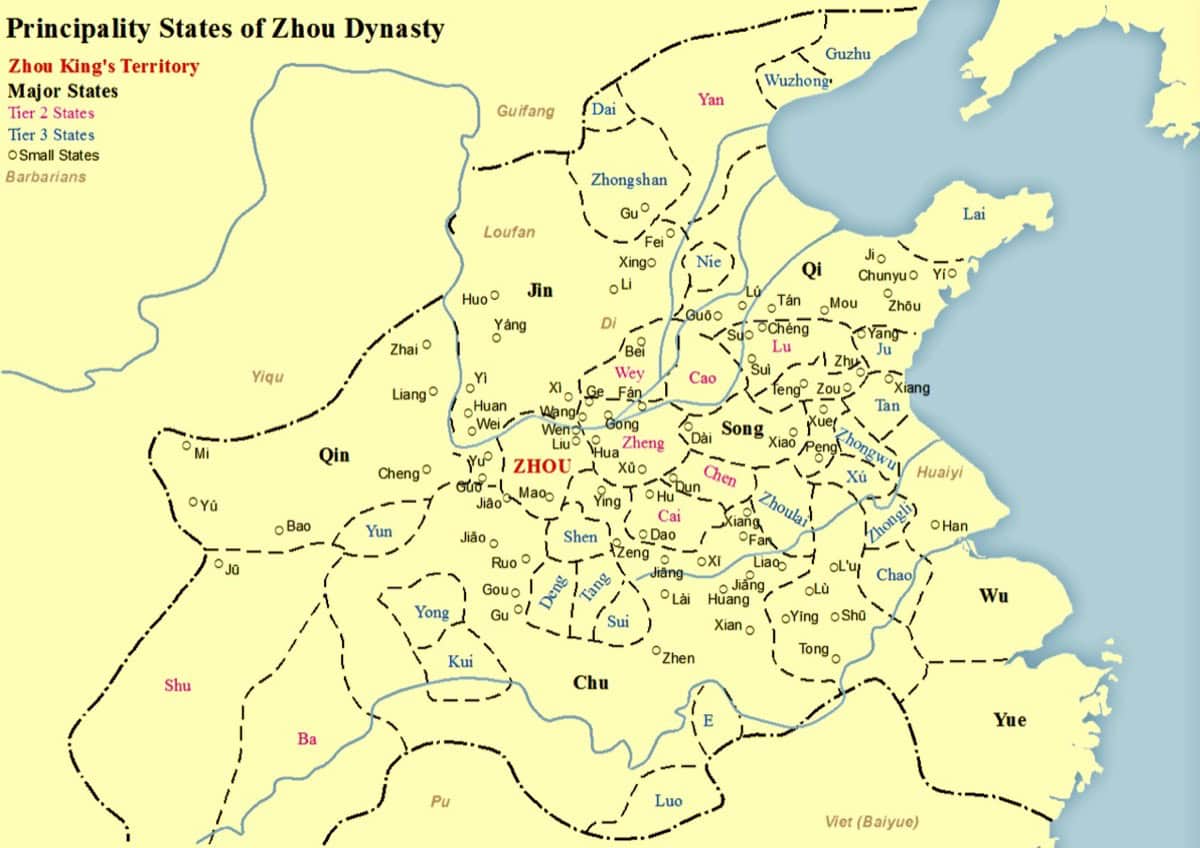
In the eleventh century before the Common Era, King Wu of Zhou (周王) conquered the Shang dynasty and divided his new realm among his brothers and loyal generals. One of those brothers was named Zhenduo (振). The king gave him a territory called Cao (曹), a modest state in what is now southwestern Shandong Province. Zhenduo became known as Cao Shu Zhenduo (曹振) — “Cao Shu” meaning simply “Uncle Cao of Zhou.” He ruled his small kingdom for decades, and when he died, his descendants continued to rule Cao for nearly six hundred years. Then, in 487 BCE, the State of Song invaded and annexed Cao. The kingdom was gone. But the name remained. The descendants of that defeated royal house took Cao as their surname.
n
That was three thousand years ago. Today, approximately 7.3 million people bear the Cao surname (曹, Cáo xìng), making it the 30th most common surname in China. The Cao name has produced a warlord-poet who reshaped an empire, the author of China’s greatest novel, and generations of villagers in a place called Caohou — “Cao Thick Village” — in the emigrant heartland of Taishan, Guangdong. This article traces the thread.
n
n
The Weight of the Name
n
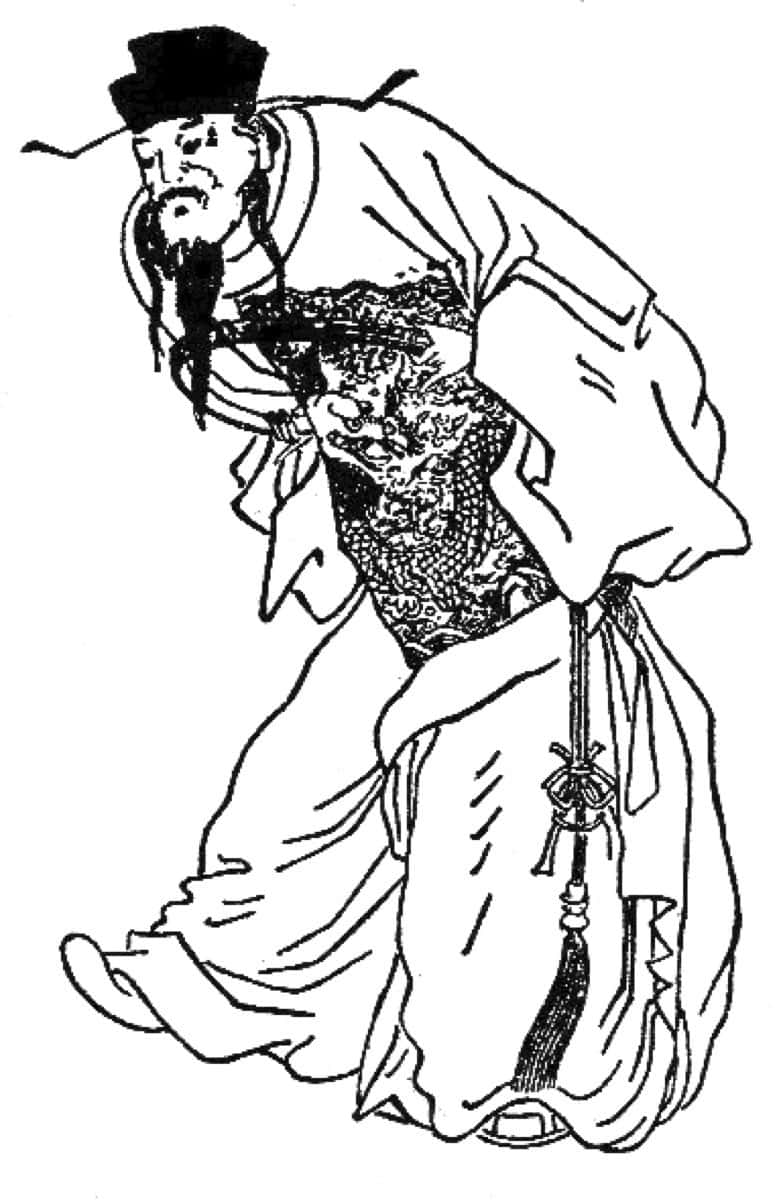
To carry the surname Cao in China is to carry a name that everyone knows. Say “Cao, as in Cao Cao” and no further explanation is needed. Cao Cao (曹, 155-220 CE), the penultimate chancellor of the Eastern Han, was a figure of such complexity that he has been reimagined in every generation for nearly two millennia: brilliant strategist, ruthless politician, and — most surprisingly — a poet of genuine sensitivity. His verses about the brevity of life, written in the midst of military campaigns, are still memorized by Chinese schoolchildren.
n
n
Cao Cao’s state of Cao Wei (曹) became one of the Three Kingdoms, the most mythologized period in Chinese history. His son Cao Pi (曹) formally ended the Han dynasty. Another son, Cao Zhi (曹), wrote the “Seven Steps Poem” (七诗) under threat of execution by his brother — composing it in the time it took to walk seven paces. “Cooking beans on a beanstalk fire,” the poem begins, “the beans weep in the pot: we grew from the same root, why rush to burn me?” It is one of the most famous poems in the Chinese language.
n
The literary tradition continued. Seventeen centuries after the Three Kingdoms, another Cao — Cao Xueqin (曹芹, c. 1715-1763) — wrote Dream of the Red Chamber (《楼》), considered by many scholars the greatest novel ever written in Chinese. The Guan clan shares a similar arc — from feudal state to diaspora — but no other Wuyi surname carries the specific literary and historical gravity of the Cao name.
n
This is the name’s cultural weight. But a surname is not only carried by emperors and novelists. It is also carried by farmers, laborers, and emigrants. By the nineteenth century, many bearers of the Cao name lived not in imperial courts or literary salons but in single-surname villages (单村, dānxìng cūn) in a county called Taishan, in the region known as Wuyi (五) — the Five Counties of the Pearl River Delta. And they were starving.
n
Southward
n
The Caos did not originate in Guangdong. Like the vast majority of Lingnan (岭, Lǐngnán) surnames, they arrived through a slow southward drift that took centuries. The movement began during the Tang dynasty (618-907) and accelerated during the Song (960-1279), as war, population pressure, and economic opportunity pushed Han Chinese families from the Central Plains toward the southern frontier. This was the same southward migration that brought the Huang surname and the Liang surname into Guangdong — each clan following its own path, but all converging on the Pearl River Delta.
n
Genealogical records suggest that Cao lineages passed through the famous migration chokepoint of Zhu Ji Xiang (珠巷, Zhūjī Xiàng) — Zhuji Lane in northern Guangdong — where countless northern families paused before dispersing into the Pearl River Delta. The Caos who eventually settled in Wuyi arrived in a landscape defined by water: the Tan River (潭, Tán Jiāng) winding through Kaiping and Taishan toward the South China Sea, its banks dotted with villages, its waters the highway that connected inland communities to coastal ports and, eventually, to the world beyond.
n
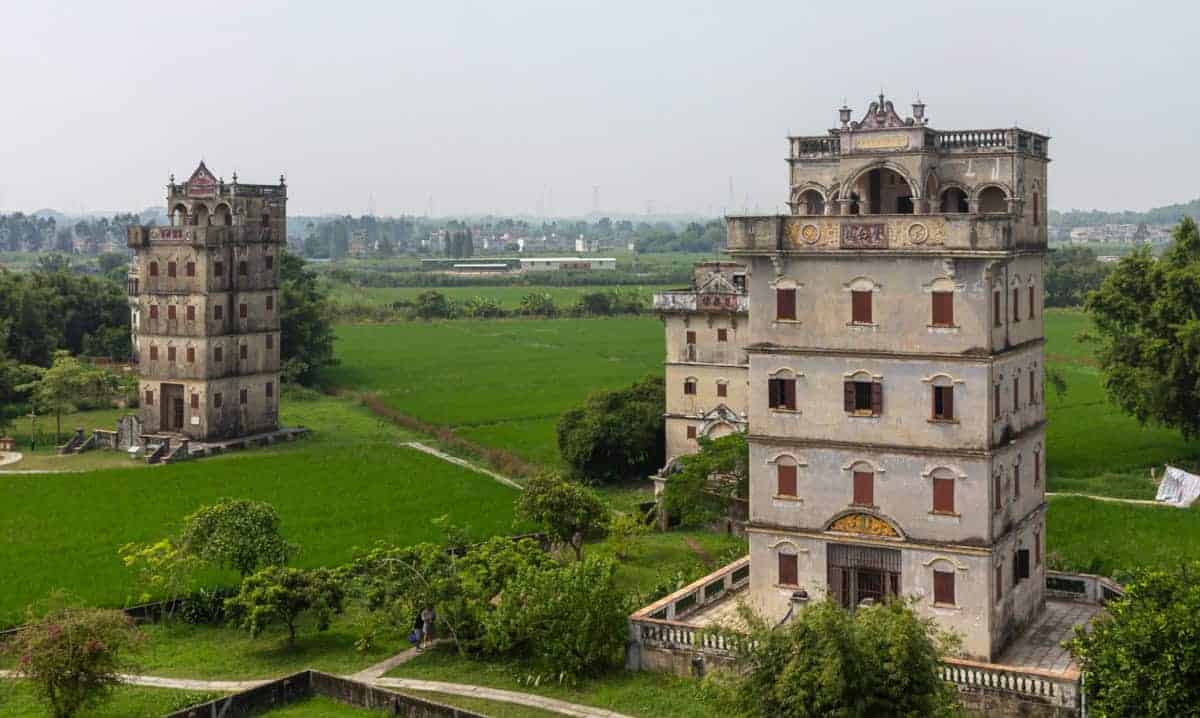
By the Ming dynasty (1368-1644), the Cao clan was firmly established in Taishan. The pattern was typical of rural Guangdong: a single surname dominated each village. Everyone in Caohou Village (曹村) was named Cao. They shared a common ancestor, worshipped at a common ancestral hall, and organized their lives around a common genealogy. This was not unusual — it was the default.
n
n
The Village
n
Caohou Village sits in Doushan Town (斗镇), Taishan. The name means “Cao Thick Village” — or, more naturally, “Cao-Abundant Village” — a place where the surname runs deep enough to name the ground itself.
n
In 1997, a government survey counted approximately 1,100 Cao households across Taishan, totaling more than 5,000 people. Two main branches of the clan were documented: the Wenfu Gong line (文公), which accounted for the majority, and the Wenbing Gong line (文公), a smaller offshoot. Their villages included Long’an Village (龙村) in Wenchuan Town, with 118 households and 582 residents, and Nazhang (那) in Guanghai Town, where Cao families had lived for generations. Caohou remained the symbolic center.
n
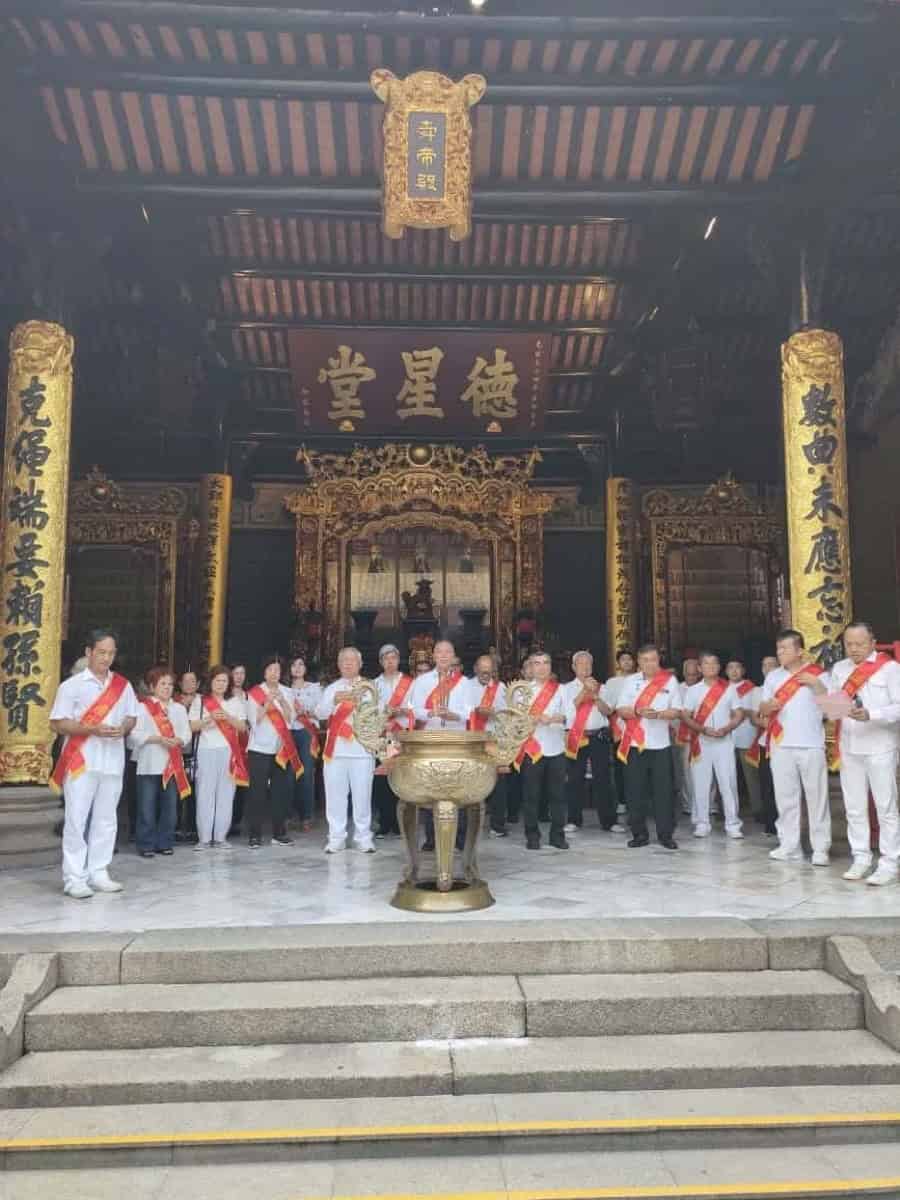
At the heart of such a village stood the ancestral hall (祠, cítáng). Inside: ancestor tablets arranged on a tiered altar, the generation poem (字诗, zìbèi shī) displayed on wooden pillars, and the clan genealogy (族, zúpǔ) — bound volumes recording centuries of births, marriages, deaths, and migrations. The hall was where Qingming offerings were prepared, where disputes were mediated, and where departing emigrants bowed one last time before leaving for the port.
n
The Caos maintained their hall well. In 1774, during the Qianlong reign of the Qing dynasty, the clan collectively funded the rebuilding of the Cao Ancestral Hall (曹贤) on Bingzheng Street in Guangzhou — a five-bay structure that demonstrated both the clan’s wealth and its organizational capacity. As the Taishan government’s own surname history notes, this tradition of collective philanthropy was the direct ancestor of later overseas Chinese contributions to their hometowns: “Today, overseas Chinese delight in contributing to hometown construction — building schools, hospitals, roads, and factories — this is the extension and continuation of that ancestral virtue.”
n
n
The Passage
n
By the 1850s, the ancestral virtue was no longer enough to feed people. Taishan’s rocky soil and limited farmland could not sustain its growing population. When news arrived of gold in California — Gum Saan, Gold Mountain (金, Jīnshān) — the calculus of survival shifted.
n
For a poor Cao villager, the credit-ticket system (赊制, shēdān zhì) turned an impossible dream into a calculated risk. A labor broker or clan association advanced the cost of passage — typically fifty to seventy-five dollars. The emigrant signed a contract pledging future wages as repayment, plus interest. His family in the village served as collateral. The system worked because clan networks reduced risk: a Cao emigrant was unlikely to default on a debt that his entire extended family had guaranteed. This was the same financial mechanism that enabled the mass migration from Wuyi’s hidden ports throughout the nineteenth century.
n
The journey began at the river port of Gongyi (公镇) on the Tan River. From there, a boat took the emigrant downstream to Hong Kong — specifically to the Sheung Wan (上) district, where gum saan companies (金庄, jīnshān zhuāng) lined the streets. These firms handled everything: passage booking, document processing, health inspections, and remittance forwarding. An emigrant might spend several days in Sheung Wan, sleeping in company dormitories above the shopfronts, before boarding the steamship that would carry him across the Pacific.
n
The voyage lasted thirty to sixty days. The emigrant traveled in steerage — a dark, crowded hold below decks, with minimal ventilation, poor food, and a pervasive smell of sickness. Many died at sea. Those who survived saw the California coast emerge from the fog, and then the customs station at Angel Island (天岛, Tiānshǐ Dǎo), where they faced interrogations designed to catch paper sons — emigrants using purchased identities to circumvent exclusion laws. If they passed, they stepped onto the piers of San Francisco, a city whose Chinese name — 旧山 (Jiùjīnshān), “Old Gold Mountain” — carried the accumulated longing of an entire generation.
n
Gold Mountain
n
What did a Cao emigrant do once he reached Gold Mountain? The answer depended on the decade.
n
In the 1850s, he went to the gold fields — the Sierra Nevada foothills, the American River, the camps with names like Hangtown and Poverty Hill. Chinese miners worked claims that white miners had abandoned as depleted, extracting gold through patient, labor-intensive methods that others disdained. They were tolerated as long as the gold held out. When it didn’t, tolerance evaporated.
n
In the 1860s, he built the railroad. The Central Pacific Railroad employed thousands of Chinese laborers — the vast majority from Wuyi — to blast tunnels through the Sierra Nevada. The work was lethal: nitroglycerin explosions, rockslides, avalanches, and winter temperatures that froze men to death in their tents. The Chinese workers were paid less than white workers, housed in segregated camps, and airbrushed out of the famous photograph taken at Promontory Summit when the transcontinental railroad was completed in 1869. Their labor made the railroad possible. Their erasure made it convenient.
n
In the following decades, Cao emigrants — like Wuyi emigrants generally — moved into urban occupations: laundries, restaurants, domestic service, grocery stores, truck farming. Each niche was enabled by clan networks. A Cao pioneer opened a laundry in Oakland. He wrote back to Caohou Village. His cousin borrowed money on the credit-ticket system and joined him, working in the laundry while learning English and saving capital. The cousin eventually opened his own laundry in Sacramento. He sponsored his nephew. The nephew sponsored his brother-in-law. The chain extended, link by link, across the American West.
n
Then came the 1882 Chinese Exclusion Act (排法, Pái Huá Fǎ’àn). It was the first federal law in American history to ban immigration on the basis of race. Chinese laborers could no longer enter the United States. Chinese residents could not become citizens. Chinese men could not bring their wives. The law transformed the Cao diaspora from a temporary sojourning community into a permanently fractured one.
n
The paper son system (纸子, zhǐ érzi) emerged as a response. An American citizen of Chinese descent — often a merchant, since merchants were exempt from exclusion — would claim a nonexistent son in China. He would sell that “paper son” slot to an emigrant, who would memorize an elaborate fabricated family history to survive interrogation at Angel Island. Clan organizations facilitated the system, providing documentation, coaching, and legal representation.
n
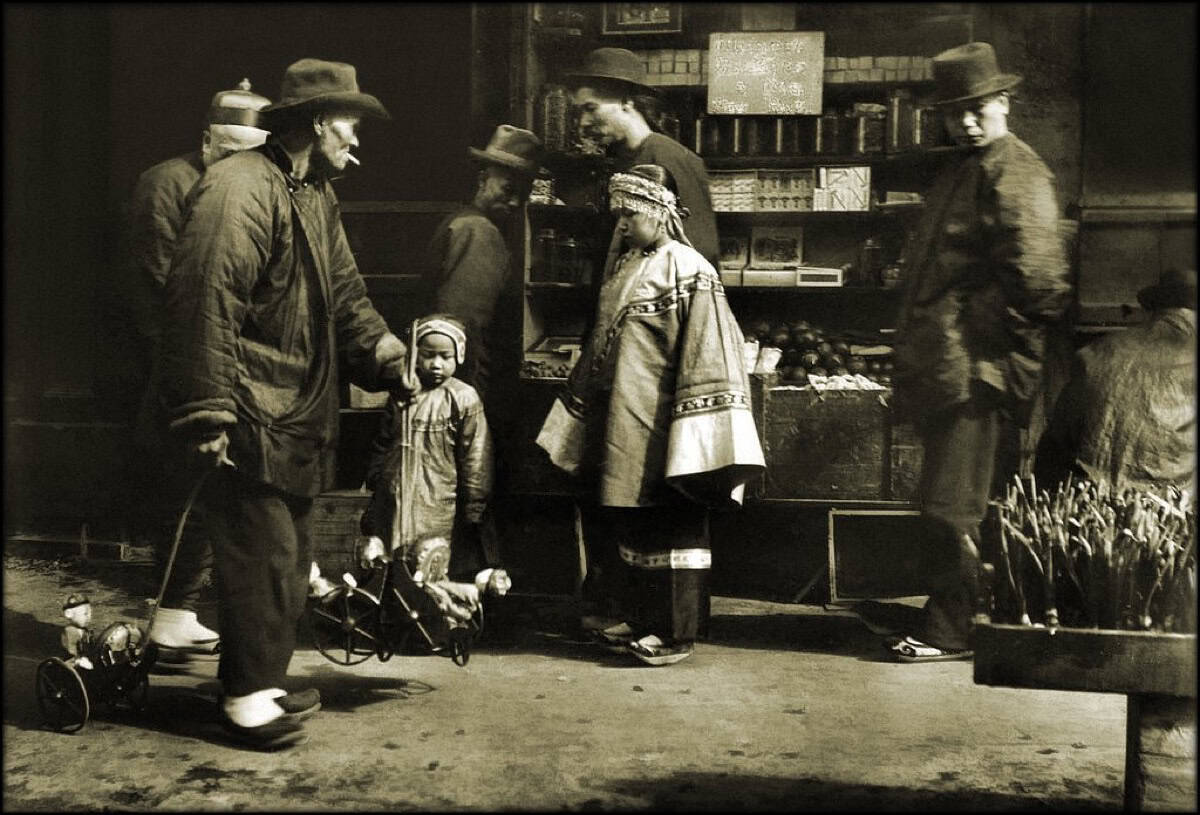
The result was a bachelor society (单汉会, dānshēnhàn shèhuì). In 1890, there were twenty-seven Chinese men for every Chinese woman in the United States. Cao men grew old in Chinatown boarding houses — the “maan hahp” (满, literally “wooden box” rooms, barely large enough for a cot) — sending money home to wives they had not seen in decades, to children who did not recognize their faces. The split household (两家, liǎngtóujiā) — one family, two worlds, connected only by letters.
n
n
The Letter
n
That connection was the qiaopi (侨, qiáopī) — the remittance-letter.
n
Qiaopi was a uniquely Chinese institution. It combined two functions that in other migration systems were separate: the financial remittance and the personal letter. A typical qiaopi envelope contained the remittance amount at the top — $50, $100, whatever the emigrant had managed to save after paying off his credit-ticket debt — followed by a letter written in the emigrant’s own hand or dictated to a professional letter-writer at the huiguan.
n
Imagine a Cao emigrant named, let us say, Cao Ah Fook, sitting in a San Francisco boarding house in 1910. He has not seen his wife in seventeen years. His children — a daughter now twenty, a son now sixteen — he has never seen at all. He dips a brush in ink and writes:
n
n
To my wife in Caohou Village: I am well. Business is slow this season. Enclosed please find fifty dollars. First, pay Master Chen for the roof — the rainy season will come soon. Second, buy new clothes for the children for New Year. Third, set aside five dollars for my mother’s medicine. Tell her I think of her every day. Ask my son if he is studying hard. A man without learning is a man without eyes. I will send more in the spring. Do not worry about me. — Your husband, Ah Fook.
n
n
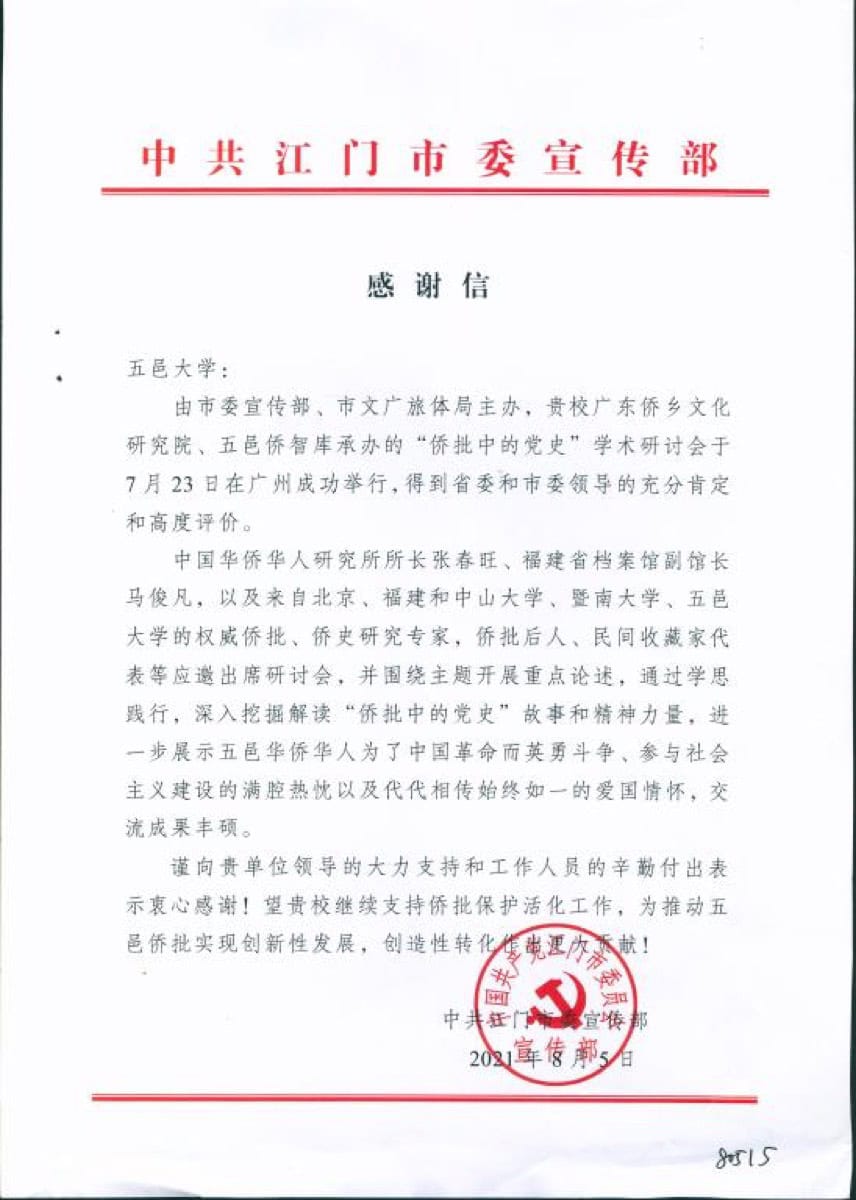
The letter traveled through a precisely calibrated network: from the huiguan in San Francisco to a steamship across the Pacific, to a qiaopi processing center in Hong Kong, to a river boat up the Tan River, to a letter-carrier who walked the dusty roads from the port to Caohou Village. The carrier knew every household. He knew which wives could read and which needed someone to read the letter aloud. For a deeper look at how these letters functioned, see our guide to reading qiaopi and understanding remittance letters.
n
n
When the letter arrived, Ah Fook’s wife took the cash to Master Chen, bought cloth for New Year clothes, and set aside her mother-in-law’s medicine money. Then she had the letter read to her — perhaps by the village schoolteacher, perhaps by her son — and heard her husband’s voice, preserved in ink, speaking across the Pacific.
n
What qiaopi reveals is the texture of diaspora life: the emigrant’s health, his earnings, his worries, his hopes, his instructions, his apologies. What qiaopi conceals is the brutality of the life that produced it: the twelve-hour days in a laundry’s steam-filled back room, the casual racism of customers, the loneliness of a man who has spent half his life in a country that doesn’t want him, sending money to a family he may never see again.
n
When the letters stopped — and they often did — the silence was absolute. A Cao emigrant died in a railroad accident, or in a mining cave-in, or of tuberculosis in a Chinatown boarding house. The family in Caohou Village never learned what happened. They only knew that the letters had stopped. They waited. Sometimes they waited for years. Sometimes they waited until they died.
n
Women Who Waited
n
Ah Fook’s wife belonged to a category of women known across Wuyi: the jinshanpo (金婆, jīnshānpó), literally “Gold Mountain wives.” The term is often translated with a note of pity — the poor women left behind. But the reality was more complex.
n
A jinshanpo was, in practice, the head of her household. She received and allocated remittance funds — paying debts, purchasing necessities, investing in land or construction. She raised children alone, making decisions about education, marriage, and career without a husband’s immediate input. She represented the absent husband at clan rituals, maintaining the family’s standing in village society. She supervised construction projects: the renovation of the ancestral hall, the building of a new home, the installation of a well. The remittance-funded transformation of qiaoxiang villages — the diaolou watchtowers (碉, diāolóu), the qilou arcade streets, the schools, the paved roads — was overseen by women on the ground, executing plans funded by men overseas. Their story is part of the broader narrative of women in the Wuyi diaspora.
n
The emotional cost was immeasurable. Many jinshanpo had married by proxy — a rooster standing in for the absent groom at the wedding ceremony. They raised children who, when their father finally returned after twenty years abroad, addressed him as “Uncle” because they did not recognize him. They received qiaopi letters they could not read, relying on village letter-readers who knew the intimate details of every family’s finances and troubles. They grew old alone, managing households that were never quite whole.
n
Taishan folk songs (民) preserve fragments of this experience. One traditional lament translates roughly: “Husband went to Gold Mountain / Twenty years no news / I sweep his parents’ graves alone / Who will sweep mine?” The jinshanpo’s existence challenges the migration narrative that centers the male emigrant’s journey. The journey was shared. Half of it happened in the village.
n
The Long Silence
n
In 1949, the journey stopped.
n
The Communist victory severed the connections between overseas Chinese communities and their ancestral villages almost completely. Land reform targeted qiaoxiang families: Cao households that had used remittance money to buy land or build houses risked classification as “overseas landlords” (华地, Huáqiáo Dìzhǔ), a political designation that could mean confiscation of property, public denunciation, or worse. Remittance channels were redirected through state-controlled banks, heavily monitored and taxed.
n
During the Cultural Revolution (1966-1976), the assault became cultural. Ancestral worship was banned. Clan genealogies were burned. Ancestral halls were vandalized or converted to granaries and meeting halls. To have an overseas relative — a connection to the capitalist world — was suddenly a liability rather than a lifeline. For nearly thirty years, the letters stopped. So did the visits. So did the money. The diaspora went dark.
n
Then, in 1978, Deng Xiaoping launched Reform and Opening (改开, Gǎigé Kāifàng). The channels reopened. Remittance flows resumed — now through the Bank of China rather than qiaopi networks, but resumed nonetheless. More importantly, diaspora descendants could visit. A trickle of overseas Chinese in the early 1980s became a stream of roots-seeking tourists (寻旅, xúngēn lǚyóu) by the 1990s. They arrived at Cao villages with old photographs, faded letters, and fragmentary memories: “My grandfather said our village was called something like Cao-Hou…”
n
What they found varied. Some ancestral halls had been restored — often with funding from the very overseas relatives who had been politically suspect a generation earlier. Some had been lost. Some villages had hollowed out entirely, their young people migrated to cities or overseas, leaving only elderly residents to maintain the graves and receive the visitors. The genealogy books were often gone, but the generation poem survived in the memories of village elders who could recite it by heart. For descendants planning their own journey back, our roots trip blueprint offers practical guidance.
n
The Name Endures
n
Today, a diaspora descendant seeking their Cao roots faces challenges and opportunities that Ah Fook could not have imagined.
n
The first challenge is the name itself — or rather, its many names. The Chinese character 曹 is romanized differently depending on when, where, and by whom the recording was done. In mainland China’s pinyin system, it is “Cao.” In the older Wade-Giles system, used in most pre-1950 American immigration records, it is “Tsao.” In Cantonese romanization, common in Hong Kong and older Chinatown records, it is “Cho” or “Tso.” Among Hakka communities, it may appear as “Chau.” A single great-grandfather who was “Tsao Wing” on his 1910 immigration papers, “Cho Wing” in a Hong Kong departure record, and “Cao Rong” in a modern genealogy database was, in fact, the same man. Searching across all variants is not optional — it is the first lesson of Chinese diaspora genealogy.
n
The second challenge is the record itself. The 1906 San Francisco earthquake and fire destroyed municipal records that might have documented Cao immigrants. The Cultural Revolution destroyed genealogies that might have connected them to specific villages. But new tools have emerged. DNA testing — particularly Y-chromosome analysis, which traces the direct paternal line — can confirm that two men named Cao, separated by a century and an ocean, share a common ancestor. Online platforms like MyChinaRoots, FamilySearch, and various Cao clan groups on WeChat aggregate scattered genealogical fragments into searchable databases. A DNA match plus a digitized genealogy plus a WeChat group of Cao descendants from three different countries can reconstruct what a single village genealogy once recorded.
n
Identity anchors persist even when records don’t. The surname character 曹 itself — a diasporic descendant who cannot read Chinese may still know how to write this one character. The hall name (堂, tánghào) — for many Cao lineages, this is Qiaoguo Hall (谯堂, Qiáoguó Táng), referencing the ancient Cao homeland in present-day Anhui Province. A descendant who knows nothing else about their heritage may know their hall name, passed down like a password across generations.
n
And then there is Qingming (清, Qīngmíng) — the spring tomb-sweeping festival. Each April, diaspora descendants return to Cao villages to sweep ancestral graves, make offerings of food and incense, and renew the clan connection. The journey from airport to village, from hotel to ancestral hall, from tomb to banquet table, is the most concentrated expression of diaspora-homeland connection in the contemporary era. A fourth-generation English-monolingual descendant from Sydney, standing in Caohou Village with a broom and incense, is performing the same ritual that Cao Shu Zhenduo’s subjects performed three thousand years ago.
n
The Weight of a Name
n
The story of the Cao surname is, in its specific details, about one clan among thousands. But its arc — origin, migration, departure, labor, separation, silence, reconnection — is the arc of the entire Wuyi diaspora. Every surname tells this story differently. Every village has its own version. The details change: a different feudal state, a different generation poem, a different gold field or railroad camp. The structure remains.
n
What unites these stories is the name — the two strokes of a Chinese character that bind a person to three thousand years of history, to a village they may never have visited, to relatives they may never meet, to an inheritance they may not even know they carry.
n
In the ancestral hall at Caohou Village, if you stand before the altar and look up, you see the character 曹 carved into the lintel. It is the same character that appears in the oldest Zhou dynasty bronze inscriptions, the same character that Cao Cao signed on military dispatches, the same character that Cao Xueqin brushed on the manuscript of Dream of the Red Chamber, the same character that a Taishan emigrant named Ah Fook wrote on a qiaopi envelope in a San Francisco boarding house in 1910. The same character, unchanged, still here. Still yours — if you choose to claim it.
n
n
Sources
n
- n
- n
台市民府户站, “台曹渊考” (cnts.gov.cn) — Authoritative government source on Cao surname history and distribution in Taishan, including specific villages, population data, and clan philanthropy records.
n
- n
台市山人政, “曹村会” (cnts.gov.cn) — Administrative record confirming Caohou Village under Doushan Town jurisdiction.
n
- n
百百, “曹” (baike.baidu.com) — Encyclopedia entry documenting Cao surname origins, the State of Cao, population distribution, and notable historical figures.
n
- n
House of Names, “Cao History, Family Crest & Coats of Arms” (houseofnames.com) — English-language resource documenting Cao migration to the United States and diaspora census data.
n
- n
梅强, 张雄, 《邑侨人》(Guangdong Higher Education Press, 2001) — Foundational academic text on Wuyi overseas Chinese history.
n
- n
刘, 《信五侨社》(Guangdong People’s Publishing, 2011) — Definitive work on qiaopi remittance letters and their social impact on Wuyi villages.
n
- n
Madeline Hsu, Dreaming of Gold, Dreaming of Home (Stanford University Press, 2000) — English-language study of Taishan transnational migration to the United States.
n
n
n
n
n
n
n
n
n
n
Continue Reading
n
- n
- Your Surname Is Your Compass: How to Trace Your Wuyi Roots
- The Guan Clan: History, Legacy, and Resilience in the Chinese Diaspora
- From Surname to Ancestral Village: A Roots Trip Blueprint for Wuyi Descendants
- The Wong Surname: Tracing Its Noble Origins and Global Legacy
n
n
n
n
Suggested Reading
Is this your family’s story?
Roots Of China is built from readers’ family histories. If a story here sounds like your own — a surname, a village, a journey — leave a comment below, or share your family’s story with us and we may be able to help you find your ancestral village.
