


Chonglou, Taishan: A Village and Its Diaspora
Two Chonglous on the Same Map
Chonglou, in Taishan (台山), was never one town — by its own count it has long been two: a town of the staying and a town of the leaving, so evenly split that local people describe the place as 两个冲蒌 (liǎng gè Chōnglóu), “two Chonglous.” The header of the town’s own magazine, the 《冲蒌侨刊》 (Chōnglóu Qiáokān), still repeats the old folk count of roughly 40,000 residents against 40,000-plus overseas; official county profiles count about 30,000 residents against more than 60,000 compatriots abroad and in Hong Kong, Macau and Taiwan; the newest put registered residents near 35,000, with only some 18,000 to 30,000 at home. The tallies disagree — and that disagreement is the story: the home side shrinking, the overseas side growing, for well over a century.
None of this would surprise a student of the region: Taishan is the heart of the qiaoxiang (侨乡), the overseas-Chinese homeland of the five counties of Guangdong, with emigrants and descendants reported at more than 1.6 million — more than the county’s own population. Chonglou, a farming-and-weaving town of some 115 square kilometers in the county’s southeast, is that county story at village scale, told in concrete, brick and print.
What follows asks how one unremarkable market town came to live two lives at once, and why its two halves have never stopped writing to each other: the trail out under exclusion-era law; the money that came home and built itself into streets and houses; the magazine that still lands in overseas reading rooms like a letter home; reunions where hundreds of the absent half return. Chonglou’s buildings were remittance letters; its magazine is a collective family letter. The correspondence is still open.
A Name That Kept the Grass and the Old Market
Chonglou’s name preserves the moment before the leaving began. Official pages that mirror the 1998 《台山县志》 (Táishān Xiànzhì, Taishan County Gazetteer) explain it plainly: when the market was founded, traders moved over from the older 冲和圩 (Chōnghé Xū, Chonghe market) and found the ground thick with year-round evergreen 蒌草 (lóu cǎo, lóu grass) — hence 冲蒌, roughly “the grass place of the Chonghe people.” The naming is uncontested. The date is not.
Town cultural research dates the founding to 1811, the sixteenth year of the Jiaqing reign (嘉庆十六年), when it began as a cattle-trading ground; market days still fall on lunar dates ending in three and eight. County-history databases instead have the 圩 (xū, market town) re-established on the bank of the Louyang River in 1911, the third year of the Xuantong reign (宣统三年), taking the name Chonglou at the move. No print gazetteer consulted in this research settles the difference, so the honest version carries both with their sources: an old market, refounded on the Louyang bank in the Qing era, which has kept its grass-written name ever since.
The name stayed alive in the town’s poetry. Chonglou still calls itself 蒌阳 (lóu yáng, “the lóu-grass bank”): reunion gatherings carry the motto 蒌阳风采, “the spirit of Louyang,” and the magazine’s culture pages bear the same banner. An identity that old, still in daily use, belongs to a town that has always known who it is — even as half of who it is moved away.
From Dexing Du to a Town Called Chonglou
Chonglou was not always a town. Under the Ming and Qing its villages belonged to 德行都 (Déxíng Dū), a sub-county division of old Taishan; after 1911 the county reorganized its districts repeatedly, settling in 1943 on 第三区 (Dì-sān Qū, the Third District), which governed the townships 蒌南乡 and 蒌北乡 (Lóunán and Lóuběi, South and North Lou). The administrative detail matters for dating: every pre-1949 story in this article belongs to the frame of its own decade. The villas that rose in the 1920s are 民国 (Mínguó, Republican-era) Taishan buildings and predate the 1943 numbering — a time with no unified “Chonglou,” only single-surname hamlets and one cattle market.
The mergers of the 1950s drew the name together — 1958 produced the township of 冲蒌乡 (Chōnglóu Xiāng) — and in December 1986 the town formally became 冲蒌镇 (Chōnglóu Zhèn). Today’s boundary is barely forty years old: younger than most of the buildings that define it.
No 《冲蒌镇志》, no town gazetteer, has ever been published — a fact worth sitting with. The written record runs in three strata: the 1998 county gazetteer’s entry, closing around 1985; scattered Republican-era district records; and the town’s own magazine, the only continuous record kept at village level across the upheavals. A town whose institutional memory lives in letters to its overseas half rather than in a history of itself — that is this article’s thesis, filed on an empty archive shelf.
A Grid of Single-Surname Villages
Look at a map of Chonglou’s natural villages — 自然村 (zìráncūn), the hamlets beneath the administrative layer — and a pattern jumps out: nearly every one is dominated by a single surname. 邓 (Dèng) in 白岗 (Báigǎng); 李 (Lǐ) in 西坑 (Xīkēng) and its hamlet 永盛 (Yǒngshèng); 黎 (Lí) in 西海 (Xīhǎi); 麦 (Mài) around the market town; 袁 (Yuán) in 八家 (Bājiā); 周 (Zhōu) in 冲洋 (Chōngyáng); 余 (Yú) in 稔坪 (Rěnpíng); 伍 and 吴 (Wǔ) in 竹湖 and 达材 (Zhúhú, Dácái). County records confirm the grid at the level of dominant lines, with an honesty clause: it was never exclusive. 永盛 is a Li hamlet inside Deng-majority 白岗; 西海’s Li core coexists with a documented Wu line. Where the same surname repeats across villages, the standard reading is 分房 (fēn fáng), branch-splitting — one lineage dividing as it grew. It is the usual explanation, and it stays flagged as such: no Chonglou genealogy text has surfaced to confirm it village by village, and reading a family register is a discipline this town still owes its historians.
Most lines carry the region’s charter story: descent from 珠玑巷 (Zhūjī Xiàng), Nanxiong’s lane of the great southern migrations. The surnames 麦、伍、邓、郭 (Guō)、黎、周、吴、李 all appear on its traditional sixty-six-surname roster; two Chonglou lines — 余 of 稔坪吉安 (Rěnpíng Jí’ān) and 袁 of 八家 — sit off it, and no responsible account invents their origin; those trails must be traced through Taishan’s own genealogy records. The emigrants carried layered homelands — the central plains, then 珠玑巷, then Taishan, then one hamlet, then a foreign city. Their lineage-recognition poem, the 认宗诗 (rènzōng shī), contains the line 日久他乡即故乡 — “a long-stayed place becomes home” — licensing leaving and belonging twice over.
Because no single clan dominated, Chonglou’s emigrants could not gather as one lineage; they organized by native place, not clan — a structural fact this article returns to.
The Road Out, and the Letters That Paid for Houses
The leaving began in earnest in the late 1800s, under laws built to stop it. The United States barred Chinese labor from 1882 to 1943 — the era’s ordeal survives in the poetry carved into Angel Island’s barracks — and after San Francisco’s 1906 earthquake destroyed the city’s immigration records, a loophole opened: a man could claim city birth and, with coached testimony, buy a dead or fictional relative’s identity, becoming a 纸儿子 (zhǐ érzi), a paper son whose false family tree sometimes skipped whole generations. Chonglou’s emigrants went overwhelmingly to the United States and Canada — 永盛’s villas were paid for in Canada money, and New York was reported in 2012 to hold more than 30,000 Chonglou people alone.
What they did abroad deserves a plain sentence, because the houses tempt us to prettify it: laundry steam, railroad ballast, restaurant shifts under discriminatory law. A single villa could absorb years of such savings. The money came home through an evolving machinery — first the itinerant couriers and remittance shops, 水客 (shuǐkè), silver houses, qiaopi agencies, carrying the letters and silver that scholars call 银信 (yínxìn, “silver letters”) and that survive today as archives and heirlooms; in 2013 the Wuyi collections were inscribed on UNESCO’s Memory of the World register. After 1949 the private channels folded into state control, remittances converted to ration coupons, 侨汇券 (qiáohuìquàn); from 1949 into the 1980s, building largely stopped.

Against the mansions must be set the price. Remittance marriages stretched couples across decades — the 金山婆 (jīnshānpó, “Gold Mountain wives”) who ran households and construction alone, the 隔山娶妻 (géshān qǔqī) proxy brides who might meet their husbands once in a lifetime. This site has told that cost in full; it will not be prettified here. The skyline itself records the ruptures: stalls in the 1930s Depression, the halt of the war years 1938 to 1945, the long silence after 1949. The villas were built in bursts — and the bursts have dates.
Seventeen Houses in Three Straight Rows
The place to see what remittance money built is 白岗’s hamlet of 永盛村 (Yǒngshèng Cūn), the Li-surname 华侨村 (huáqiáo cūn, overseas-Chinese village) that is Chonglou’s signature settlement. Field surveys by Wuyi University’s Guangdong Qiaoxiang research centre and county features agree on the arithmetic: 17 洋楼 (yánglóu, Western-style villas), three storeys or higher, in three orderly rows — a dozen to the south, most of them five storeys tall, five to the north, divided by small lanes. Seventeen, never eleven; the smaller figure in some reposts counts only one building round.
The building came in a concentrated surge around 1924, and the driver was fear as much as pride: the region’s 1910s–20s banditry, 拉参 (lācān), kidnapping for ransom, drove overseas kin to remit for fortified display villas — gun loopholes and high watch perches standard.
Even the freight tells of two countries feeding one house: village accounts describe every material arriving by ship and rail — overseas cement, 红毛泥 (hóngmáo ní, “red-hair cement”), steel doors and windows — unloaded at Jiangmen’s Beijie station and carried down the Sunning Railway to Chonglou, where each family carted its own load home. A single local account, not a rule for every village, but one with the ring of memory worn smooth.
The signature house is 三省寄庐 (Sānxǐng Jìlú), the joint house of three brothers — the name plays on the three — built in 1928 on Canada money. It is in third-generation hands: 李夏榆 (Lǐ Xiàyú) retired and returned to keep it, study and ping-pong room intact, runs an education foundation rewarding local students, and built the hamlet a floodlit volleyball court. A house built by three brothers, kept by a grandson, giving back to the village around it: a three-generation conversation.
The village’s other memories deserve their grain of detail and their honest limits, as a 2019 feature in The Paper records. In 1941, villagers are said to have sheltered in the villas during a Japanese sweep; the buildings were not breached. A 1979 photograph shows villager 李春娣 (Lǐ Chūndì) with U.S. First Lady Rosalynn Carter — her kinship to the houses’ owners is not on the record. The hamlet earned the nickname “Little Hong Kong” for its bustle, and in 1984 a film crew shot 《加州来客》 (California Visitors) in its lanes. The demography completes the inversion: roughly 270 residents at home against a reported 300 to 400 abroad. Even inside one hamlet, the leaving outnumbers the staying.
A Watchtower Carrying an American Childhood Name
A few villages south, 西海村 (Xīhǎi Cūn) shows the built village’s second logic. Its hamlets 南洲里 and 河洲里 (Nánzhōu Lǐ, Hézhōu Lǐ) pair 碉楼 (diāolóu, watchtowers) directly beside villas — display and defense as neighbors under the same bandit years. Readers who know the region usually meet the tower form through Kaiping’s UNESCO-listed diaolou; Chonglou’s are of the same family, raised not for heritage but for fear.

One of them is the sharpest object in this story. The 良勋碉楼 (Liángxūn Diāolóu) went up in 河洲里 in 1929, built by 伍良勋 (Wǔ Liángxūn), whose daughter 伍美香 (Wǔ Měixiāng), a returnee from the United States, once brought three generations of the family home on a roots trip. On the tower’s front wall, carved into the concrete, runs a line of English: 1929NGTENBOW — the owner’s childhood milk-name 千保 (Qiānbǎo, “Thousand Treasures”) in the Latin alphabet, the building year fused with the pet name his family called him, in the language of the country he worked in. One building, two names, two countries, one date: a bilingual identity document in concrete. The Wuyi University field survey records it as rare even by regional standards; it needs no more explanation than it gives.
The hamlet extends the same impulse: many 河洲 houses — 侨房 (qiáofáng, overseas-built houses) — carry marble door-couplets, thick characters picked out in red, a striking number embedding the place-names 冲蒌 and 河洲. A village signing its identity onto its own doorways, in stone that outlives the emigrants who ordered it.
Restoration shows the correspondence running homeward: in 南洲里, villager 黎亮钧 (Lí Liàngjūn) rallied donors overseas and at home to rebuild the hamlet’s ancestral hall and watchtowers. The years and sums are unrecorded in any source this research reached; the mechanism is plain — overseas money, local organization, a village rebuilt by the cooperation of both. The mechanism, not a figure, is the fact worth keeping.
Sixteen Streets That Date the Money
The market town itself, 冲蒌圩 (Chōnglóu Xū), is remittance geography in a town plan. Its core holds more than 600 buildings along sixteen named streets: two arteries named for the diaspora outright — 侨东路 and 侨西路 (Qiáodōng Lù, Qiáoxī Lù, Overseas-Chinese East and West Road) — surrounded by a civic-virtue layer, 公平路, 友爱路, 团结路, 自由路, 胜利路: fairness, fraternity, unity, liberty, victory. A naming layer that dates the money — and the mood — of the generation that spent it.
The engine credited with that growth was the Sunning Railway (新宁铁路, Xīnníng Tiělù) — China’s first privately funded line, financed by the county’s own overseas Chinese and chronicled on this site. It ran two stations inside today’s Chonglou (冲蒌站 Chōnglóu Zhàn and 红岭站 Hónglǐng Zhàn), threading 红岭 (Hónglǐng), 达材, 冲蒌墟 and 竹湖, its rails imported from the United States, its locomotives German-built. Whatever the line did not cause alone, the town’s chroniclers associate it directly with the change: after it opened, arcaded shophouses — 骑楼 (qílóu), of the form this site has examined in depth — rose around the station sheltering pharmacies, pawnshops and groceries, and the cattle market grew into a proper town. The station master, 麦仪 (Mài Yí), left an account of those years that survives through his grandson — a surname line this article meets again at the magazine’s desk.

The arcades are not a museum. At the corner of 光荣路 (Guāngróng Lù) and 共和路 (Gònghé Lù), 华东楼 (Huádōng Lóu) has run as a restaurant since 1982, now under third-generation 伍树波 (Wǔ Shùbō), who restored the century-old shophouse 修旧如旧 (xiūjiù rújiù) — repairing old things in the old way. On market days stalls still set up among the arcades.
A Collective Family Letter, Still in the Post
The true connective tissue of the two Chonglous is not brick but print. The 《冲蒌侨刊》 is a qiaokan (侨刊), one of the region’s overseas-Chinese hometown magazines — a genre scholars call 集体家书 (jítǐ jiāshū), “the collective family letter,” descended from Taishan’s pioneering 1909 《新宁杂志》 (Xīnníng Zázhì). It was founded in 1956 — and accurate dating matters: not a straight run from that year. Interrupted and resumed twice, in 1957 and again in July 1979, it has run continuously since. A magazine that kept coming back, twice, is its own kind of fidelity.
What makes it more than a newsletter is its ledger function: standing columns — 鸣谢 (míngxiè), acknowledgments of who gave what; 财务公开 (cáiwù gōngkāi), financial disclosure; 哀荣篇 (āiróng piān), the obituaries — make the magazine the town’s printed account book, money in, money out, the dead recorded. A family in San Francisco could open an issue and read what its donation bought for an ancestral hall, and which elder had died and been honored. The qiaokan still lands in overseas reading rooms and association halls, keeping one conversation alive across an ocean.
The editor anchoring that correspondence today is 麦浪 (Mài Làng), head of the town’s culture station and grandson of the station master 麦仪; he reported on the magazine’s work at the town’s March 2024 summary meeting on 侨务 (qiáowù, overseas-Chinese affairs). One family line spanning the railway that moved materials and the magazine that moves news: the two great connectors of modern Chonglou run through one surname.
Four Strands of One Trail
Every diaspora town eventually produces a human register. Chonglou’s four most instructive figures each answered one question differently: what does Chonglou owe the people who left, and what did leaving build?
The revolutionary. 李是男 (Lǐ Shìnán, 1881–1937) was born in San Francisco to a family from 西坑村. He joined the revolutionary Tongmenghui (同盟会) in Hong Kong in 1906, returned to America and launched the weekly 《美洲少年周报》 (the Young America Weekly); in 1909 Sun Yat-sen made him president of its San Francisco branch. To fund the revolution he performed Cantonese opera as a 小生 (xiǎoshēng, young male lead) — the 革命小生, “revolutionary young lead.” The record corrects a tempting simplification: he did not hurry home after 1911, but stayed in America keeping the paper alive; only in 1922, at Sun’s repeated urging, did he return to Guangzhou to serve in the republic’s presidential secretariat. He died in 1937. His strand of the trail exported revolution itself.
The return-and-rebuild. 李云扬 (Lǐ Yúnyáng, 1913–2004), from the 南和 (Nánhé) hamlet of the same 西坑 village, went the other way. An early Taishan educator, he joined the party in the 1930s and in 1938 went to Xinjiang, spending eight years in the province’s far south building schools, a reservoir and roads — until warlord Sheng Shicai had him arrested in 1942; he was jailed until 1946. After 1949 he rose to lead Jinan University in Guangzhou. He and his wife 伍乃茵 (Wǔ Nǎiyīn), herself a revolutionary veteran, are commemorated by a party-member education base (党员教育基地, dǎngyuán jiàoyù jīdì) installed in a converted grain barn in his home hamlet. What came back besides money: a schoolmaster’s life, spent twice over.
The one who stayed. 邓练贤 (Dèng Liànxián, died 2003), of the Deng line in 白岗, was an infectious-disease physician and party secretary at Guangzhou’s Zhongshan Third Hospital. In spring 2003 he was among the first Guangdong medical workers to die of SARS, infected while treating patients; the province posthumously named him a revolutionary martyr, 革命烈士 (gémìng lièshì), and he received the Bethune Medal. On New Year’s Eve 2004 a statue was unveiled in Chonglou, members of the Deng lineage association standing present. Chonglou’s own, of the Deng line of Baigang — the precise hamlet rests on a weak source and is best left there. His strand stayed and gave everything at home: the same hometown the others left.
The living strand. The fourth answer is being written now, by the current generation of Chonglou association leaders abroad who fund the town’s schools and halls — leaders such as 麦德森 (Mài Désēn), recorded in 2023 as president of the U.S. Chonglou association. Their philanthropy is an open account, not yet a biography.
Four surnames, four destinations — revolutionary politics, return-and-rebuild, sacrifice at home, generosity from abroad. Not four lives, but one trail walked four ways.
The Village Overseas
Chonglou’s overseas half organized exactly as its surname grid predicted: by place, not clan. With no single dominant surname, there could be no one lineage association to gather around; Chonglou people abroad associate as Chonglou people, through native-place associations, 同乡会 (tóngxiānghuì), not surname associations, 宗亲会 (zōngqīnhuì). A Li and a Wu from Chonglou are fellow townsmen first, cousins never.
The oldest of these bodies, the U.S. Chonglou Native-Place Association, was founded around 2004 and is concentrated in New York, reported in 2012 to hold more than 30,000 Chonglou natives. Its reunion cycle is on the record: the fourth, fifth and sixth 恳亲大会 (kěnqīn dàhuì, kinship reunions) were held at home in 2010, 2012 and 2015. In April 2022 a new channel opened: the Chicago Chonglou Native-Place Association, founded under its first president, 伍兆定 (Wǔ Zhàodìng) — confirmed on the government record — with a permanent hall opened that June. An association born in this century is proof that the correspondence keeps opening new lines, not just maintaining old ones.
The town answers in kind. On 9–10 November 2023 Chonglou held a reunion under the motto 同聚冲蒌·共谋发展 — “Gathering in Chonglou, Planning Development Together” — drawing more than 400 hometown people from home and abroad, per the county government’s report. The speakers’ list read like a map of the diaspora: the chamber of commerce president, 麦德森 of the U.S. association, 伍兆定 of the Chicago one, the head of the New York Chonglou Middle School alumni association. Cooperation agreements were signed; a hometown banquet, 家宴 (jiāyàn), and an evening of performances followed. The same town reports carry the association presidents and the qiaokan’s editor: hall and magazine are two ends of one correspondence, the town government its post office.
A Correspondence Still Open
The arithmetic that opened this article has only drifted further apart. County-compiled registration data suggest about 38,000 registered residents in 2008 and 36,400 in 2019 — a paper loss of some 1,800 — while the overseas tally climbed past 60,000. The split is not healing; it is widening, now measurable in the register books as well as the streets.
Walk Chonglou today and you walk between two heritage economies. The stock is extraordinary — more than 160 watchtowers, the villa rows of 永盛, the arcaded market grid — yet much stands empty, its owners’ descendants in New York, Chicago, Toronto. No formal heritage listing was located for the Yongsheng ensemble, the Liangxun Watchtower or the market streets in this research; protection runs through provincial rural-revitalization designations and adaptive reuse rather than monument registers. The town sits between two models of inheritance: the origin-tourism of 珠玑巷, which sells the ancestral lane, and Taishan’s document-then-活化 (huóhuà, adaptive-reuse) pipeline, which inventories buildings and finds them new jobs. The emblematic project is the grain barn — a 1970s structure of some 6,000 square meters — refitted in 2026 as the Chonglou Granary Culture and Experience Hall and “beautiful town living room.” The village storehouse made new: an emblem of a correspondence that always moved goods and messages both ways.
The designations have landed on exactly the overseas-Chinese settlements — 西坑 and 西海 on provincial lists — and the living economy threads new strands through the old ones. Bamboo weaving, concentrated in 西海 and its neighbors, became a Jiangmen municipal intangible cultural heritage in 2009; reporting in 2021 put the craft’s annual output at some 450 million yuan — reported, not audited. The black-skinned winter melon, 黑皮冬瓜 (hēipí dōngguā), earned Chonglou a national “One Village One Product,” 一村一品 (yīcūn yīpǐn), designation. In 西坑 an entrepreneur of the post-1980s generation runs a nationally cited family farm — the newest strand of the correspondence, this one pointing home. And the qiaokan still publishes into the WeChat era, its pages shared in diaspora group chats as well as mailed to reading rooms.
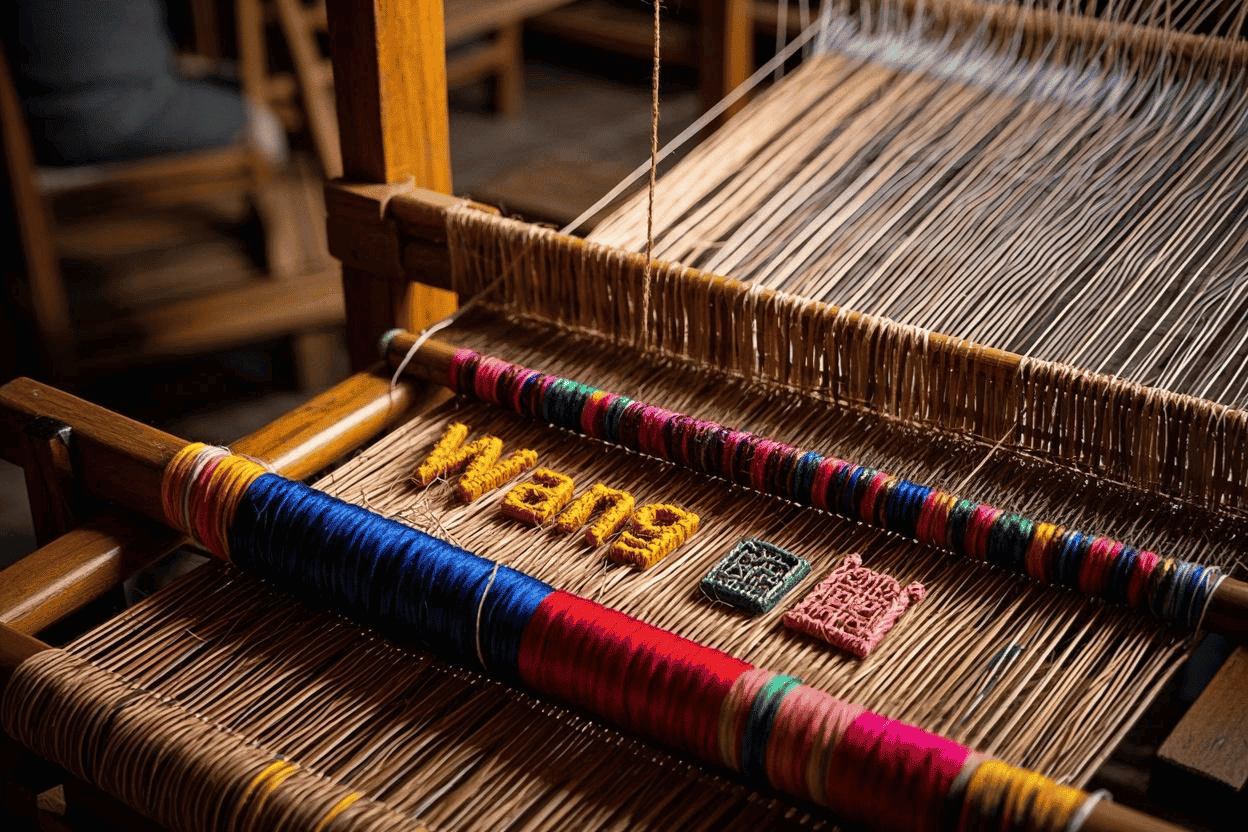
Chonglou was never one town — and has never stopped being one conversation. Buildings went out as letters and came back as walls; the magazine goes out as a letter and comes back as belonging; associations opened in 2022, and 400 people came home in 2023. Every layer of home — the central plains, 珠玑巷, Taishan, a single hamlet, a foreign city — is a layer of address, and the mail moves between all of them. Wherever your own family’s letters went out and came back, the question applies: is your ancestral place a town you left, or a correspondence you keep? In Chonglou the answer is written in concrete and print — and it is still being written. Planning the journey home and tracing your surname to its village are good first letters for those ready to begin.
Continue Reading
- The Meijia Courtyard of Duanfen, Taishan
- Haiyan Overseas Chinese Farm, Taishan
- Baisha Village, Kaiping: One Village, Five Continents
- Taishan Village Life Before the Exodus
Stay Connected
Follow RootsOfChina on Facebook and Instagram for new article updates, behind-the-scenes from Kaiping, and stories from the Chinese diaspora.
Sources
- 《台山县志》(Taishan County Gazetteer), Taishan County Local Gazetteer Editorial Committee, Guangdong People’s Publishing House, 1998 — entries close around 1985, with a supplement through 1991.
- 《台山县华侨志》(Taishan Overseas Chinese Gazetteer), Taishan County Overseas Chinese Affairs Office, 1992.
- 梅伟强、张国雄 (Mei Weiqiang, Zhang Guoxiong), 《五邑华侨华人史》(History of the Wuyi Overseas Chinese), Guangdong Higher Education Press, 2001.
- 刘进 (Liu Jin), 《银信与五邑侨乡社会》(Silver Letters and Wuyi Qiaoxiang Society), Guangdong People’s Publishing House, 2011.
- 谭楚明 (Tan Chuming), 《台山华侨建筑》(Overseas-Chinese Architecture of Taishan), Lingnan Fine Arts Publishing House, 2024.
- 梅伟强、梅雪 (Mei Weiqiang, Mei Xue), 《”集体家书”连五洲——五邑侨刊乡讯研究(1978–2005)》(A Collective Family Letter Connecting Five Continents: Wuyi Qiaokan Research, 1978–2005), Hong Kong Social Sciences Press, 2007.
Web sources, linked in the text above: the Taishan Municipal Government portal (cnts.gov.cn) pages for Chonglou; the Wuyi University Guangdong Qiaoxiang Culture Research Institute field survey of Baigang and Xihai; The Paper’s 2019 feature on Yongsheng Hamlet; UNESCO Memory of the World documentation of the Wuyi qiaopi inscription; and Jiangmen Government portal reports (2022–2024), including the town culture station’s account of the Sunning Railway and Chonglou.
Suggested Reading
Is this your family’s story?
Roots Of China is built from readers’ family histories. If a story here sounds like your own — a surname, a village, a journey — leave a comment below, or share your family’s story with us and we may be able to help you find your ancestral village.
