

Between 1850 and 1950, millions of Chinese emigrants sent home letters unlike any correspondence in human history. Each one was simultaneously a love letter, a bank transfer, a household budget, and a legal document — all folded into a single piece of paper. These were qiaopi (侨批, qiáopī), the “overseas Chinese correspondence-remittances” that sustained an entire region’s economy, held millions of families together across oceans for decades, and became a UNESCO-recognized documentary heritage that rivals the Magna Carta in historical significance. If your ancestors came from the Wuyi (五邑) region of Guangdong — Taishan, Kaiping, Xinhui, Enping, or Heshan — there’s a good chance your family story is written in qiaopi.
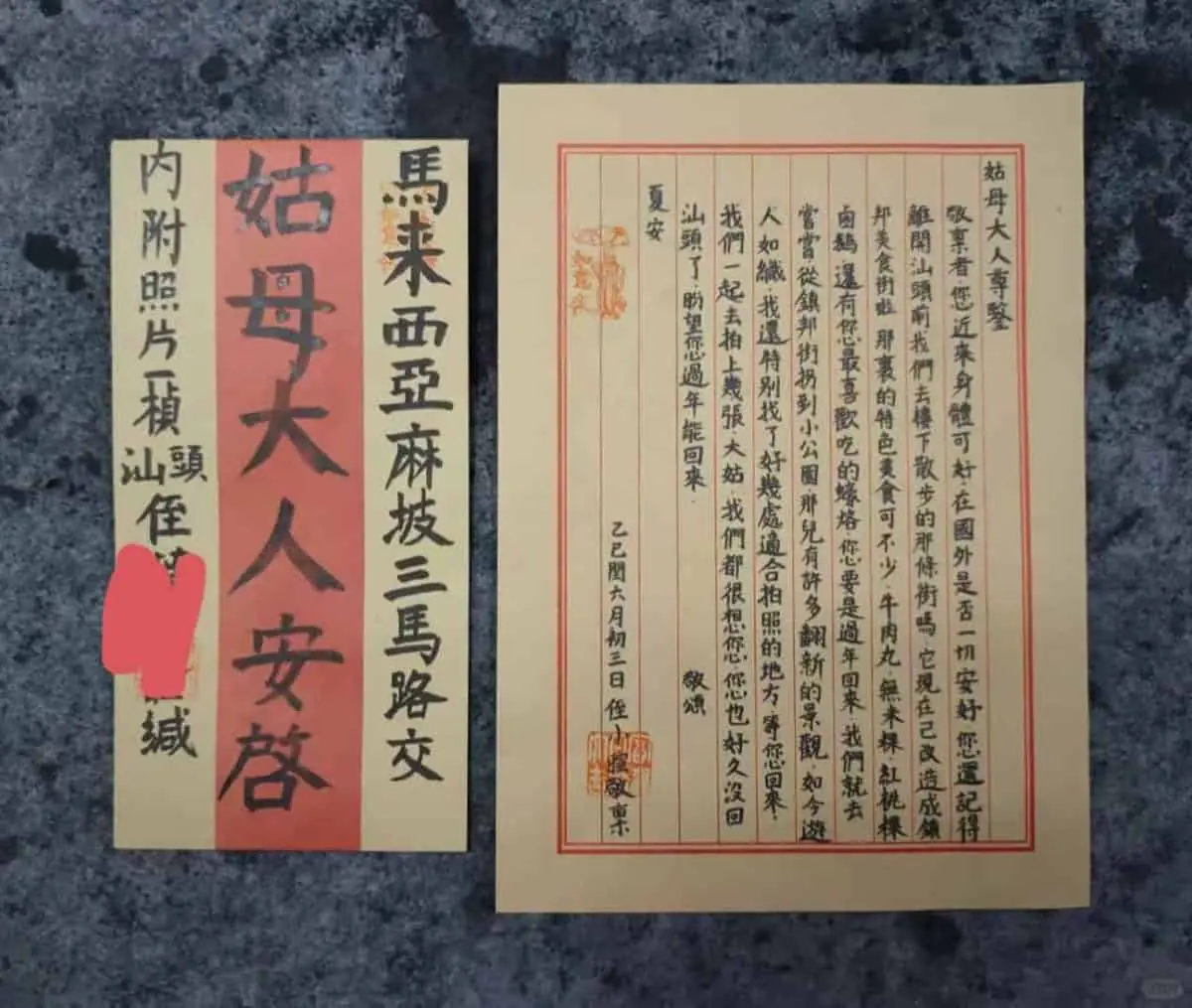
What Exactly Is Qiaopi?
The word itself tells the story. 侨 (qiáo) means “overseas Chinese” or “sojourner” — someone living abroad but belonging to China. 批 (pī) is harder to translate: it means a remittance document, a batch of goods sent home, a formal correspondence with money attached. Together they form “qiaopi” — a letter from an overseas Chinese person that always, without exception, included money. The older term, yinxin (银信, yínxìn), is even more direct: “silver letter.”
A typical qiaopi letter followed a standardized format recognizable to everyone in the system. The remittance amount appeared in a specific corner of the envelope — always visible, always verifiable. Inside, the writer addressed family members in a set order: parents first, then wife, then children, then siblings. Business matters occupied a separate section. Sensitive topics — business failures, family disputes, illness — were often expressed in coded language that village letter-readers wouldn’t immediately understand. “The weather has been difficult” might mean the laundry business was failing. “Neighbor matters are complicated” could refer to a family dispute that needed the husband’s intervention.
This dual function — emotional connection and financial transfer, inseparable in a single piece of paper — is what distinguishes qiaopi from either pure correspondence or pure money transfer. Imagine if every Western Union transfer today came with a handwritten personal letter from the sender, and the letter itself was the financial instrument. That’s qiaopi.
How Did It Work? The Courier System
The qiaopi system was built on a network of individual couriers called xunchengma (巡城马, xúnchéngmǎ) — “city-patrolling horses.” These were not postal workers. They were entrepreneurs, trusted community members, often former emigrants themselves who knew both the overseas Chinatowns and the Wuyi villages intimately.
The journey of a single qiaopi letter was a feat of human logistics. It began at a qiaopi shop (批局, pījú) in an overseas Chinatown — San Francisco’s Grant Avenue, Singapore’s Chinatown, Vancouver’s Pender Street. The husband (almost always male) would arrive with cash and news for his family. If he was illiterate — and many laborers were — the shop provided a letter-writer. The remittance amount was recorded in a ledger, the letter was bundled with fifty or sixty others, and the bundle began its journey.
A steamship carried it from San Francisco to Hong Kong in two to four weeks. In Hong Kong, the bundles were sorted by destination county and handed to regional couriers. From there, the xunchengma carried them onward — to Haikou Port (海口埠, Hǎikǒu Bù) in Taishan, the busiest qiaopi entry point in the region, and then on foot to individual villages. Some villages were a day’s walk from the port; others were deeper inland, accessible only by footpaths between rice paddies.
What held this system together was not contracts or insurance but trust. The xunchengma was known personally by every family on his route. Qiaopi shops were guaranteed by clan associations. Theft was vanishingly rare — approximately three to five percent of letters were lost, and when one disappeared, the family’s entire livelihood for that quarter vanished with it. There was no recourse, no insurance, no complaint department. The system worked because everyone in it had to trust everyone else, and that trust was rarely broken.
Some couriers served the same route for thirty or forty years. The Mei family’s courier on the San Francisco-to-Duanfen route operated from 1895 to 1931 — thirty-six years. He delivered letters to three generations of Mei families, attended their weddings, delivered news of their deaths, and was trusted with their most intimate financial and emotional secrets. When he died, families on his route mourned him as they would a relative.
A Letter Arrives in the Village
When a qiaopi courier entered a Wuyi village, it was not a private transaction. It was a community event.
Families gathered at the ancestral hall (祠堂, cítáng). The courier distributed the letters and the money. But since approximately seventy percent of the recipients — the wives, mothers, and daughters-in-law left behind — were illiterate, the letters had to be read aloud. This was the job of the village letter-reader (代书人, dàishūrén), a literate man — sometimes a former teacher, sometimes a returned emigrant — who performed one of the most intimate roles in qiaoxiang society.
The letter-reader held a family’s secrets in his hands. He knew how much money each household received. He knew which husbands were prospering and which were struggling. He knew about marriage negotiations conducted across the Pacific, about children a father had never met, about family feuds that simmered for years. He was trusted absolutely — and in a society built on informal trust, that trust was the entire infrastructure.
The ritual repeated across more than five hundred Wuyi villages, connecting them to a dozen overseas Chinatowns. When the money was distributed and the letters read, the wife would compose her reply — dictated to the same letter-reader, who would write it in the formal style expected by the overseas husband. That reply would travel back through the same network in reverse. The full cycle — letter sent, money delivered, reply returned — took two to three months.
What Did the Letters Actually Say?
The emotional range of qiaopi letters is extraordinary. They are, at once, the most mundane and the most intimate documents of the Chinese diaspora. Here are three examples, adapted from letters preserved in the collections at Wuyi University:
A household budget, circa 1925:
“I am sending fifty yuan. Twenty is for mother’s medicine — make sure she takes it even when she says she doesn’t need it. Fifteen is for your winter clothes; buy the thick cotton from the market in Taicheng, not the thin cloth from the village peddler. Ten is for Da Zai’s school fees — tell him I want to hear he is first in his class when I return. Five is for the spring festival sacrifice. If there is any left, buy rice for the storage jar. I know the price has gone up.”
Every yuan has a purpose. Every purpose reveals the family’s priorities: filial piety (mother’s medicine), care for the wife (winter clothes), investment in the future (school fees), ritual obligation (spring festival sacrifice). The letter is a household budget — but it’s also a message of love, delivered in the only way the system allowed.
Family governance, circa 1918:
“Do not let Da Niu marry the Chen family boy. I have made inquiries, and the family is not steady. Their eldest son in Singapore drinks and gambles. I have found a Li family boy here in San Francisco — his name is Li Ah Wing. He has a laundry business on Sacramento Street and sends money home every quarter without fail. He is twenty-three, healthy, and has no debts. Wait for my next letter with more details before you mention anything to the Chen family.”

From six thousand miles away, the absent husband is managing his daughter’s marriage prospects with the precision of a detective. He has investigated the Chen family’s overseas son, found a suitable alternative, and is negotiating by mail — a process that might take a year to complete. This was long-distance family governance at the speed of steamships.
Hardship and longing, circa 1930:
“Business is slow this quarter. There have been troubles here that I cannot write about clearly — you will understand when we speak. I will send what I can next month when the accounts settle. Do not worry about me. Your face is in my dreams every night, and I wake feeling as though I have just left home yesterday. Tell the children their father sends a thousand embraces. Tell mother I am eating well.”
The coded language — “troubles I cannot write about clearly” — signals the Great Depression’s arrival. The laundry is failing. The remittance will be small. But the letter ends with a declaration of love that breaks through the formal structure: “Your face is in my dreams every night.” In a system built on money, the emotional content is what made the letters worth keeping.
The Gold Mountain Wives
By 1920, approximately eighty percent of married women in Taishan were what locals called Gold Mountain wives — jinshanpo (金山婆, jīnshānpó) — women whose husbands lived and worked abroad, often for decades at a time. The term “Gold Mountain” (金山, Jīnshān) was the 19th-century Chinese name for California, and later for America generally.
The popular image of the jinshanpo is one of passive waiting: the wife who stays home, receives the money, and waits. But the reality, revealed in the qiaopi record, is far more complex. These women were economic agents. Despite being largely illiterate, they managed household finances, hired and supervised construction workers, negotiated with merchants, invested in land, and made major family decisions that their absent husbands had delegated to them. When a jinshanpo decided to build a new wing on the family house — financed by qiaopi money — she was the general contractor, the procurement officer, and the site supervisor.
Some wives exercised even more agency. Qiaopi letters from the 1920s and 1930s reveal women demanding to join their husbands abroad: “Send for me. The children need their father. I want to see America.” These were not passive pleas but active negotiations, supported by the economic power the wives had accumulated through decades of household management.
The system also had its dark side. When qiaopi stopped arriving — because the husband had died, remarried abroad, or simply disappeared — the wife in Wuyi had no recourse. Some women waited decades for letters that never returned. Others were forced into poverty. The women of Wuyi — the jinshanpo, the amahs, the ones who left — each navigated the qiaopi system differently, and the letters document every path.
Money, Buildings, and Social Class
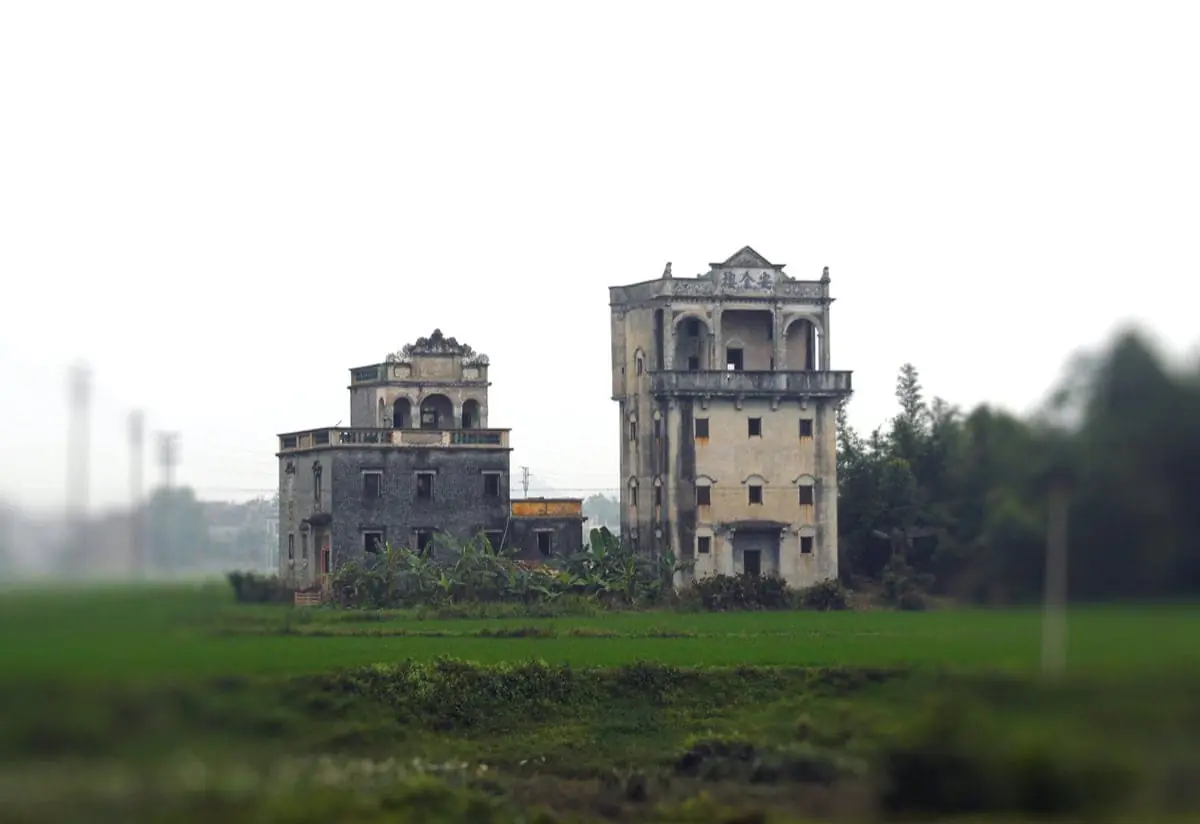
Walk through any old village in Taishan or Kaiping today, and you can read the qiaopi economy in the architecture. Remittance families built multi-story Western-style mansions with arched windows, wrought-iron balconies, and imported tiles. Non-emigration families lived in traditional single-story brick homes with courtyards. The class structure was visible from the street.
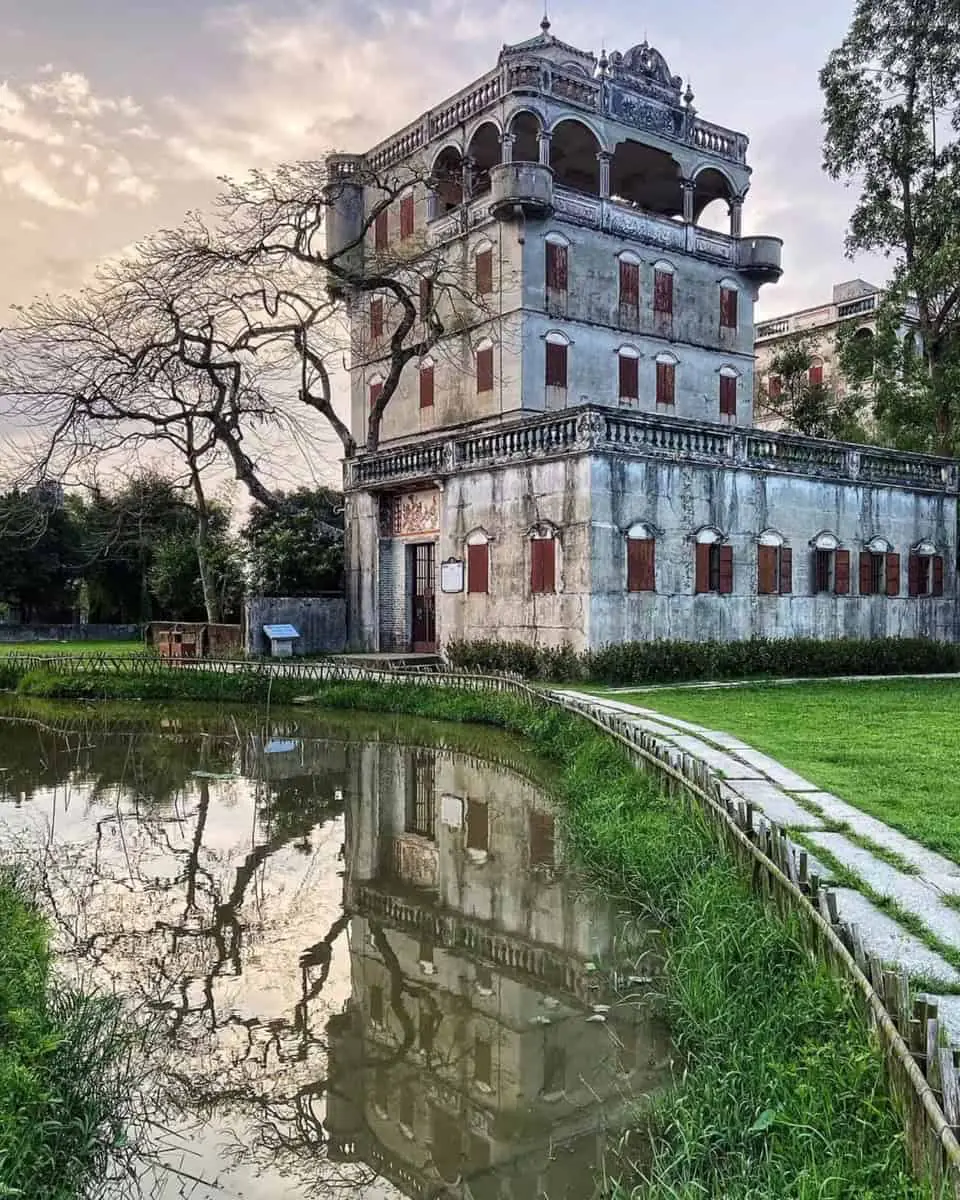
Qiaopi remittances financed an estimated ninety percent of construction in the Wuyi region between 1850 and 1950. The most dramatic result was the diaolou (碉楼, diāolóu) — fortified multi-story towers that dot the Kaiping countryside. Built as both status symbols and defensive structures against bandits, these towers combined Chinese, European, and Middle Eastern architectural elements. They were the ultimate expression of qiaopi-funded status competition: families competed to build taller, more elaborate, more cosmopolitan towers than their neighbors. Today, the Kaiping Diaolou are a UNESCO World Heritage Site — a direct material legacy of the qiaopi system.

An estimated seventy percent of Taishan’s surviving pre-1949 buildings were funded by qiaopi remittances. But the money didn’t just build houses. It built modern schools teaching English and Western subjects by the 1910s — a generation ahead of non-qiaoxiang regions. It built Western-style hospitals by the 1920s. It funded university educations in Guangzhou and Hong Kong for the next generation, who then migrated legally as professionals rather than as laborers. Qiaopi created a multi-generational mobility ladder: remittance money educated children who then escaped the cycle of unskilled labor migration entirely.
Crisis, War, and the End of an Era
The qiaopi system was resilient but not invincible. Three crises nearly destroyed it.
The Great Depression of 1929-1933 caused qiaopi volumes to drop by sixty percent. The remittances that had sustained entire villages for two generations simply stopped. In Wuyi, families who had been entirely dependent on overseas earnings — no agriculture, no local trade, no other income — faced sudden impoverishment. The Depression revealed the fundamental vulnerability of the qiaoxiang economy: it was a single-source system, and when that source failed, there was nothing else.
World War II was worse. The Japanese occupation of Wuyi from 1938 to 1945 severed qiaopi routes entirely. The Japanese also occupied much of Southeast Asia, cutting off the Nanyang (南洋, Nányáng) remittance channels that served the Singapore, Malaysia, and Indonesia diaspora. Remittance-dependent villages experienced famine. Families who had been wealthy by local standards two years earlier were now starving, their multi-story mansions standing empty as monuments to a vanished income stream.
The post-war years brought a brief recovery — volumes rebounded to 400,000 letters annually between 1946 and 1949 — but the system’s days were numbered. After 1949, the new People’s Republic of China nationalized all remittance channels through the Bank of China. The informal qiaopi network, with its xunchengma couriers and clan-guaranteed shops, was dismantled. Overseas remittances continued, but they flowed through state-controlled banking channels — efficient but impersonal, stripped of the letters that had made qiaopi unique.
By the 1970s, modern banking, international telephones, and direct air travel had made the xunchengma obsolete. Why send a courier on a two-month journey when you could wire money in hours and call home from a Chinatown phone booth? The last informal qiaopi courier operated in the 1980s. A system that had sustained millions of families for 130 years ended within one lifetime.
UNESCO and World Recognition
For decades after the system’s collapse, qiaopi letters sat forgotten in kitchen drawers, storage boxes, and attic trunks across Wuyi. They were private family documents, not public history. That changed in the early 2000s, when researchers at Wuyi University (五邑大学) in Jiangmen began a systematic effort to collect, catalogue, and study qiaopi.
The result was extraordinary. Over ten years (2003-2013), the university’s Qiaoxiang Culture Research Institute, working with the Guangdong Provincial Archives, catalogued more than 160,000 qiaopi documents. They found letters spanning a century, from the 1850s to the 1950s, connecting villages in Guangdong and Fujian to Chinese communities on every inhabited continent. The Fujian and Chaozhou migration is a parallel diaspora system, told in our companion piece. The collection revealed a diaspora communication system of staggering scale, complexity, and emotional depth.
In 2013, UNESCO inscribed the “Qiaopi and Yinxin Correspondence and Remittance Documents” on its Memory of the World Register. This is the same register that includes the Magna Carta, the Gutenberg Bible, and the Diaries of Anne Frank. UNESCO recognized qiaopi as documenting “one of the largest and most significant transnational migrations in modern history.” The letters, UNESCO noted, “record the aspirations, nostalgia, ethical values, and daily life of Chinese emigrants and their families across a century.”
The UNESCO designation transformed qiaopi’s status. What had been a niche academic specialty became an international research field. Qiaopi interpretation was integrated into the Kaiping Diaolou World Heritage Site. The Taishan Overseas Chinese Museum opened new qiaopi exhibits. And Chinese state media began promoting qiaopi as part of the Maritime Silk Road cultural heritage narrative — an irony, given that the Communist government had dismantled the system half a century earlier.
Where to See Qiaopi Today
If you want to see qiaopi with your own eyes — or search for your family’s letters — several options are available.
The Taishan Overseas Chinese Museum (台山华侨博物馆) in Taicheng holds the largest public qiaopi collection in Wuyi. Its interactive displays show original letters, courier route maps, and family histories. You can see the actual paper, the fading ink, the stamps and seals that authenticated each letter. The museum also covers the broader history of Taishan emigration — the context that makes qiaopi meaningful. For a deeper look at what the museum holds, see our feature on what 150 years of qiaopi letters reveal.
The Kaiping Diaolou Museum, integrated with the UNESCO World Heritage diaolou sites, interprets how qiaopi remittances funded the towers. The connection is direct: those towers were built with money delivered through these letters. Seeing the diaolou in person while understanding the qiaopi system that built them transforms the experience from architectural tourism to historical understanding.

For those who can’t travel to Wuyi, the Wuyi University Qiaopi Digital Archive has digitized more than 80,000 letters, searchable by date, surname, village, and destination. If you know your family’s ancestral village — or even just your surname and that your ancestors came from Taishan — the digital archive is the place to start. The return address on a qiaopi envelope is often the most precise ancestral village location available anywhere.
The Guangdong Provincial Archives in Guangzhou holds the largest qiaopi collection in China, including the documents submitted for the UNESCO nomination. Research access is available by application.
For diaspora descendants planning a roots trip, qiaopi research is practical preparation. Knowing the specific letters your great-grandfather sent — when, from where, for how much — adds a layer of personal history that no guidebook can provide. The same digital archive that serves academic researchers also serves family historians. Search your surname. Search your village. The letters may already be waiting.
Why Qiaopi Matters Now
The $640 billion global remittance industry descends directly from qiaopi. Western Union, MoneyGram, Wise — these are the modern xunchengma, performing the same function through different technology. And the emotional needs remain identical. Today’s diaspora families use WeChat for the same reasons qiaopi families used xunchengma couriers: reassurance, authority, love, and money across distance. The medium changed. The human need didn’t.
Qiaopi letters are now being used in genetic genealogy projects. Researchers match letter writers — identified by name, village, and date — with living descendants through DNA databases. The letters provide the family-tree infrastructure that DNA alone cannot supply: names, relationships, locations, dates. For diaspora descendants who know only that their ancestors “came from Taishan,” a qiaopi letter can narrow that search to a specific village, a specific house, a specific family.
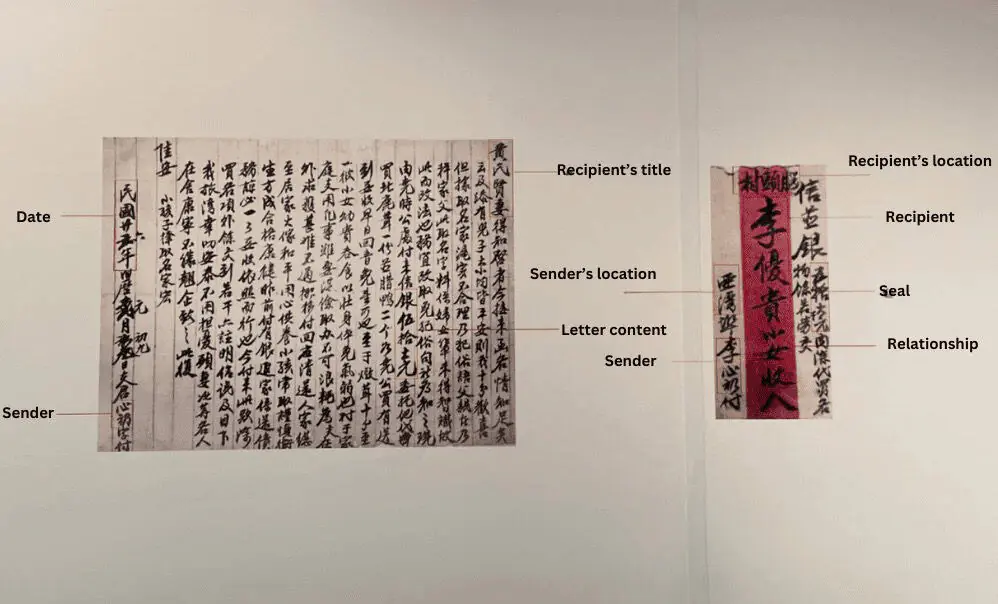
If your family came from the Wuyi region between 1850 and 1950 — and millions of families worldwide meet that description — there’s a good chance qiaopi letters exist with your surname, from your ancestral village, documenting your family’s story. They might be in the Wuyi University archive. They might be in the Guangdong Provincial Archives. They might still be in a drawer in Taishan, wrapped in cloth, waiting to be found.
Qiaopi letters teach us that staying connected across distance is one of humanity’s oldest and deepest challenges. The solutions we build — from ink on paper to video calls, from xunchengma couriers to WeChat messages — all come from the same human need. A hundred and fifty years ago, a man in San Francisco sat down at a qiaopi shop and wrote: “Your face is in my dreams every night.” Today, a mother in Vancouver opens WeChat and sees her daughter’s face on a video call. Different technology. Same love. Same distance to bridge.
Sources
- 梅伟强, 张国雄. 《五邑华侨华人史》. 广东高等教育出版社, 2001.
- 梅伟强, 关泽锋. 《广东台山华侨史》. 中国华侨出版社, 2010.
- 刘进. 《银信与五邑侨乡社会》. 广东人民出版社, 2011.
- 袁丁. 《跨国移民与近代广东侨乡》. 中华书局, 2019.
- Hsu, Madeline Y. Dreaming of Gold, Dreaming of Home: Transnationalism and Migration Between the United States and South China, 1882-1943. Stanford University Press, 2000.
- 五邑大学侨乡文化研究所. 《侨乡文化研究丛书》. 中国华侨出版社, 2004-2015.
- UNESCO. “Qiaopi and Yinxin Correspondence and Remittance Documents” — Memory of the World Register, 2013 inscription.
- Wuyi University Qiaopi Digital Archive — Guangdong Qiaoxiang Culture Research Center.
- Taishan Overseas Chinese Museum (台山华侨博物馆) — permanent collection, Taicheng, Taishan.
- Kaiping Diaolou and Villages — UNESCO World Heritage Site.
Continue Reading
- Reading Qiaopi: What Remittance Letters Reveal About Wuyi Families
- Inside the Taishan Overseas Chinese Museum: What 150 Years of Qiaopi Letters Reveal
- The Letters That Never Came: Gold Mountain Wives Who Waited in Vain
- From Surname to Ancestral Village: A Roots Trip Blueprint for Wuyi Descendants
Stay Connected
Follow RootsOfChina on Facebook and Instagram for new article updates, behind-the-scenes from Kaiping, and stories from the Chinese diaspora.
Suggested Reading
Is this your family’s story?
Roots Of China is built from readers’ family histories. If a story here sounds like your own — a surname, a village, a journey — leave a comment below, or share your family’s story with us and we may be able to help you find your ancestral village.
