


Five Point Seven Million People, and a Roster With Seventy-Three Slots
The Shen surname belongs to roughly 5,710,800 people in mainland China — 52nd on the https://www.mps.gov.cn/n2254314/n6409334/c7726021/content.html“>2020 household-registration tabulation, counting registered residents and excluding Hong Kong, Macau and Taiwan. No other figure is used here; the 14 that still circulates is a slot in the Song rhyme list known as the Hundred Surnames (百家姓, Bǎijiǎxìng), not a census. And on the front of a 沈 ancestral hall (宗祠, zōngcí) hangs 吴兴 (Wúxīng), the commandery of origin (郡望, jùnwàng) claimed for seventeen hundred years.
Then there is the character. 沈 (Shěn) is not 申 (Shēn): identical in Mandarin, a different family — 申伯, ancestor of the 谢 (Xiè) clan; if that search brought you here, the Xie surname story is where you meant to go. 岑 (Cén) and 谌 (Chén) collide with it in Cantonese romanisation, one of the traps the surname literature keeps returning to; 瀋 (shěn) is the 瀋陽 graph and the commonest database error. The 台山 form is recorded as unknown, not guessed.
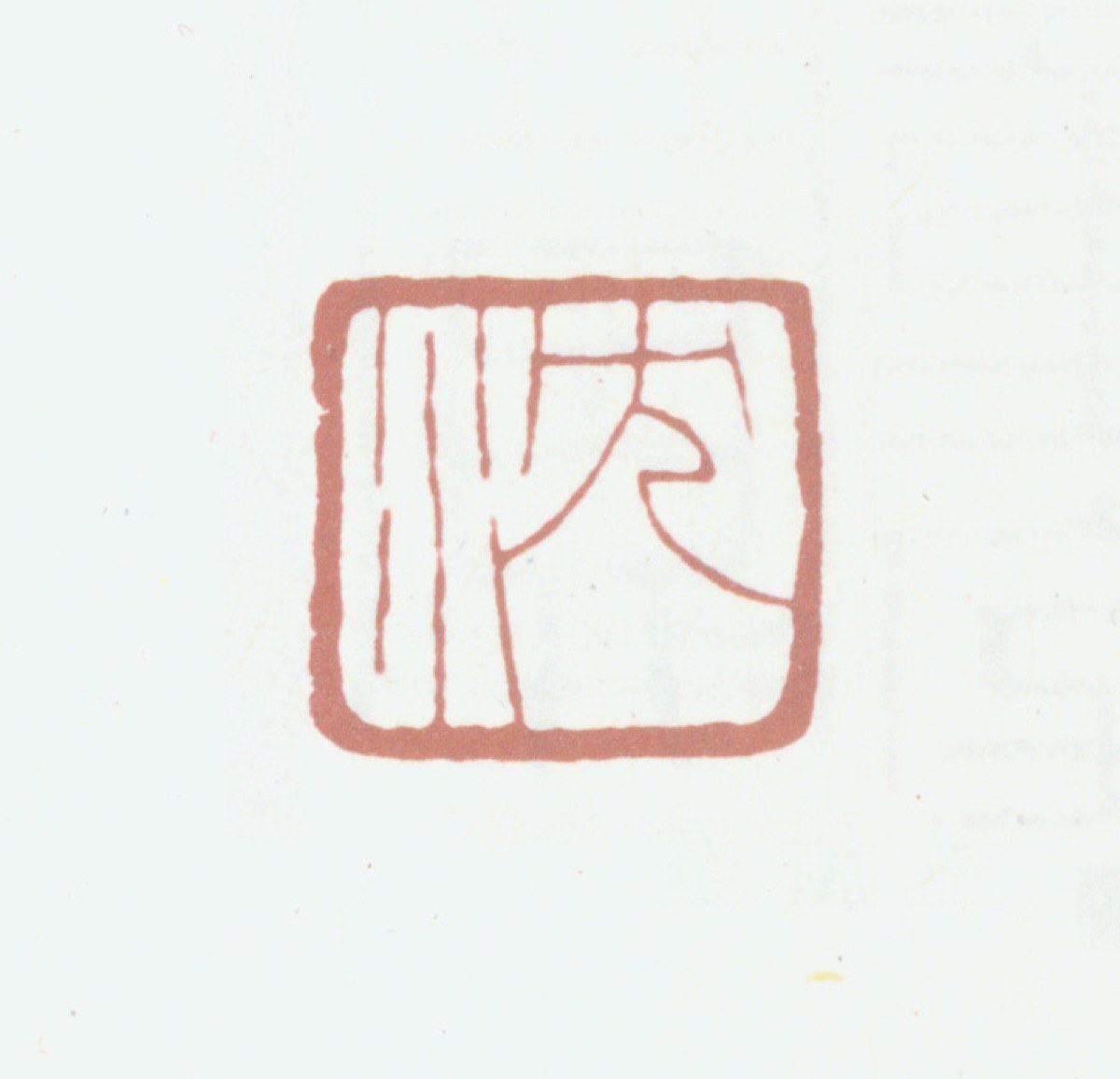
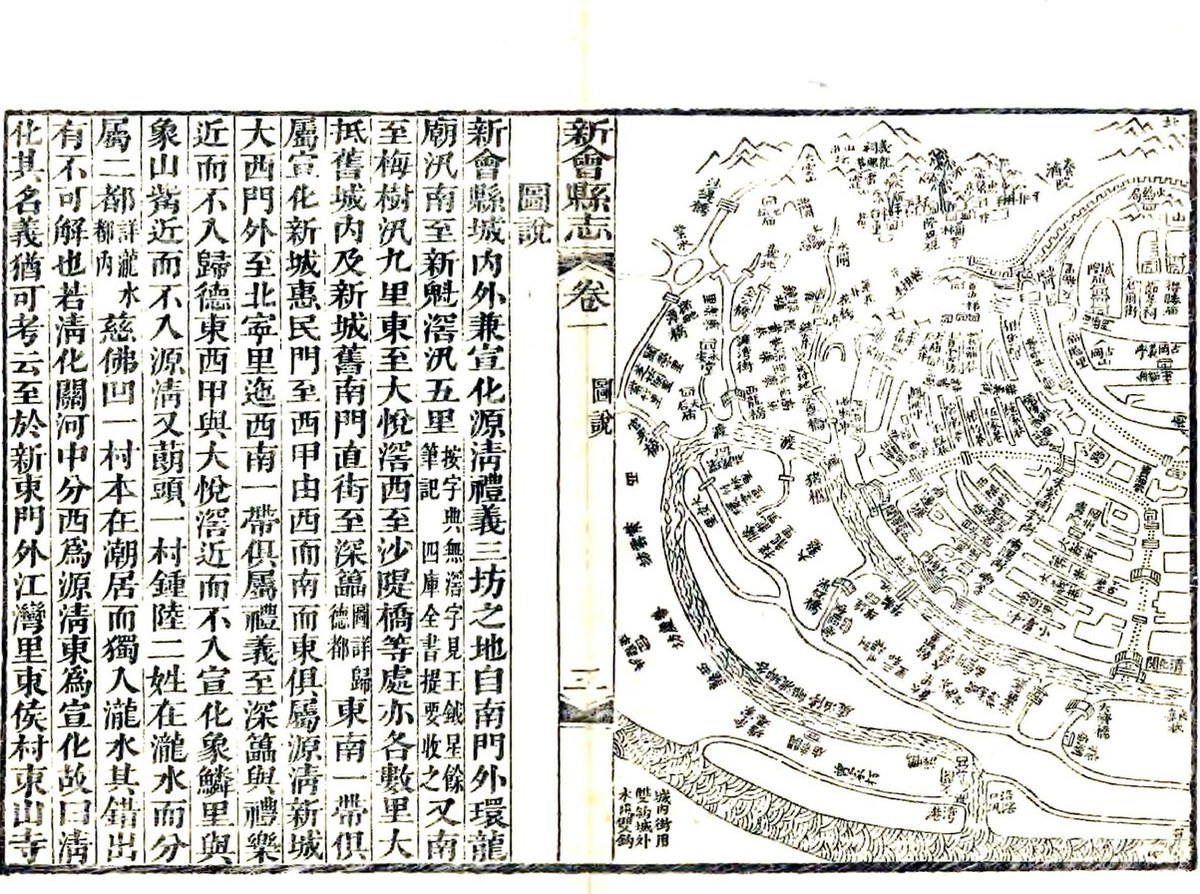
Beside the plaque, put a document. The 道光 edition of the 新会 gazetteer (新会县志) carries an illustrated section (图说, túshuō) listing surnames ward by ward: seventy-three across twelve wards, counted for this article. 沈 is not on it. Nor is 沈 among the thirty-three surnames and ninety-seven households 罗贵 (Luó Guì) is said to have led out of 珠玑巷 (Zhūjī Xiàng), the charter most 五邑 prefaces cite. Two rosters, one mother county, one character missing.
Four claims follow. The origin is a menu of three incompatible stories, and no item wins. The pedigree was edited by an ancestor with an interest in the answer: 沈约 (Shěn Yuē). The commandery is a trademark that outlived the place, which makes the plaque a claim, not an address. And the absence in 五邑 has denominators — seventy-three slots, thirty-three surnames, one county aggregate, one index nobody has opened. A place name can outlive the place. A 郡望 is a brand with a maintenance cost of zero.
Three Founding Stories, and a Preface That Picks One
A surname article usually opens with one ancestor. This one cannot: 沈 attaches to three states and to two kinds of word, a state name and an office name. This article counts three.
The first is what most prefaces lead with. 周文王’s tenth son, 聃季载 (Dān Jìzǎi; also written 冉), was granted a fief at 沈亭 (Shěntíng) in 平舆, in 汝南 (Rǔnán) — the old 沈 state, says the ninth-century register 元和姓纂. In 506 BCE 蔡 destroyed it and carried off its lord, 沈子嘉; that date and agent sit in 沈约’s preface and match the 左传.
The second cannot be joined to the first. In 楚 a place called 沈 was granted to a prince, 公子贞, at 沈鹿 (Shěnlù). Its documented figure is 沈诸梁 (Shěn Zhūliáng), son of the marshal 沈尹戌, granted 叶 and so known as 叶公 (Yè Gōng), the man the dragon idiom mocks. Here 沈 is an office and a place, 沈尹 (Shěnyǐn), not the 沈 state. Two genealogies built on two kinds of noun are not one genealogy.
The third is older and further north: 台骀 (Táidài), who opened the 汾 and 洮 rivers, and whose descendants held four states, 沈 among them — a 沈 in Shanxi, absorbed in the Zhou conquest.
The splice shows in one name. Popular accounts have 季载’s descendant 沈逞 (Shěn Chěng) flee to 楚 after 506. 沈约 places him at the end of the Qin, two hundred and fifty years later, declining a summons. Print both: the flight is a later smoothing, where the 姬姓 line is stitched to the 芈姓.
A preface opening at 汝南平舆 has chosen one item off a menu. It has not inherited a fact. The clan’s most eminent member chose differently.
The Historian Who Wrote His Own Ancestors In
The 宋书, the official history of the Liu-Song, runs to a hundred juan. The hundredth is 沈约’s own preface, and also the earliest substantial genealogy the 沈 possess — a document that establishes the family’s descent with its author inside it. An official history is no neutral check on a private genealogy when it is the private genealogy. The full 自序 is on Wikisource, which is the only reason a reader can run this argument without leaving the page.
He says as much in the line the clan quotes most: 「自兹以降,谱牒罔存」 — from this point on, the genealogies are lost. The admission sits immediately before the bridge.
Then the anomaly. 沈约 traces to 台骀 and the 汝南 沈亭, not to 聃季载, the tenth son of 周文王, the story later surname books lead with. The clan’s greatest figure declined the most popular origin.
The arithmetic fits on the back of an envelope. 沈戎 (Shěn Róng), the first ancestor the lineage treats as documented, dies in 58; 沈约 dies in 513. Four hundred and fifty-five years, eleven generations in 唐燮军’s count: about forty-one years a generation, this article’s own division, and already at the outer edge. A longer version reaches fifteen generations through 沈逞, and the received text keeps the join visible in its headings, calling 逞 the fifteenth-generation ancestor and 戎 his fourteenth-generation descendant.
The genre explains the licence. Six Dynasties genealogies were official registers, of the kind 贾弼 compiled for selecting candidates; the private family genealogy is a Tang-Song form. A register from 诏安 or 台山 belongs to the later genre, which was expected to be edited.
That gives a test the reader can carry: a pedigree crossing from a Southern Song founder to 沈戎 in twenty generations fails on average generation length alone. Applied below to 钱塘’s branch, and again to a Singapore association’s table of contents.
A 2011 collation lists sixteen textual problems in the preface itself. A genealogy is edited history, and the joints are where the work was done — 沈约 did it first, with the best prose in the family.

A Flight, a Grave, and a Name That Arrived From Outside in 266
The founding sentence must be read whole: a son of 靖 named 戎, styled 威卿, talked down a rebel leader called 尹良; the Han founder offered him the marquisate of 海昏, which he declined; and thereupon he moved for safety to 余不乡 (Yúbù xiāng), in 乌程, and the family made its home there.
The verb is the point. 避地 (bìdì) means to move for safety — not to be enfeoffed, not to be posted, not to follow a road. The documented core begins with 沈戎; the narrative around him — a rebel talked down, a title refused — is myth with a documented core, and his death in 58 is probable rather than certain. But its shape is the family’s oldest possession: migration as escape. Eighteen hundred years later a 五邑 preface explains a branch’s departure by the Hakka-Punti fighting of 1854 to 1867 in the same grammar.
The grave is an object, which makes the myth usable. A Southern Qi recluse, 沈驎士, withdrew to the stream at 余不乡 and set a stone recording his ancestors’ virtues at the family cemetery on 金鹅山 (Jīn’é shān), Golden Goose Mountain. The text survives: 颜真卿’s 773 record of the stone describes it, and describes the tree that grew through the turtle base. The cemetery stayed at 武康. The stone names the place; it does not reconstruct the tomb.
Then the ground changed its name four times: 余不乡 under 会稽, then 永安, then 武康, and in 266 吴兴 commandery, created under 孙皓 with its seat at 乌程. The family had not moved. The label had.

Two addresses were kept anyway. 沈约 is recorded as a man of 吴兴 武康 whose ancestral registration was 寿春; by the Tang, descendants were registering 吴兴 while living nowhere near it. Two commanderies appear in the surname’s lists, 吴兴 and 汝南; one is the working brand, and it is the one on the plaque.
The hall names make the mechanism permanent. 吴兴堂 (Wúxīng táng) is the master hall, taken because the 沈 worth naming came out of 吴兴 武康. Then 梦溪堂 (Mèngxī táng), named for 沈括’s garden in an adopted town, and 金鹅堂 (Jīn’é táng), named for 沈戎’s grave-mountain: one a claim, the other a hill, filed side by side in the hall system. About fifty minor halls circulate in current lists, evidence that the tables are a modern consolidation; nothing suggests 梦溪堂 was in use in the Song.
On the Guangdong side, 珠玑巷 does the same work — a claim to registered-household respectability rather than a route description, which is how a preface is read.

What the Swords Were Traded For, and Why It Did Not Work
陈寅恪’s characterisation, quoted by 唐燮军, is the frame here: the 吴兴 houses were local armed magnates of the first rank, and the 沈 entered the cultural gentry only after 沈约. The argument is theirs, and it has a bibliography.
Then the dates, one clause each. In 324 沈充 backed 王敦, died, and the lineage went under debarment from office — a family calamity that made the clan a legally exposed unit rather than a private association. In 365 his son 沈劲, barred by his father’s crime, died defending 洛阳 to clear the debt. In 399 and 400 the 孙恩 rising killed 沈穆夫 and broke the genealogical chain; the survivors 沈林子 and 沈田子 rebuilt through 刘裕’s wars. In 417 沈田子 took 长安, killed 王镇恶, and was killed. In 465 沈庆之, who had served three reigns, was murdered by the emperor he served. In 477 and 478 沈攸之 made the house’s last bid for independent power and was destroyed. In 502 沈约 urged 萧衍 to take the throne and was rewarded with a literary career — the transformation completed by the man from the previous section.
唐燮军’s conclusion should be printed plainly: the move from arms to letters bought status and lost durability. Cultural capital was bound to imperial favour, and imperial favour proved less durable than the land and the retainers the family had given up. That is an argument, not a law of history.
The counter-case sits an hour away. In 新会, 陈白沙 (1428–1500) and the 江门 school of mind made literary confidence a local asset rooted in a county rather than a court — one investment bound to a throne, one rooted in place. A contrast, not a proof; the county’s own history holds the rest.
Two Gaps, One Sentence, and a Commoner Named Bi Sheng
沈括’s family can be documented to a hard ceiling. The 钱塘 沈 are a Song literati line: his father 沈周 was a court official, his kinsmen 沈遘 and 沈辽 writers, their collected works printed in the Southern Song. 祖慧’s 2004 study traces the line to the early Song and no further; above it sits construction, not record — roughly a thousand years. That is the first gap.
The second matters more to a reader with a 五邑 preface in a drawer: above the 钱塘 line lies the same 珠玑巷 jump a 台山 沈 register would make. Two gaps in one life, and this article fills neither.
Two labelled clauses of context. 沈周 was posted to 泉州, the empire’s largest maritime port, so the boy who wrote the 梦溪笔谈 grew up inside a trading world — an analogy only, and no cause of emigration from 五邑. The political career ended in 1082 at 永乐城; 祖慧 distributes the blame between court micromanagement and 徐禧’s choice of site, not one man’s incompetence.
The 宋史’s entry on him is short and barely mentions the 梦溪笔谈; the Song state did not file him under science. That filing was made in 1956, when 胡道静’s collation appeared, and reinforced by the Needham generation — a twentieth-century coronation, named as such. His reputation for denouncing 苏轼 rests on 王铚’s late, solitary supplement: rumour layer.

Then the passage the article has been earning. 毕昇 enters history in one section of the 梦溪笔谈 as a commoner — a 布衣 (bùyī) — with no birthplace, no dates, no workshop. And then: 「昇死,其印为予群从所得,至今保藏」. After 昇 died, his type came into the possession of my younger kinsmen, and is still kept. The most consequential technology of the second millennium survives in the record because a 沈 happened to own the equipment.
Put beside it the other end of the archive. The 1998 gazetteer of 台山 lists emigrant labourers without names; a remittance envelope carries a name, a village and an amount, and little else — an asymmetry the qiaopi files are built to decode. The archive keeps the name and loses the life. Only genealogies, inscriptions and envelopes fill the gap, never the gazetteer.
A Garden Named After a Dream, and a Household Already Split
In 1088 沈括 retired to a garden at 京口, on the Yangtze: a stream, fields, terraces. He called himself the old man of 梦溪, Dream Stream, and said he had seen the place in a dream thirty years earlier. He died there. He never went back to 钱塘.
Two places claim him and both are right about different things: 钱塘 holds his registration, 镇江 holds his grave and his garden, now a protected site. What stands there is a memorial garden that recasts a private retirement as a shrine to science — a framing 祖慧 refuses and this article does not reproduce.

The household is harder to see, and the sole witness is hostile. 朱彧’s notebook 萍洲可谈, which has a grudge, has his wife 张氏 expel 沈括 and his eldest son 沈博毅 from the house; father and son lived elsewhere while the younger children stayed. Say plainly that the source is hostile, and why it survives: his own collected works are almost silent about wives and daughters. No dialogue is reconstructed, and no letter.
The transfer this makes possible is the article’s quietest claim. 台山’s 守生寡 — a wife left behind so long she is widowed while still married — turned separation into an institution. 沈括 is the control case: a man separated from his own household without leaving the country. 五邑 did not invent the split household; it formalised one, and the women’s side of it has its own vocabulary.
Which is why 梦溪堂 is the strangest hall name in the surname: one named after a garden in a town the man adopted, hung beside 金鹅堂, named after a grave. Separation was never an emigrant condition. Emigration only made it statistical.
Three Famous Names That Will Not Sit Still
A 沈 reader arrives carrying 沈约, 沈括, 沈万三, 沈周 and 沈从文, and family lore turns that prestige into a claim of descent. Fame is not a lineage, and none of the three below has a 五邑 village.
沈万三 is the hardest. 顾诚 concluded in 1999 that he lived and died in the Yuan, on his reckoning in 1356, and that the Ming stories — the Nanjing wall, the treasure bowl, the exile to Yunnan — are false transmission. 樊树志 dissented in print, writing that 顾诚’s conclusion, though not unfounded, was hard to believe. Then in 2020 高寿仙 attacked the witness rather than the verdict, arguing that the epitaph 顾诚 leaned on may concern a man who merely shared the name — a challenge to the evidence, not to the conclusion. The dispute is not settled, and this article will not settle it. One detail belongs to the argument: a 湖州 lineage genealogy records a 沈寿二, originally 沈秀, who supplied grain to 朱元璋’s campaign and was rewarded with a command.
沈周, one clause and a warning: the 长洲 painter of the 吴门 school, paired with 文徵明, is a different man from 沈括’s father of the same name, four centuries earlier.
沈从文, one clause: a twentieth-century novelist. Nothing is said here about his ethnic identification, because the sources conflict and were not consulted.
Seventy-Three Slots, Thirty-Three Surnames, and a Clerk Counting Something Else
The 道光 gazetteer of 新会, fourteen juan, was completed in 1841 under 林星章, its illustrated section compiled by 谭锡朋, who drew the maps. It covers twelve wards and lists seventy-three surnames; counted in full for this article, 沈 is absent. 新会 is 台山’s mother county, which is why this roster, not a 台山 one, is the test — and the roster has an author, a purpose and an omission. Its source was the county survey register, and the scholar who has worked through it finds that it recorded only surnames in multi-household clusters: 「或者只记录多户聚居之姓氏,而对单门独户之姓氏例皆不载」. It also omits the county seat and one whole township, 潮连. Absence from the seventy-three means no 沈 village; it does not mean no 沈. Negatives here are phrased that way throughout: none is catalogued, none located. The 清史研究所 study of the 图说 is where that caveat is argued.
The second roster is a charter, not a census. 罗贵’s thirty-three surnames and ninety-seven households, as reconstructed by 黄慈博, contains no 沈 — and the Luo article owns that story. The list circulates as thirty-three, thirty-four or thirty-eight; its date splits between 1131 and the 咸淳 era; and it calls 南雄 a prefecture, an office the place held only from 1368, while the tradition’s own size runs from 186 surnames to forty-four.
The third is an aggregate, and its logic is weaker than it looks. The 1998 gazetteer of 台山 ranks Chen, Huang, Li, Wu, Zhen, Lei, Kuang, Tan and Yu at the top of its surname table, and 沈 is not among them. A county total sets an expectation; it cannot exclude a locally large cluster — the same shape the Lü file found.

The decisive object is one nobody here has opened. A village-by-village index of 台山 clan names was compiled in 1973 and is digitised at FamilySearch as item 489257, catalogued and open to anyone with an account. Its existence is verified; its contents were not searched. It could settle the question, and it is handed over unopened — the same gap the digital-tools survey describes for other surname catalogues.
The negative has a face, and it is an official’s. The one 沈 in 新会’s record is 沈宝善, styled 石楼, a 诏安 man from Fujian, a 嘉庆 provincial graduate who became magistrate in 1807 and held the county through 张保’s raids, for which 外海 cast and honoured his image. No end year is given, because none was found. He arrives from 诏安 as an office-holder, not a founding lineage.
Any 沈 claim on 五邑 must pass four tests. It must land in one of the seven wards carved out of 新会 in 1498 or 1499 — 德行, 文章, 平康, 矬洞, 海宴, 泷水, 潮居 — the gazetteer tradition disagreeing with the Ming geography on which year that was. It must declare Cantonese or Hakka — a fork this county once institutionalised, with a separate Hakka sub-prefecture from 1867 to 1953 — the verdict resting on dialect, hall form and burial custom. Its 珠玑巷 story must carry the relay detail the gazetteer supplies for the 甄, who came from 南雄 through 会城 and 崖西 to four branches at 霞坑, 旺北, 石海 and 簕冲. And it must survive the grave.
The finding: the corpus contains no named 沈 village in 五邑. None is catalogued. None has been located. That is a result with denominators, and the reason this article had to be written. The 毛 surname file ran the same check on a different character and reached the same shape of answer.
Four Hundred Kilometres East, and a Bridge the Family Built Itself
The correction comes first. 沈 in Guangdong is real and substantial, and its densest, best-documented communities sit some four hundred kilometres east of the emigration heartland, in 潮汕 and the 大埔–梅州 corridor, reached through 诏安 in Fujian. A provincial generation-poem compilation also lists 南雄, 阳春, 清远, 英德 and 广州 白云, so this is not a claim that every 沈 in the province is a 潮汕 沈. None of the villages is in the five counties.
The chain has four names. 沈世纪 (Shěn Shìjì), born 沈彪, 621 to 688, was one of six auxiliary generals in the campaign that opened 漳州, stationed at 南诏, today’s 诏安, and is the founding ancestor of the 沈 of Fujian and 潮汕; he is worshipped as 武德侯 (Wǔdé hóu), Marquis of Martial Virtue, on the twenty-second day of the first lunar month. Later, 沈廷辅’s eight sons, all with wood in their names, dispersed into 大埔 and 梅州, the Hakka corridor; two descendants, 沈楸 of 梅塘 and 沈枝, supply most of Guangdong.

The same flight grammar, five hundred years on. At the end of the Song, 沈锐叔’s sons — 沈立, 沈道 and 沈矩 — fled the Yuan armies from 诏安 to 潮州, and 道 moved on to 华美 in 海阳. 华美 is now the densest 沈 place in Guangdong: one village in 彩塘, in 潮安, reported as more than nine thousand people of a single surname with more than fifty halls — the village’s own account, not a census. Its founding date is a tension in the corpus: the flight narrative puts 沈道 at the Song-Yuan transition, a catalogue record dates him to the 成化 era, and both stand.
The overseas institutions are 潮州-derived. The 沈 association in Thailand traces its founding to 1885, when 沈永居, 沈万成 and 沈俊元 mobilised 225 kinsmen to buy land and raise a hall to the Marquis of Martial Virtue. That is the association’s own account; a variant year of 1887 circulates, so treat 1885 as probable.
And then the document that makes the article. In Singapore, the 南洋沈氏公会 was founded in 1923 as a reading room, its first purpose to worship the Marquis of Martial Virtue; in 1989 it published a genealogy compiled from the 诏安 register — one catalogue says 1979, and the year is not the load-bearing part. Table seven runs from 达公 to 约公; table eight runs from 约公 to 楸公. A fifth-century 吴兴 man and a thirteenth-century 诏安 founder, joined in consecutive tables: a bridge of some seven hundred years, printed by the family, performing on its own page the test this article ran in section three. A construction, not a lie — and the reader’s own book has the same joint.
What is left is a method rather than a village. Four objects to photograph, in order: the grave-map page, which records where a grave was meant to be, not when it was last opened; the inscribed plaque; the stone inscription, whose restoration text often carries two dates, settlement and remittance; and the gazetteer. One roster to check, the seventy-three; one test, the seven wards and the speech group; one claim to demote, 吴兴, from address to brand. One channel a thin surname can use: the overseas periodicals, whose donor rolls run name, village and amount in three columns — confirming that a family existed, never how many it was. The surname hub keeps the rest of the method.
One more practical point: 台山 practises secondary burial, the bones lifted into an urn, so the year on a stone is usually that of the last reburial. A tombstone cannot date a lineage, which is why the grave-map page comes first.
The plaques still hang — in 潮安 halls, in Singapore, in Kuala Lumpur. The gazetteers are objects a reader can consult this year, and the village index waits in a digital library. What a 沈 reader has in 2026 is a DNA test and a subscription database: a haplogroup and a surname frequency, neither of which will say which of the seventy-three slots the family fell outside of.
So: if the family says 珠玑巷, it is repeating a charter 沈 is not on. If it says 台山 and the record is silent, the silence has a shape — seventy-three slots, a county aggregate, and a tombstone that lies about its own date. A name can outlive its address; this family’s did, by seventeen hundred years. And a family that kept neither the land nor the hall still kept the character.
Continue Reading
- The Xie (谢) Surname: From Shen Bo to the Wuyi Diaspora
- The Luo (罗) Surname: From Fire God Origins to the Wuyi Diaspora
- The Lv (吕) Surname: A Prime Minister’s Pedigree and No Ancestral Village
- Your Surname is Your Compass: How to Trace Your Wuyi Roots
Stay Connected
Follow RootsOfChina on Facebook and Instagram for new article updates, behind-the-scenes from Kaiping, and stories from the Chinese diaspora.
Sources
- 沈约, 《宋书》卷一百《自序》 — Wikisource.
- 颜真卿, 《吴兴沈氏述祖德记》 (773) — Wikisource.
- 沈括, 《梦溪笔谈》卷十八 技艺 — Wikisource.
- 清史研究所, 《道光〈新会县志·图说〉所载姓氏分布之研究》 — iqh.ruc.edu.cn.
- 唐燮军, 《六朝吴兴沈氏及其宗族文化探究》, 2007; 祖慧, 《沈括评传》, 2004.
- 《台山县志》, 1998; 张国雄 等, 《五邑文化源流》, 1998.
- 顾诚, 《沈万三及其家族事迹考》, 《历史研究》1999:1; 樊树志, 《沈万三事迹考辨》; 高寿仙, 《明代疑事探微》, 2026.
- 南洋沈氏公会, 《沈氏宗谱》, 1989 — NLB Singapore; 台山市人民政府, 「台山姓氏」 — cnts.gov.cn.
- FamilySearch item 489257, 《台山縣各村氏姓索引》, 1973 — catalogue record.
- 公安部, 《二〇二〇年全国姓名报告》, 2021 — https://www.mps.gov.cn/n2254314/n6409334/c7726021/content.html“>archived copy.
Image credits
- 道光《新会县志》 (1841), 林星章 修, 黄培芳/曾钊 纂 — Wikimedia Commons, public domain.
- 《宋书》, Harvard-Yenching Library scan — Wikimedia Commons, public domain.
- 《吴兴沈氏家谱》, (清) 沈晋恩 纂修, Shanghai Library scan — Wikimedia Commons, public domain.
- 印章 沈1, Qing seal imprint — Wikimedia Commons, public domain.
- Chinese movable type, 1313 — Wikimedia Commons, public domain.
- 浙江德清县城航拍 (2023), Siyuwj — Wikimedia Commons, CC BY-SA 4.0.
- 白河沈氏宗祠 (2013), Pbdragonwang — Wikimedia Commons, CC BY-SA 3.0.
- Mengxi Garden (2013), 猫猫的日记本 — Wikimedia Commons, CC BY-SA 3.0.
- 从熙公祠 外部正面 (2016), 三猎 — Wikimedia Commons, CC BY-SA 4.0.
Suggested Reading
Is this your family’s story?
Roots Of China is built from readers’ family histories. If a story here sounds like your own — a surname, a village, a journey — leave a comment below, or share your family’s story with us and we may be able to help you find your ancestral village.
