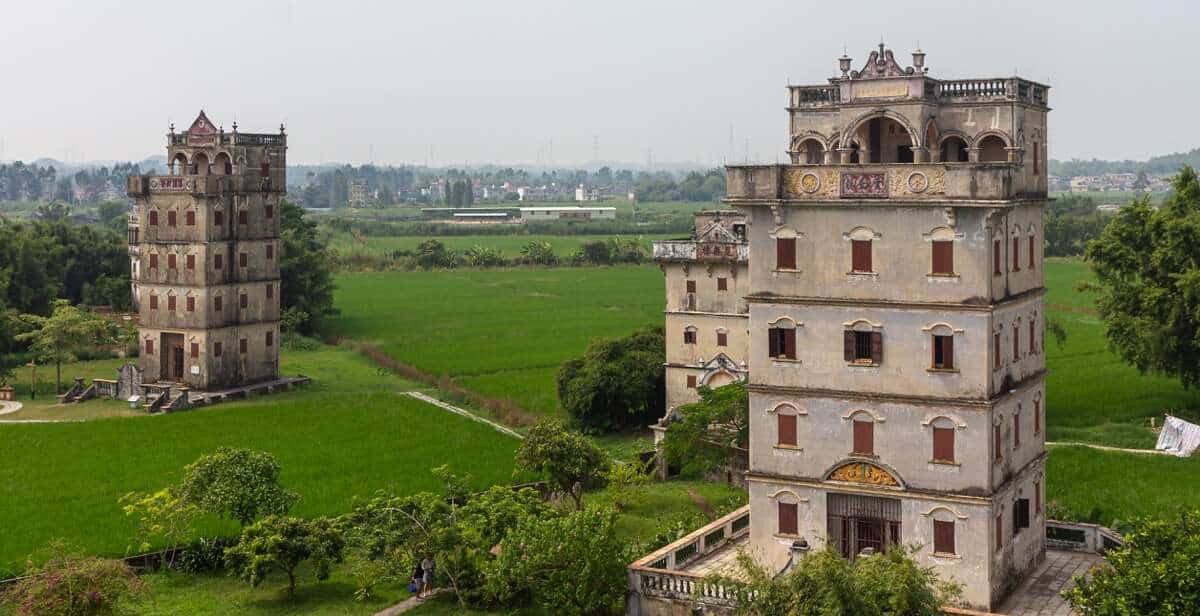
Between 1840 and 1940, over two million people left the five counties of the Wuyi (五邑) region in southern Guangdong — one of the largest sustained regional migrations in modern history. Taishan (台山) sent its sons to build the transcontinental railroad and fill San Francisco's Chinatown. Kaiping (开平) raised diaolou towers with Canadian gold and…
What to Eat in Wuyi: A Food Guide for Returning Diaspora
Taishanese cuisine was the first regional Chinese food to globalize. Before Sichuan, Hunan, or Shanghai cooking reached international audiences, immigrants from the Siyi (四邑) region of Guangdong had already defined what "Chinese food" meant for most of the Western world — a diaspora that…
Between 1840 and 1940, over two million people departed from a handful of stone jetties along the Tan River. They were leaving Wuyi (五邑, wǔyì — the five counties of Taishan, Kaiping, Xinhui, Enping, and Heshan), a stretch of rocky, typhoon-prone coastline on Guangdong’s southwestern edge, bound for gold fields in California, tin mines in…
Wuyi Roots Trip Accommodation Guide: Where to Stay in Kaiping and Taishan rnOver four million people of Wuyi (五, Wǔyì — the Five Counties) descent live outside China. Every year, thousands of them plan the journey back — a trip that may have been decades in the emotional making, passed down through family stories like…
nttThe Wuyi (五) region of Guangdong Province sent over two million people overseas between 1840 and 1940 — and every single one of them came from a specific village. Not a city, not a county, but a village. A place with a name, a founding ancestor, a clan genealogy, and a cluster of houses that…
Chinese Railroad Workers: The Wuyi Villages That Built the Transcontinental
Between 1865 and 1869, approximately 12,000 Chinese workers laid the track that connected America from coast to coast. More than eighty percent came from a cluster of four counties in Guangdong province — an area smaller than Connecticut. Their wages built diaolou towers, their letters…
Between 1850 and 1950, millions of Chinese emigrants sent home letters unlike any correspondence in human history. Each one was simultaneously a love letter, a bank transfer, a household budget, and a legal document — all folded into a single piece of paper. These were qiaopi (侨批, qiáopī), the "overseas Chinese correspondence-remittances" that sustained an…
Plan Your Wuyi Roots Trip: Visas, Routes, and Getting There
The Five Counties (五邑, Wǔyì) of Wuyi — Taishan (台山), Kaiping (开平), Xinhui (新会), Enping (恩平), and Heshan (鹤山) — sent over two million people overseas between 1840 and 1940, creating one of the largest sustained migrations in modern history. Today, an estimated 1.3 million…
Guanghai: Taishan's Historic Port Town and Its Maritime Diaspora
The Fortress by the Sea
The year was 1387. The Hongwu Emperor, Zhu Yuanzhang, founder of the Ming dynasty, looked at his coastline and saw vulnerability. Japanese pirates — wokou (倭寇, wōkòu) — had been raiding settlements from Shandong to Guangdong. His answer was the largest…
Between 1840 and 1949, the Wuyi region sent over two million people overseas — and for a century, the only thread connecting them to home was paper. The qiaopi (侨批, qiáopī) — remittance letter — doubled as financial transaction and intimate family document: a few silver dollars folded inside a few sentences. Money and love…