


The Name That Was a Kingdom
n
In the eleventh century before the Common Era, a man named Man Gong (曼) knelt before the Shang king and received a fiefdom in the fertile Nanyang basin of present-day Henan province. The territory was called Deng (邓). For nearly four centuries, the State of Deng (邓) navigated the treacherous politics of Zhou dynasty China — a minor state caught between ambitious neighbors — until 678 BCE, when the expanding Chu kingdom absorbed it entirely.
n
The kingdom died. But its name lived on.
n
The displaced people of Deng took their former state’s name as their surname, scattering southward into the Yangtze valley. They would spend the next two and a half millennia migrating — first to Fujian, then to Guangdong, and finally across the Pacific to North America, Australia, and Southeast Asia. The Deng surname is one of the few Chinese surnames that began as a sovereign political entity before it was ever a family name, a distinction it shares with a limited number of Chinese surnames that trace their origins to ancient states. Every Deng clan member alive today carries the memory of a small kingdom that disappeared twenty-seven centuries ago.
n

n
From Exile to Empire
n
The absorption by Chu was the surname’s founding trauma, but it was not the end of Deng clan prestige. A millennium after the kingdom’s fall, during the chaos of Wang Mang’s usurpation and the collapse of the Western Han, a young man named Deng Yu (邓) threw his support behind a distant imperial cousin named Liu Xiu.
n
Deng Yu was twenty-three years old when he presented his strategic plan for the restoration of the Han dynasty. His vision — secure the Central Plains first, then sweep south and east — became the blueprint for Liu Xiu’s successful campaign. When Liu Xiu ascended as Emperor Guangwu (光帝) in 25 CE, he named Deng Yu one of the Twenty-Eight Generals of Yuntai (云二八) and awarded him the title “First Merit” (第功).
n
Deng Yu would later serve as Grand Minister of Education (司), one of the Three Excellencies of the Han imperial government. Every Deng ancestral hall contains couplets referencing his achievements. Every Deng clan genealogy opens with his biography. The combination of military brilliance and civil governance excellence gave the Deng surname a prestige foundation that few other Chinese surnames can match — a real historical figure, not a mythic ancestor, whose achievements are documented in the standard dynastic histories — much like the general Ma Yuan who gave the Ma surname its martial identity.
n
Deng Yu (邓): Han dynasty general and Grand Minister of Education. Pronounced Dung (falling tone) Yü (rising tone).
n

n
The Road to Siyi
n
Deng clan migration followed the well-worn path of southward Chinese population movement. During the Tang dynasty (618-907 CE), Deng branches settled in Fujian’s coastal regions — Quanzhou (泉) and Zhangzhou (漳) — attracted by maritime trade and the relative stability of the south. During the Song dynasty (960-1279), continued southward pressure brought Deng clan members into eastern Guangdong.
n
The critical founding moment for Deng presence in the Siyi (四) region — the “Four Counties” of Taishan, Kaiping, Enping, and Xinhui — was the Zhujixiang (珠巷) exodus of 1273 CE. As Mongol armies closed in on the Southern Song, thirty-three surname families departed from Nanxiong’s Zhujixiang in northern Guangdong and migrated south to the Pearl River Delta. Deng clan members were among these families. This migration node is shared by many Wuyi surnames, including the Liang surname’s founding ancestors.
n
They settled initially in Xinhui before spreading into Taishan’s interior valleys — Duanfen (端镇), Shuibu (水镇), and Doushan (斗镇) townships. Unlike dominant clans that came to control entire townships, Deng villages distributed across multiple areas in smaller clusters — a pattern reflecting later arrival and satellite settlement rather than single-clan territorial dominance.
n
In each new village, the Deng clan built an ancestral hall (祠, citang). Grey Lingnan brick, three-bay layout, raised ridge with ceramic ornaments. Above the entrance, the hall bore the inscription “Nanyang Hall” (南堂) — the geographic marker connecting every Deng village back to that ancient kingdom in Henan. Inside, spirit tablets arranged by generation formed a three-dimensional genealogy. The hall was court, temple, community center, and the last place a Deng migrant would visit before departing for overseas.
n
n
Gold Mountain Calling
n
The nineteenth century transformed the Deng surname from a regional Chinese clan into a global diaspora. Deng clan members participated in every wave of the Wuyi migration that sent an estimated two million people overseas between 1840 and 1949.
n
The first wave was the coolie trade (苦贸). From the 1840s through the 1870s, labor brokers shipped contract workers from Guangdong’s ports to the sugarcane fields of Cuba and the guano mines of Peru. Conditions were brutal — mortality rates on the Pacific crossing approached 20% on some voyages. Deng clan members from impoverished villages in Taishan’s interior were among those who signed contracts they could not read, bound for destinations they could not find on a map.
n
The Gold Rush of 1849 brought a different kind of migrant. Deng clan miners joined thousands of other Siyi Chinese heading to California — “Gold Mountain” (金, Jinshan) in the vernacular. They panned rivers in the Sierra foothills, worked claims others had abandoned, and sent whatever they found back to Taishan through the emerging qiaopi remittance system.
n
Railroad construction drew the next wave. Starting in the 1860s, Deng clan laborers worked on the Central Pacific Railroad’s transcontinental line through the Sierra Nevada — laying track through snowdrifts, drilling tunnels through granite, handling nitroglycerin for blasting with a casualty rate that was never accurately recorded. When the Golden Spike was driven at Promontory Summit, Utah, in 1869, the Chinese workers who had built the western half of the line were excluded from the celebration photographs.
n
Departure was a ritualized act. A Deng clan member leaving for overseas reported to the ancestral hall, burned incense before the spirit tablets, received blessings from elders, and carried a small packet of soil from the ancestral village. This was not merely an economic migration. It was a sacred obligation — the migrant going out on behalf of the ancestors and clan. The port at Guanghai (广港), one of Taishan’s historic departure points for the diaspora, was the last sight of home.
n

n
Paper Sons and Stone Walls
n
The Chinese Exclusion Act of 1882 was the first law in American history to bar immigration by ethnicity. It prohibited Chinese laborers from entering the United States, denied citizenship to Chinese residents already in the country, and remained in effect — through successive renewals and expansions — for sixty-one years.
n
For Deng clan members, the Exclusion Act was not an abstract policy. It was the wall between husbands and wives, parents and children. Deng men already working in the United States could not bring their families. Deng men seeking entry had few legal paths — and many desperate ones.
n
The paper son (纸儿) system emerged as the adaptive response. An estimated 80-90% of Chinese entering the United States between 1882 and 1943 used fraudulent documentation — typically claiming to be sons of US citizens. Deng clan members purchased “slots” in the families of Chinese Americans who had birthright citizenship, memorizing fabricated family histories, village layouts, and interrogation responses. A paper son might spend months studying the details of a family he had never met — the number of steps to the village well, the names of neighbors three houses down, the location of the family pig pen — because any contradiction during interrogation could mean deportation.
n
Angel Island Immigration Station, opened in 1910 in San Francisco Bay, was the gate. Deng clan arrivals could be detained for weeks or months in crowded barracks while immigration officials attempted to catch them in contradictions. The poetry carved into the barrack walls — knife scratches in wood, ink on plaster — records the psychological toll. One anonymous detainee wrote:
n
“For what crime must I endure this imprisonment? My only crime is wanting to work, to feed my family, to be a man.”
n
The 1906 San Francisco earthquake, which destroyed most federal immigration records, was an accidental liberation. Without original documentation to verify against, the paper son system expanded enormously. Deng clan migration continued through the Exclusion era — built on borrowed names, memorized genealogies, and the desperate hope that Angel Island’s interrogators would not find the crack in the story.
n

n
Letters Across the Pacific
n
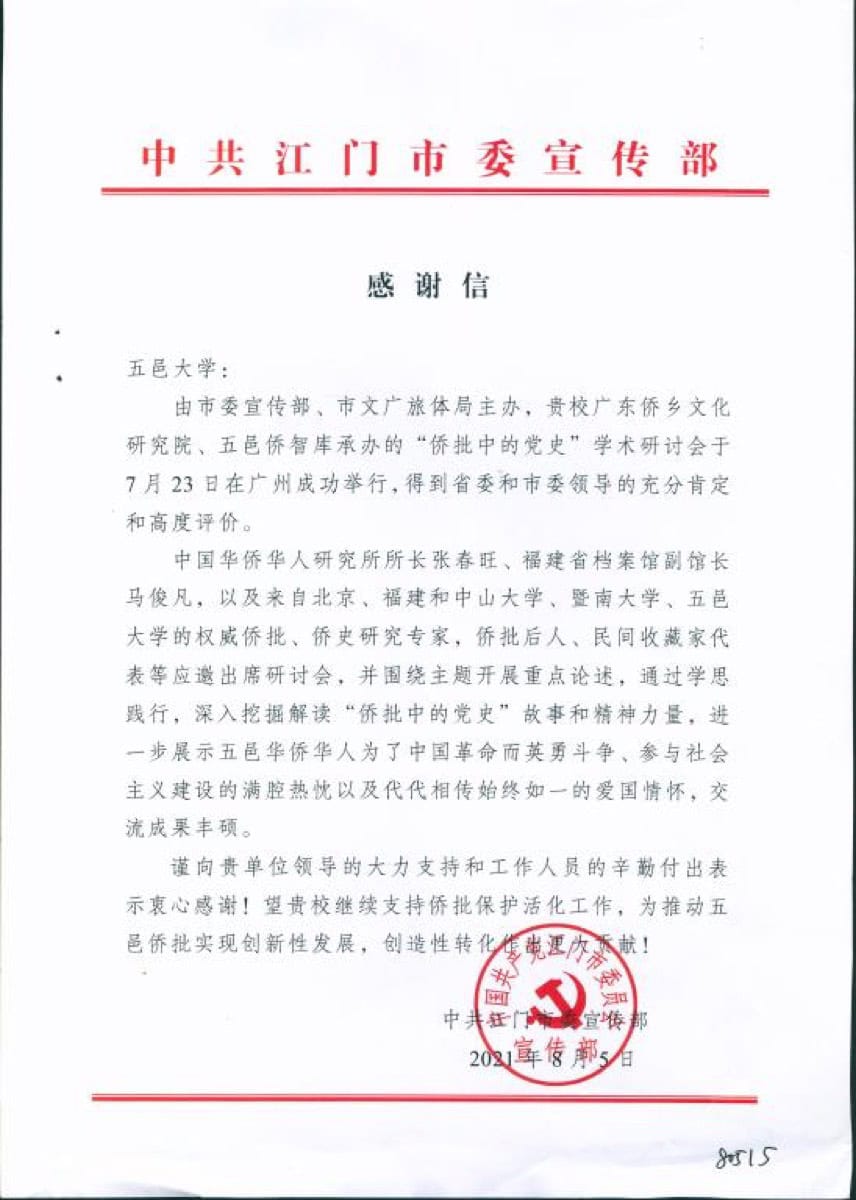
While Deng men labored in American laundries and on railroad maintenance gangs, their families in Taishan lived for the arrival of qiaopi (侨) — the remittance letters that combined financial transfer, family governance, and emotional connection into a single document. The qiaopi system was the central economic lifeline of the qiaoxiang villages sustained by overseas remittances.
n
A typical qiaopi from a Deng clan migrant in San Francisco to his wife in Duanfen might contain: US$30 in remittance, instructions for its distribution (“$5 for Father’s medicine, $10 for the children’s school fees, $15 toward the new house”), updates on work and health, inquiries about the village, and expressions of longing — I dream of home every night, tell the children their father has not forgotten them.
n
The qiaopi was simultaneously an economic instrument and a tool of patriarchal authority. Through these letters, the husband in California directed household decisions in Taishan — which land to buy, which school to send children to, how to handle disputes with neighbors. The wife (often married as a teenager to a man she barely knew, now absent for decades) managed the daily reality: raising children alone, supervising construction crews, navigating village politics, maintaining the family’s social standing.
n
These wives were known as jinshanpo (金婆) — “Gold Mountain wives.” Many never saw their husbands again. Some received letters for decades from men who had started second families in America. Others received no letters at all, their husbands lost to accident, illness, or simply the decision to disappear into a new life. The jinshanpo managed households, built diaolou towers with remittance money, educated children, and maintained the fiction of the intact family — all while waiting for letters that might never come. Their experience mirrors the jinshanpo stories across the Wuyi diaspora.
n
Qiaopi (侨): Remittance letters combining money transfer and personal correspondence. Pronounced chow-pee. Recognized by UNESCO as Memory of the World documentary heritage in 2013.
n
n
Laundries, Restaurants, Chinatowns
n
Deng clan migrants in North America built economic lives in the narrow spaces left by exclusion. Hand laundries were the dominant occupation from the 1880s through the 1950s. The business model was punishing — twelve-hour days over steaming tubs and hot irons — but required minimal capital, minimal English, and could employ family members. By the 1930s, Chinese operators ran approximately 70% of hand laundries in San Francisco. A Deng clan laundryman in New York or Seattle was a common figure: bent over an ironing board in a steam-filled room, saving every nickel to send home.
n
Restaurants became the second-generation niche. What the world knows as “Chinese food” — chop suey, chow mein, egg foo young — largely originated in Taishanese-owned restaurants adapting Siyi home cooking to Western ingredients and tastes. The Deng clan restaurateur who served “Chinese” food to American customers was simultaneously an entrepreneur, a cultural ambassador, and a performer — presenting a version of Chinese identity that was palatable to the host society while maintaining private clan connections through associations and family networks.
n
Clan associations (宗会, zongqinhui) provided the social infrastructure beneath the economic surface. The Deng clan association in San Francisco or Vancouver offered lodging to new arrivals, job introductions, dispute resolution, and burial services — the last being critical, as most migrants intended their bones to be returned to Taishan for proper burial. The association was simultaneously a mutual aid society, an identity preservation institution, and a transnational communication hub.
n
Zongqinhui (宗会): Clan association organized by shared surname. Pronounced dzong-chin-hway. These organizations were the primary social infrastructure of the Chinese diaspora.
n

n
The Reformer’s Surname
n
In December 1978, at the Third Plenum of the Eleventh Central Committee in Beijing, a seventy-four-year-old man named Deng Xiaoping (邓平) launched the policy that would transform China: Reform and Opening (改开, gaige kaifang).
n
Deng Xiaoping was born in Paifang Village, Guang’an County, in Sichuan Province — not in Taishan. Yet his ancestral roots traced through the same Deng clan migration that had carried others from Henan through Fujian and Guangdong before some branches continued westward into Sichuan during the Ming-Qing transition. The surname he carried was the same surname borne by the coolies, laundrymen, and railroad workers of the Wuyi diaspora.
n
His policies transformed the relationship between that diaspora and the qiaoxiang (侨, overseas Chinese hometowns). After three decades of near-total separation during the Mao era (1949-1978), Deng clan members in San Francisco, Vancouver, and Sydney could suddenly return. They could visit ancestral graves, participate in Qingming (清节) ceremonies, reclaim family properties lost during collectivization. Remittance flows resumed. A new generation of diaspora philanthropy funded school renovations, road construction, and ancestral hall restorations — revitalizing the qiaoxiang villages that remittance wealth had built.
n
The surname Deng acquired a new layer of meaning. It had always been “the name that was once a kingdom,” associated with the ancient State of Deng and the Han dynasty general Deng Yu. Now it was also the name of the man who opened China to the world — creating a unique form of dual clan pride: ancient lineage and modern legacy, carried in the same five strokes of the character 邓.
n

n
The Digital Clan
n
In the twenty-first century, Deng clan identity maintenance has migrated from paper to platform. Deng clan WeChat groups connect members across continents — a diaspora grandmother in Vancouver can see photographs of her ancestral village in Duanfen within minutes of their being taken. Online genealogy databases allow diaspora members to trace lineage from a laptop in Sydney. DNA testing through services like 23andMe and FamilyTreeDNA has created a new form of clan verification — Y-chromosome matching that can confirm shared descent from a common Deng ancestor. These tools offer new approaches to surname research for diaspora members seeking roots.
n
The World Deng Clan Federation (世邓宗总) organizes periodic global conventions. Deng clan members from Malaysia, Thailand, Canada, the United States, and China gather to reaffirm shared identity through a blend of traditional rituals (ancestral veneration, banquet seating by generation) and modern programming (genealogy workshops, investment forums, youth networking). At these gatherings, the generation poem (字诗, zibeishi) — the naming sequence that identifies each generation’s position in the lineage — is recited by elders and taught to children.
n
The qiaopi letter has been replaced by the WeChat message. The ancestral hall has been supplemented by the online database. But the fundamental impulse remains: to know where you come from, to stay connected to the people who share your name, to honor the ancestors who carried that name across oceans and centuries.
n

n
Roots Today
n
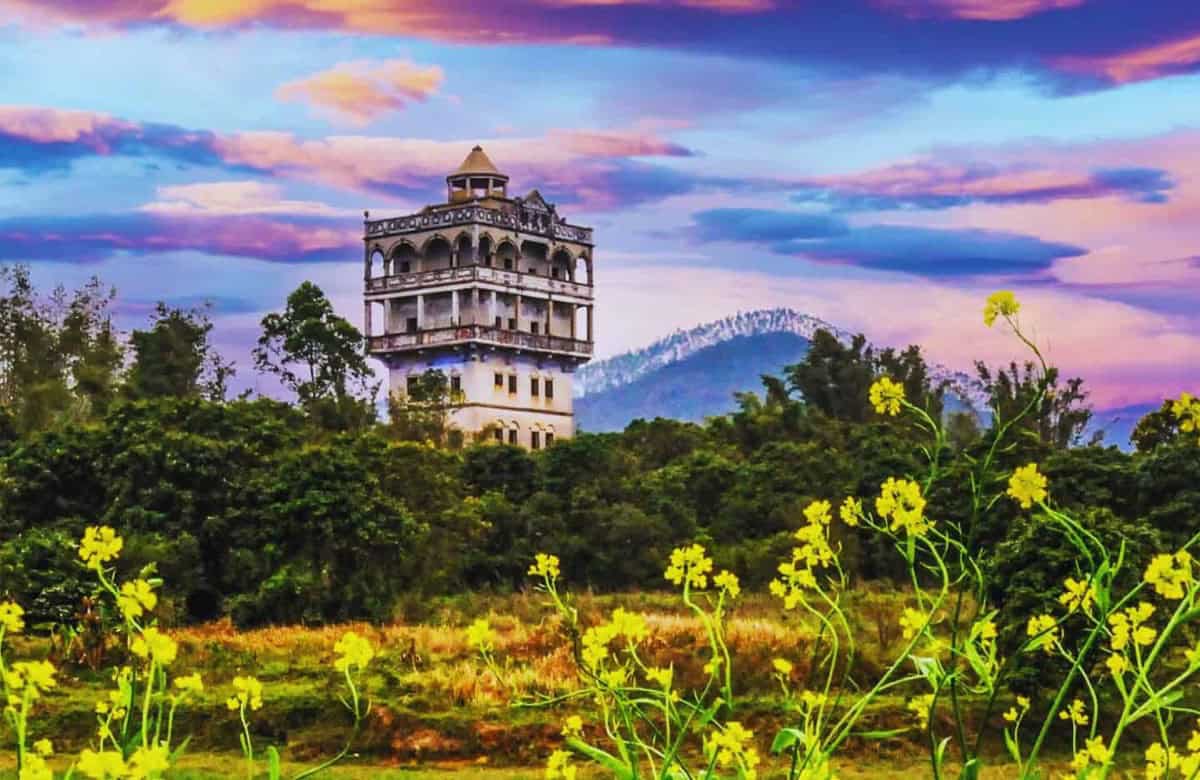
Today, Deng clan villages in Taishan are quieter than they were a century ago. The diaolou towers still stand, their reinforced concrete walls a monument to remittance wealth and the fear of bandits that drove their construction. Many houses sit empty, their owners scattered across the Pacific — some in San Francisco, some in Vancouver, some in Sydney, some buried in cemeteries whose headstones still face west, toward home.
n
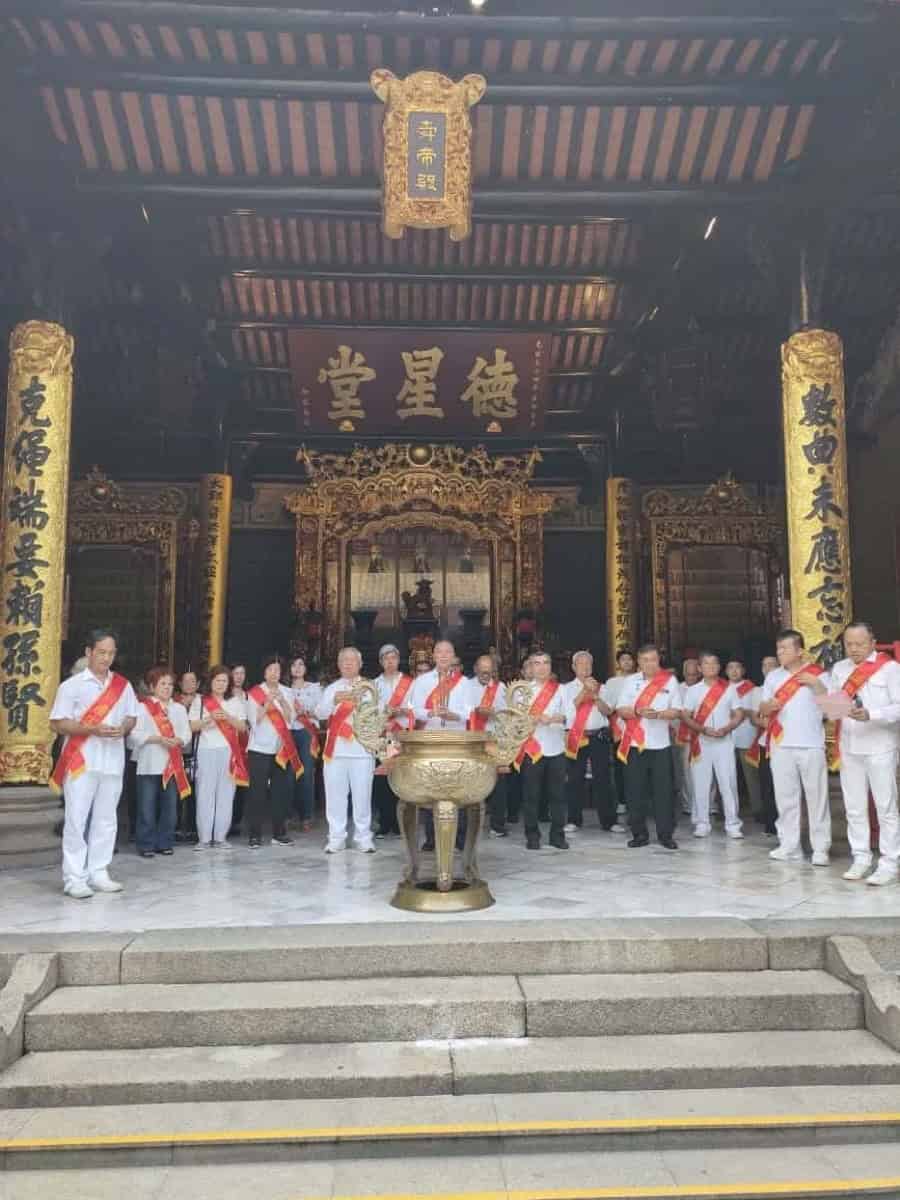
But during Qingming (清节), the annual grave-sweeping festival, the diaspora returns. Deng clan members born in North America, Australia, and Southeast Asia walk the narrow lanes their great-grandparents walked. They burn incense at ancestral graves, share banquet meals in ancestral halls, and find their place in the generation poem — discovering that their given name, chosen by parents who may not speak Taishanese, still carries the character assigned to their generation three centuries ago. This is the same pilgrimage made by diaspora families across the Wuyi region each spring.
n
For these visitors, the surname Deng is not merely a linguistic coincidence. It is a three-thousand-year-old community — a lineage that began as a small kingdom in the Nanyang basin, produced a Han dynasty general, survived the Exclusion era behind paper names, and now spans the globe. Somewhere in a Deng village in Taishan, an ancestral hall still bears the inscription: Nanyang Hall (南堂) — the marker of an ancient homeland that exists now only in memory, and in the name carried by millions.
n
n
n
Continue Reading
n
- n
- The Yu (余) Surname: From Shaoguan Statesmen to the Wuyi Diaspora
- The Zhou Surname: Three Thousand Years from China’s Longest Dynasty to the Wuyi Diaspora
- The Ma Surname: From Fubo General to the Wuyi Diaspora
- The Sun Surname: 3,000 Years from Ancient Le’an to the Wuyi Diaspora
- Your Surname, Your Compass: A Guide to Wuyi Roots Research
n
n
n
n
n
n
Stay Connected
n
Follow RootsOfChina on Facebook and Instagram for new article updates, behind-the-scenes from Kaiping, and stories from the Chinese diaspora.
n
Sources
n
- n
- n
《氏谱— Multiple editions, various custodial families. Deng clan genealogical records documenting origin from the State of Deng through migration to Guangdong.
n
- n
《记by Sima Qian (Western Han). References to the State of Deng in the Zhou dynasty feudal system.
n
- n
《传庄十年— Spring and Autumn Annals, documenting Chu’s absorption of the State of Deng in 678 BCE.
n
- n
《汉·禹》by Fan Ye (5th century CE). Biography of Deng Yu, Han dynasty general and Grand Minister of Education.
n
- n
《南氏谱录(2002). Lingnan Surname Genealogy Compilation, including Deng clan genealogical records.
n
- n
张雄 et al., 《邑侨人》(2001). Guangdong People’s Press. Comprehensive Wuyi overseas Chinese migration history.
n
- n
梅强, 关锋, 《东山侨》(2010). China Overseas Chinese Press. Taishan-specific migration history with village-level detail.
n
- n
刘, 《信五侨社》(2011). Guangdong People’s Press. Qiaopi remittance letters and qiaoxiang social transformation.
n
- n
袁, 《国民近广侨》(2019). Jinan University Press. Transnational migration and modern Guangdong qiaoxiang.
n
- n
Madeline Hsu, Dreaming of Gold, Dreaming of Home: Transnationalism and Migration Between the United States and South China, 1882-1943 (2000). Stanford University Press. https://www.sup.org/books/title/?id=935
n
- n
Erika Lee, At America’s Gates: Chinese Immigration during the Exclusion Era, 1882-1943 (2003). University of North Carolina Press.
n
- n
Angel Island Immigration Station Foundation — Historical records and poetry collection. https://www.aiisf.org/
n
- n
Chinese Exclusion Act Case Files — National Archives at San Francisco. https://www.archives.gov/research/chinese-americans
n
- n
Baidu Baike — Deng Surname (邓) entry. https://baike.baidu.com/item/邓
n
n
n
n
n
n
n
n
n
n
n
n
n
n
n
Suggested Reading
Is this your family’s story?
Roots Of China is built from readers’ family histories. If a story here sounds like your own — a surname, a village, a journey — leave a comment below, or share your family’s story with us and we may be able to help you find your ancestral village.
