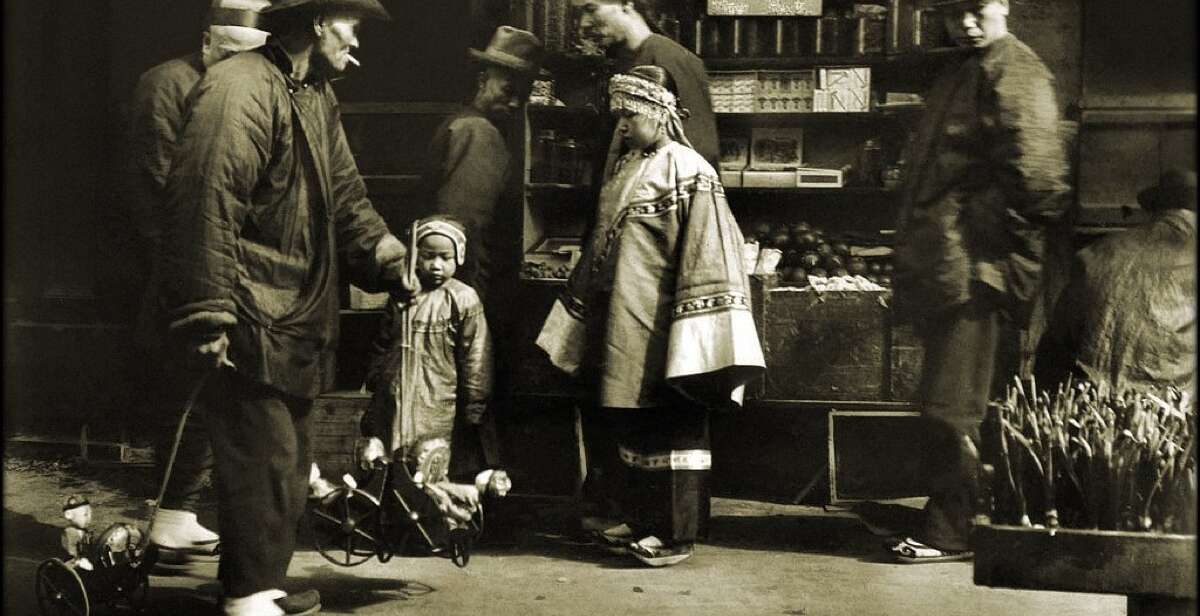
Between 1840 and 1940, over two million people departed from a handful of stone jetties along the Tan River. They were leaving Wuyi (五邑, wǔyì — the five counties of Taishan, Kaiping, Xinhui, Enping, and Heshan), a stretch of rocky, typhoon-prone coastline on Guangdong’s southwestern edge, bound for gold fields in California, tin mines in…
nttThe Wuyi (五) region of Guangdong Province sent over two million people overseas between 1840 and 1940 — and every single one of them came from a specific village. Not a city, not a county, but a village. A place with a name, a founding ancestor, a clan genealogy, and a cluster of houses that…
The Name That Was a Kingdom nIn the eleventh century before the Common Era, a man named Man Gong (曼) knelt before the Shang king and received a fiefdom in the fertile Nanyang basin of present-day Henan province. The territory was called Deng (邓). For nearly four centuries, the State of Deng (邓) navigated the…
The Sun surname (孙) traces its roots to three ancient Chinese noble lineages — the Ji (姬) clan of the Zhou dynasty, the Mi (芈) clan of Chu, and the Gui (妫) clan of Qi — converging over three millennia into a single name now carried by 18 million people worldwide. Among Chinese surnames, Sun…
The Wu (吴) surname is the only major Chinese clan whose founding narrative is not conquest, statecraft, or military genius — but voluntary renunciation. In the 11th century BCE, a Zhou dynasty prince named Taibo (泰伯) looked at the throne he was born to inherit and chose to walk away. He yielded the succession to…
Cao Surname Wuyi Diaspora: Three Thousand Years from Zhou Dynasty State to Gold Mountain nIn the eleventh century before the Common Era, King Wu of Zhou (周王) conquered the Shang dynasty and divided his new realm among his brothers and loyal generals. One of those brothers was named Zhenduo (振). The king gave him a…
Guanghai: Taishan's Historic Port Town and Its Maritime Diaspora
The Fortress by the Sea
The year was 1387. The Hongwu Emperor, Zhu Yuanzhang, founder of the Ming dynasty, looked at his coastline and saw vulnerability. Japanese pirates — wokou (倭寇, wōkòu) — had been raiding settlements from Shandong to Guangdong. His answer was the largest…
Between 1840 and 1949, the Wuyi region sent over two million people overseas — and for a century, the only thread connecting them to home was paper. The qiaopi (侨批, qiáopī) — remittance letter — doubled as financial transaction and intimate family document: a few silver dollars folded inside a few sentences. Money and love…
In 1931, at the peak of overseas Chinese remittances to Taishan, ten surname groups pooled their Gold Mountain earnings to build something unprecedented — a 108-building arcaded market town on the banks of the Datong River. The Mei clan held the largest stake, but the Qiu, Cao, Jiang, Liu, Huang, Chen, Li, Tan, and Wu…
Liu (刘) Surname: From Han Dynasty to Wuyi Diaspora
The Emperor's Lineage
The Liu surname — 刘 (Liú) — is carried by more than 80 million people worldwide, making it the fourth most common Chinese surname. But numbers alone do not capture what the Liu name represents. This is the surname of emperors: Liu Bang,…