

Liu (刘) Surname: From Han Dynasty to Wuyi Diaspora
The Emperor’s Lineage
The Liu surname — 刘 (Liú) — is carried by more than 80 million people worldwide, making it the fourth most common Chinese surname. But numbers alone do not capture what the Liu name represents. This is the surname of emperors: Liu Bang, the commoner who founded the Han Dynasty in 206 BCE; Liu Xiu, who restored it after usurpation; Liu Bei, who claimed its legacy in the Three Kingdoms. For more than 2,000 years, the Liu clan has maintained a continuous documented lineage — one of the longest in human history — from the Central Plains to the coastal villages of Taishan, and from those villages across the Pacific to America, Australia, and beyond.
The story begins at the mythic edge of Chinese history, where legend and documented genealogy meet. Liu Lei (刘累), an 18th-generation descendant of the sage-king Emperor Yao (帝尧), served the Xia Dynasty as a dragon-keeper — a keeper of the sacred, dangerous creatures that symbolized imperial authority. The clan was given the title “Imperial Dragon” (御龙氏, Yù-Lóng Shì), and Liu Lei is still commemorated today at the Liu Clan Ancestor Garden in Lushan, Henan Province. This is not myth pretending to be history; it is the cultural memory that Liu clan genealogies preserve, a bridge between the legendary and the verifiable. From Emperor Yao’s ninth son Yuanming (源明), who was enfeoffed at a place called Liu and took its name as his surname, through the Shang and Zhou dynasties — during which the clan passed through the Shiwei (豕韦氏) and Tang-Du (唐杜氏) lineages — the Liu name threaded its way through China’s earliest dynasties.
Then came the commoner who would change everything. Liu Bang (刘邦) was born a peasant in Pei County, in what is now northern Jiangsu. He rose through the chaos of the Qin Dynasty’s collapse, defeated the aristocratic general Xiang Yu at the Battle of Gaixia in 202 BCE, and founded the Western Han Dynasty — the first commoner in Chinese history to become emperor. His dynasty lasted more than 400 years, gave China its majority ethnic name (Hàn 汉, “Han”), and established the Liu surname as an imperial lineage. Western Han emperors ruled for twelve generations. After the usurpation of Wang Mang, Liu Xiu (光武帝) restored the dynasty as the Eastern Han. Later, in the Three Kingdoms period, Liu Bei (刘备) — a descendant of Liu Sheng, son of Emperor Jing of Han — founded the kingdom of Shu Han and, with his sworn brothers Guan Yu and Zhang Fei, became one of the most beloved figures in Chinese literature and folklore. This is the core of Liu clan identity: not merely an old surname, but an imperial surname, borne by the founders and restorers of one of the world’s great civilizations.
Every Liu ancestral hall in Taishan bears the name Pengcheng Hall — 彭城堂 (Péngchéng Táng). Pengcheng, modern Xuzhou in Jiangsu Province, was Liu Bang’s birthplace and the ancestral seat of the Han imperial line. When a Liu clansman walks into an ancestral hall in Shuibu township, Taishan, and sees those three characters above the altar, he is connected across 2,000 years and 1,500 kilometers to the commoner-emperor who founded a dynasty. The hall name is a portable homeland — it requires no map, only memory.
The Han Dynasty’s practice of enfeoffing Liu princes across the empire seeded the surname across China with remarkable efficiency. Princes were given territories in every direction, each establishing a local Liu lineage that persisted long after the dynasty fell. By the Tang Dynasty, the Liu surname was already one of China’s largest. Today, with more than 80 million bearers — roughly 70 million in mainland China and an estimated 10 million overseas — the Liu surname represents more than five percent of the Han Chinese population. 1 It is the concentrated reproductive legacy of an imperial clan that reproduced across two millennia.
But there is a deeper question, and it animates everything that follows: What happens when one of the world’s most ancient and distinguished surnames is concentrated into a handful of villages in a single township in coastal Guangdong — and then dispersed again across the globe? The Liu clan story is not merely the story of a name. It is the story of how a portable identity, carried in a single syllable, survived migration, exclusion, revolution, and assimilation to persist into the 21st century. And it begins, like so many great migrations, with a moment of rupture: a family fleeing south, a dynasty collapsing behind them, and a new home waiting at the edge of the Southern Sea.
The Road to the Southern Sea
In the late ninth century, the Tang Dynasty — the golden age of Chinese civilization — was convulsing toward its end. The Huang Chao Rebellion (黄巢起义, 874–884 CE) tore through the Central Plains, and among the millions displaced was a man named Liu Xiang (刘祥). He was the 25th-generation descendant from Liu Chen of the Han imperial line, and he fled south with his wife and children. His two brothers scattered and were lost to the record — swallowed by the chaos. Liu Xiang alone brought the Liu name to Shibi Cave, in Ge’eng’ao Village, Ninghua County, Tingzhou Prefecture, in the mountains of Fujian Province. This was the first anchor point of the southern Liu clan, and it was not merely a genealogical footnote. It was the hinge between the imperial north and the diasporic south — the moment the Liu name began its long journey toward the sea.
For the next three centuries, the Liu clan put down roots in Fujian. Liu Xiang’s descendants multiplied, serving as local officials and scholars, building the foundation for the next great southward movement. Then, in the Southern Song Dynasty, came the moment that Liu clan genealogies record with striking specificity: the departure from Zhuji Lane.
Zhuji Lane — 珠玑巷 (Zhūjī Xiàng) — in Nanxiong, northern Guangdong, was a way station for migrants moving south from Fujian and Jiangxi. By the early 13th century, it had become the departure point for one of the most vividly documented mass migrations in Chinese clan history. Liu Xiang’s 16th-generation descendant, Liu Guangchuan (广传公), had served as magistrate of Ruijin County, Jiangxi, and fathered 14 sons by two wives — the “Fourteen Ju” (十四巨). One of those sons, Juquan (巨泉公), moved south to Nanxiong, and his fourth son, Liu Qinglian (清廉公), relocated to Zhuji Lane.
Then came the crisis. The “Hu Fei incident” (胡妃之祸) — a political scandal involving an imperial concubine — triggered a cascade of southward flight. In the first year of the Kaiyuan era — 1205 CE — Liu Qinglian’s three sons, Liu Jun (俊), Liu Zhaoxiong (兆熊, also recorded as 少雄), and Liu Shating (沙亭), joined a group of 97 migrants organized by a man named Luo Gui. They fled Zhuji Lane together and arrived at Guangzhou’s West Gate, where they parted ways. The Zhuji Lane departure is the Liu clan’s Plymouth Rock — a specific year, specific names, a specific crisis, a specific group of 97. Nine centuries later, Liu clan descendants still tell the story.
Liu Zhaoxiong broke from his brothers and traveled southwest to the coastal territory of Xinning (新宁, later renamed Taishan — 台山, Táishān), one of the famed Five Counties of Guangdong. He settled at a place called Li’ao (里坳), in what is now Dajiang Township, becoming the founding ancestor of the Taishan Liu clan. This was the moment, circa 1205, when the Liu surname first took root in what would become the world’s most prolific emigrant-sending county. The Liu clan had reached the South China Sea.
But the real demographic engine of the Taishan Liu would come later, from a different branch. Liu Jun’s grandson, Liu Gui (贵公), had four sons. The youngest, Liu Shihua (刘世华), explored the Hengshui (横水, Héngshuǐ) area of Shuibu township (水步, Shuǐbù) — the name means “Water Step” — in the Wenzhangdu district of Xinning. He found the fengshui ideal: hills protecting the rear, water flowing gently before, good earth for building. Records suggest he settled there in the early Ming Dynasty, approximately 650 years ago, in the 1370s. He became the progenitor of the largest Taishan Liu branch. His descendants spread across Shuibu, Chonglou, Fucheng, Duhu, and Guanghai — a constellation of Liu villages radiating from Shuibu township. The Shihua Liu Ancestral Hall (世华刘公祠, Shìhuá Liú Gōngcí), built in the late Ming Dynasty, renovated in 1905 and again in 2010, and still standing today in Qiaoxing Village, Shuibu, is the physical anchor of this lineage — a building that has served as temple, school, and community center across more than four centuries.
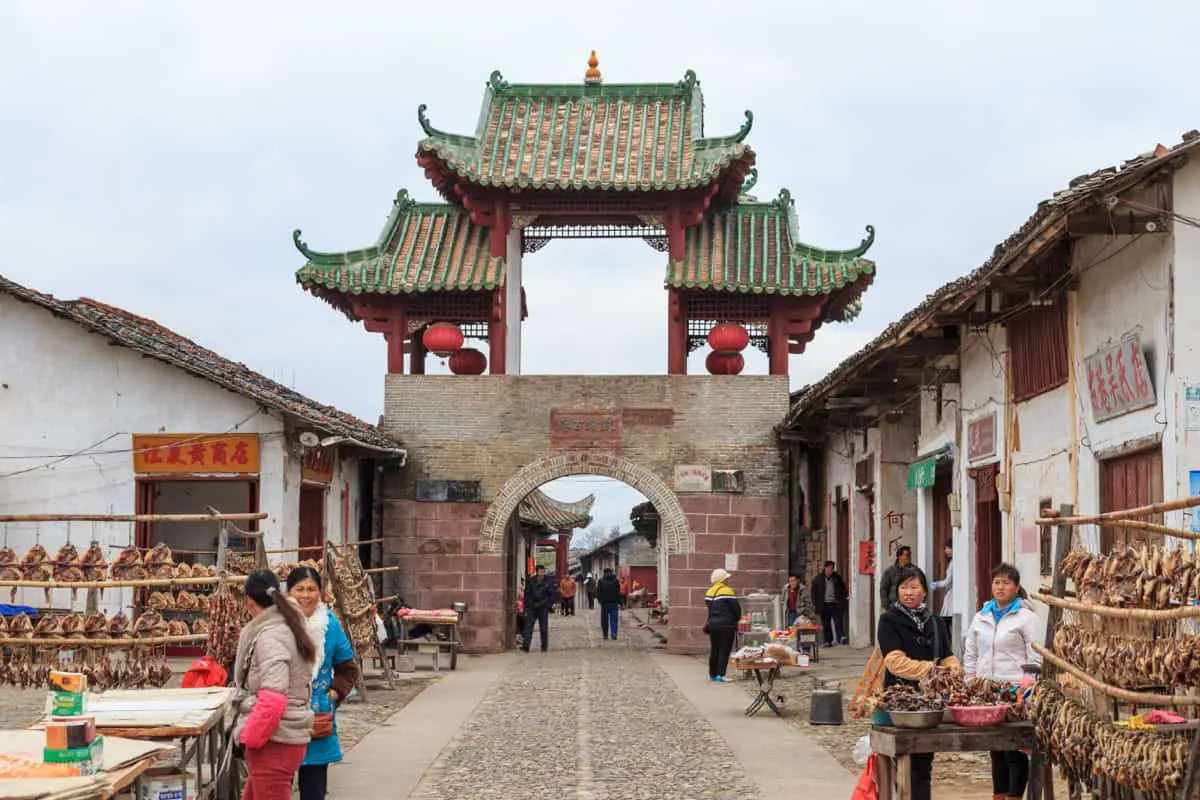
From Li’ao, the first settlement, to Hengshui, the largest concentration, the Liu villages of Taishan form a distinct geography: Kengkou and Henghu near the township center; Chonglou’s Laishantang and Daling to the south; Guanghai’s Dongshan, Chongpang, and Yueming villages along the coast; Duanfen to the southwest; Duhu’s Nichong and Liangdun to the southeast. A third branch, descended from Liu Wensong (刘文耸) — a descendant of Juhai Gong, the fifth son of Guangchuan Gong who fled south during the Mongol invasions and was adopted by the Zou family in Xinhui, creating the clan saying “Never forget the Liu, never forget the Zou” (刘不可失,邹不可忘) — established additional lineages in Guanghai’s Dongshan area. This was the village geography the diaspora would carry in memory across oceans.
And the threshold between those villages and the overseas unknown was the Tan River (潭江, Tán Jiāng). The waterway connected Liu villages to Macau (澳门), the primary embarkation port for Wuyi emigrants headed to the Americas and Australia. The journey from Shuibu or Guanghai to Macau took one to two days by boat, followed by weeks in a Macau labor boarding house awaiting ship assignment. Every Liu clan emigration story passes through this river-to-port corridor. The Tan River is the physical threshold between the ancestral village and the overseas unknown — the last Chinese water a Liu emigrant would see before the open Pacific.
The Boy from Longtang Lane
He was born in 1893 in Sydney, Australia — a Eurasian boy with an English mother and a Chinese father from Taishan’s Shuibu township. He inherited Western facial features; he could, if he wished, pass for white in a country that had enshrined the White Australia Policy. But when the boy was seven years old, his father made a decision that would define his life: Liu Guangfu (刘光福) was sent back to Taishan for a Chinese education.
For eight years, from 1900 to 1908, Liu Guangfu lived in his ancestral village of Longtangli (龙塘里), Qiaoxing Village, Shuibu Township. Picture the boy: he looks Western, yet he is speaking Taishanese — the dense, tonal dialect of the Siyi region that is nearly unintelligible to speakers of standard Cantonese — and learning classical Chinese, absorbing clan traditions. The rhythm of village life surrounded him: the ancestral hall at the center of the settlement, the generational poetry chanted by elders, the letters arriving from overseas relatives, the women managing households while husbands worked distant goldfields. These eight years made Liu Guangfu bicultural in the deepest sense — not merely bilingual, but formed by two civilizations. He would spend the rest of his life building bridges between them.
At 15, he returned to Australia. He worked odd jobs, finding his footing in the Chinese-Australian community. By 1911, at just 18, he was secretary at the Chinese Consulate-General in Melbourne, where he actively opposed Yuan Shikai’s monarchical restoration in China — a teenager already engaged in high-stakes republican politics. In 1917, he co-founded the China-Australia Mail Steamship Line with four partners: Yu Rong, Guo Biao (from Zhongshan), Huang Zhuwen, and Huang Laiwang. The venture raised £108,000 in capital — an extraordinary sum for a Chinese-Australian enterprise at the time — and operated between Australian east coast ports and Hong Kong. Its purpose was audacious: to break the European shipping monopoly, promote Chinese-Australian trade, and raise Chinese national pride. The venture ultimately failed in 1924, undone by post-World War I inflation, rising costs, and fierce competition, but its ambition — Chinese-controlled trade routes across the Pacific — foreshadowed everything Liu Guangfu would spend his life pursuing.
The pivotal moment came in 1921. Liu returned to China with his wife and children, and in Guangzhou, he met Sun Yat-sen — the revolutionary leader who had helped overthrow the Qing Dynasty and was now struggling to unify the fractured republic. The meeting transformed Liu Guangfu. He returned to Australia not merely as a community member but as a political actor: English Secretary of the Kuomintang Australia branch and Vice-Chair of the Sydney Chinese Chamber of Commerce. His work was no longer about individual success; it was about the rights and standing of Chinese-Australians as a community.
Then, in 1932, came the moment that defined his transnational identity. During the Shanghai “January 28 Incident” (淞沪抗战), when Japanese forces attacked the city, Liu Guangfu volunteered for Cai Tingkai’s 19th Route Army — a predominantly Cantonese force defending Shanghai. He served as English Secretary for five months, managing international media relations and disseminating battle reports to the world. Think about what this means: a Chinese-Australian, born in Sydney, raised in a Taishan village, serving a Cantonese army, fighting Japanese aggression in Shanghai, communicating with the international press in English. This is transnational identity in action — not an abstraction but a man on a battlefield.
After the war, Liu Guangfu continued his lifelong campaigns: anti-Japanese fundraising from Australia, co-founding the Australia-China Friendship Association, advocating for Chinese equal rights during the White Australia Policy era, and the quiet, persistent work of building Sydney’s Chinatown into a community institution. He was widely considered the main force behind its establishment.
In 1982, at age 89, he received the Order of the British Empire from Queen Elizabeth II for his contributions to Australia-China relations. Australian media called him the “Father of Australian Chinese society” (澳洲华侨社会之父). He died in 1983 at age 90, his life having spanned the full arc of Chinese-Australian history — from the White Australia era, when Chinese were excluded from citizenship, to the multicultural era, when a Chinese-Australian could receive one of the empire’s highest honors. Liu Guangfu is the human-scale proof that the Liu clan’s 2,000-year lineage produces individuals capable of bridging civilizations. But he was not alone. The weight of the Liu name produced remarkable diaspora figures across multiple continents.
The Weight of a Name
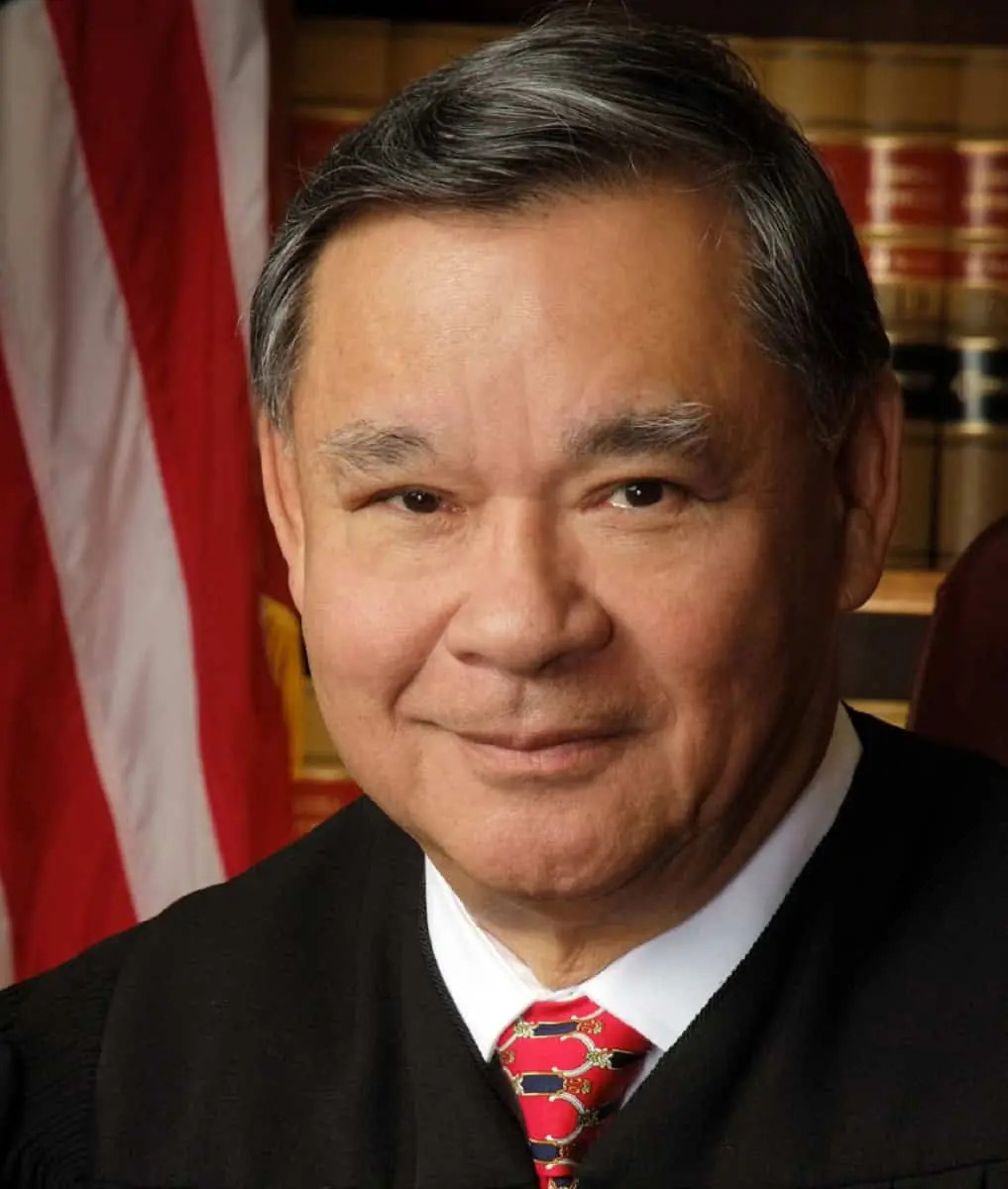
If you had walked into a Los Angeles laundry in the 1940s, you might have found a boy named Ronald S.W. Lew (1941–2023) folding shirts after school. He spoke Taishanese at home — his father, Liu Shitian (刘石天), had immigrated from Taishan’s Hengshui village in 1920, during the Exclusion era when Chinese entry into the United States was nearly impossible. The family ran the laundry because that was what Taishanese families did in America: they washed other people’s clothes. But the boy folding shirts would eventually become Liu Chengwei (刘成威), and in 1987, President Ronald Reagan appointed him to the United States District Court for the Central District of California — the first and only life-tenured Chinese-American federal judge in American history.
The arc is almost impossible to comprehend. Liu Shitian somehow entered the United States during the Exclusion era — likely via the paper son system or a narrow merchant exemption — returned to China to marry, and brought his son back to America. Ronald grew up in the family laundry, earned his BA from Loyola Marymount University in 1964, served in the US Army from 1967 to 1969, and received his JD from Southwestern Law School in 1971. He worked in the Los Angeles City Attorney’s office, entered private practice, and was appointed to the LA Municipal Court by Governor Jerry Brown in 1982, the LA Superior Court by Governor George Deukmejian in 1984, and finally the federal bench by President Reagan in 1987. He helped establish the first Chinese-American museum and served as the first chair of the Southern California Chinese Lawyers Association. He died in May 2023, having lived the compressed arc of Chinese-American possibility: from laundry worker’s son to federal judge in a single generation.
But the Liu clan did not produce only judges. In 2003, David Lau (刘达强) became the fourth Chinese-American mayor of Monterey Park, California. His ancestral village was Shuibu’s Lianxing Dachengli (联兴村委会大成里) — a specific lane in a specific village. Hong Kong-educated, he had immigrated to the United States more than 40 years earlier, served on the Garvey School District board for seven years, and was elected to the Monterey Park City Council in 2001 before his rotating 9.5-month mayoral term. His community service through the San Gabriel Valley Tongyuan Association and the International Lions Club represents the democratic expression of clan achievement — not the federal bench, but the city council, where diaspora descendants govern the communities they helped build.
Then there is the poet. Liu Huangtian (刘荒田, born 1948), whose original name is Liu Yuhua (刘毓华), came from Shuibu’s Qiaoxing Ruilong Village (乔庆瑞龙村). He was a sent-down youth during the Cultural Revolution, a village teacher, and a civil servant before immigrating to San Francisco in 1980. In America, he worked restaurant and hotel jobs while writing. Over four decades, he published more than 45 books of essays and poetry — a staggering output for anyone, let alone someone working manual labor. His major works include I Am a Taishanese (《我是台山人》) and My Taishan Small Town (《我的台山小镇》). He won the “Zhongshan Cup” Global Overseas Chinese Literature Prize and served as honorary president of the American Chinese Literature and Arts Association. Forty-five books, and the subject is always home. The village in Shuibu never left him.
Alongside the poet stands the photographer. Liu Bozhi (刘博智, born 1950), of Taishan ancestry, spent more than 50 years documenting overseas Chinese communities across approximately 40 countries — laundry workers, aging miners, the solitary men of the Exclusion-era bachelor society who grew old without wives or children in America. His 2020 Shenzhen exhibition, “Immigration — Liu Bozhi Chinese Diaspora Culture Photography Exhibition” (移民——刘博智华人流散文化影像展), captured the human face of the diaspora that statistics could never convey. He photographed what others forgot.
And then there is the officer who gave everything. Liu Wenjian (刘文健, 1982–2014) immigrated to New York at age 12 from Shuibu with his parents, Liu Weitang and Li Xiuyan. After the September 11 attacks inspired him to serve his adopted country, he joined the NYPD in 2007, serving in Brooklyn’s 84th Precinct. He used Mandarin and Cantonese to serve the Chinese community in his precinct. On December 20, 2014, he and his partner Rafael Ramos were killed in a patrol car ambush — the first Chinese-American police officer killed in the line of duty in New York City history. The city named a street after him: Detective Liu Wenjian Way. His wife, Chen Peixia, gave birth to their daughter Angelina in July 2017 via IVF using his preserved sperm. A foundation was established in his name in 2019. The Liu clan diaspora produces federal judges and fallen officers. Greatness and sacrifice are simultaneous truths — the story of one family name contains them both.
The pattern, once you see it, is extraordinary. Shuibu township — a single administrative unit in coastal Guangdong, population likely in the tens of thousands — produced a federal judge in Los Angeles, a mayor in Monterey Park, a major literary figure in San Francisco, a renowned photographer who taught at the University of Kansas, and a fallen NYPD hero in New York. This is not coincidence. It is the consequence of concentrated clan identity, village-to-destination migration chains, and the values the clan encoded in its generational poetry — learning, moral cultivation, service. But before any of these figures could achieve what they did, someone had to pay for the passage, survive the goldfields, endure the exclusion laws, and manage the village while the men were gone.
Gold Mountain’s Long Shadow
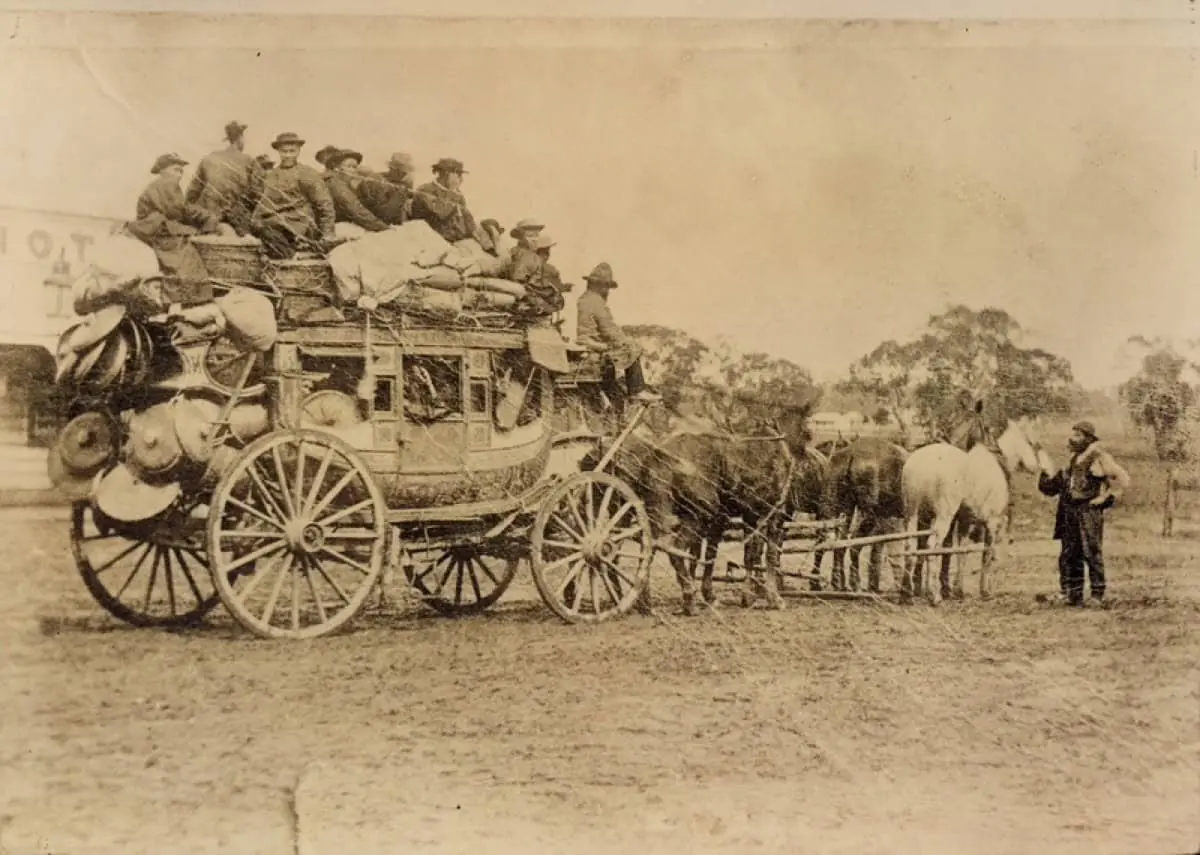
Before any Liu clansman could build a laundry or argue a case in federal court, someone had to pay for the passage. The credit-ticket system — 赊单制 (shēdānzhì) — was the financing engine of Wuyi emigration: a labor broker advanced passage money against two to five years of future wages, typically at punishing interest rates. It was simultaneously exploitative and enabling — debt bondage that could consume a man’s prime working years, yet the only way a land-poor villager from Taishan could access global labor markets. Every Liu clan emigration story begins with this gamble. Some lost everything. Some won more than they could have imagined.
The Liu clan’s Australian anchor, established decades before Liu Guangfu was even born, illustrates both sides of the gamble. Liu Guangming (刘光明), born in 1853 in British Malaya to Taishan ancestry, entered the Melbourne goldfields after news of gold discoveries spread through the overseas Chinese world. He succeeded — becoming a wealthy merchant and community leader. He then “recommended many fellow villagers to Melbourne to seek gold,” as one government record puts it, co-leading anti-racial-discrimination struggles alongside Lei Ah Mouy (雷亚妹), who is recorded as the first Siyi person to enter the Australian goldfields in 1851. This is the chain migration mechanism in its purest form: one successful emigrant → letters home → a pipeline of villagers → a community. Liu Guangming was the Liu chain’s first link to Australia, and Liu Guangfu, arriving decades later, would build upon the community Guangming had helped establish.
The goldfield at Ballarat — called New Gold Mountain (新金山, Xīn Jīnshān) to distinguish it from San Francisco’s Old Gold Mountain (旧金山, Jiù Jīnshān) — became one of the most significant sites of Chinese diaspora labor in the 19th century. At peak, Chinese miners comprised roughly 25 percent of the 40,000 miners working the Ballarat fields. The Chinese camp had its own Guandi Temple (关帝庙), ancestral tablets, and the social infrastructure that sustained clan identity in exile. The Sovereign Hill open-air museum preserves this history today — the archaeological record of men who crossed an ocean to dig in foreign earth, sending what they found back to villages that depended on their remittances.
But the American experience would prove far harsher. The Chinese Exclusion Act of 1882 transformed the Liu clan’s American trajectory. Men already in the United States were trapped: they could not return to China to visit family without risking permanent exclusion. Women were barred from entry almost entirely. The result was a “bachelor society” — Chinese-American communities with male-to-female ratios of 10 to 1 or worse, where men lived decades without wives or children, sending remittances home to villages they could not visit, growing old alone in rooming houses in San Francisco and New York. Liu clan men were among them.
The Exclusion Act spawned its own adaptive response: the “paper son” (纸儿子, zhǐ érzi) system, in which Chinese migrants purchased fraudulent documentation claiming to be sons of American citizens. The 1906 San Francisco earthquake and fire, which destroyed the city’s birth records, created a massive opening — tens of thousands of Chinese claimed US citizenship by birth, exploiting the documentary vacuum. This was not criminality in the ordinary sense; it was survival, a community-wide strategy to circumvent a law explicitly designed to exclude an entire race. The paper son system was the diaspora’s adaptive response to a law that treated them as permanently alien. Liu clan members, like all Taishanese, likely participated — the system was so widespread that participation was the norm, not the exception.
But the neglected story — the one that most accounts of the Chinese diaspora overlook — concerns the women who stayed behind. While Liu clan men labored in goldfields, laundries, and restaurants across the Pacific, their wives remained in Taishan villages. These women, the jinshanpo — 金山婆 (Jīnshānpó), “Gold Mountain wives” — managed household finances, directed remittance-funded construction, raised children alone, and exercised community authority that would have been impossible in non-emigrant villages. They decided where to build, what to plant, and how to allocate the remittance funds that arrived in qiaopi letters (银信, yínxìn) — combined money transfers and family letters, inscribed as a UNESCO Memory of the World in 2013. The women of Taishan sustained emigrant villages across decades of separation, and their story demands to be told alongside the more visible achievements of their husbands and sons.
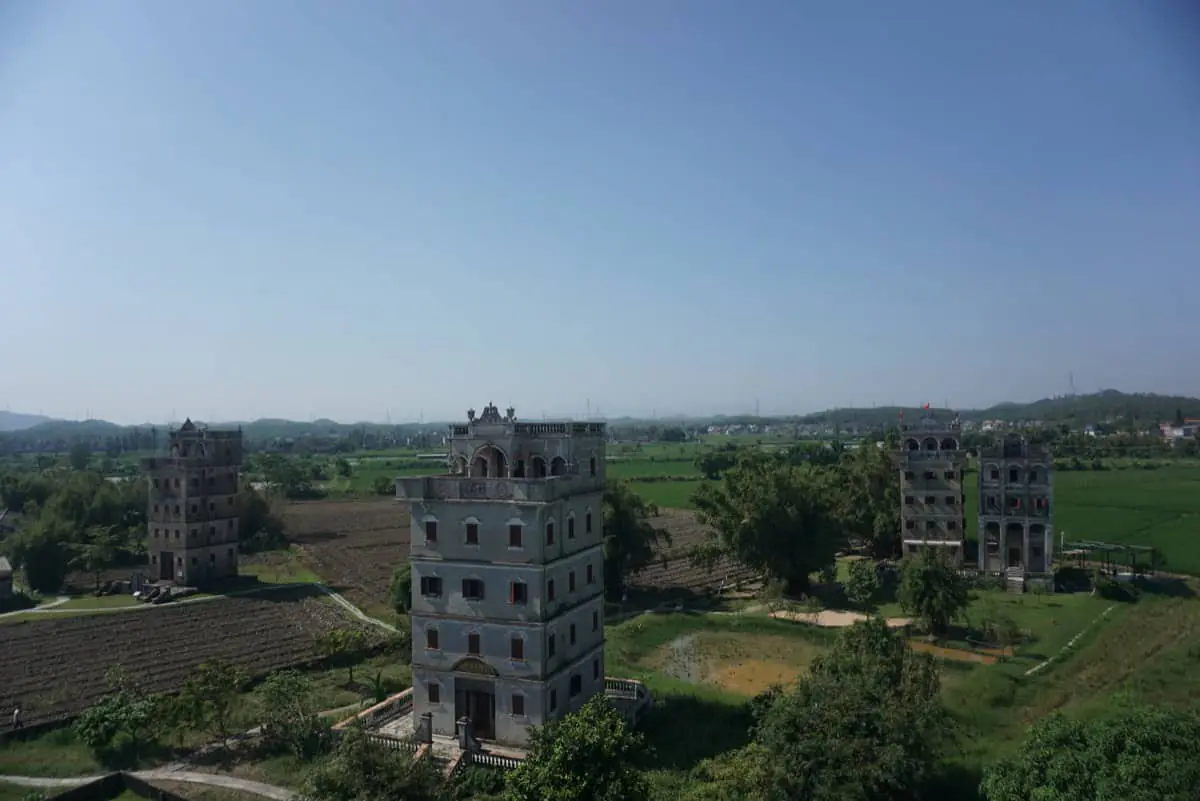
The Western-style mansions and diaolou (碉楼) — fortified watchtowers — that still stand in Liu villages were funded by male wages earned in overseas goldfields and laundries, but they were directed by female hands. The jinshanpo negotiated with builders, managed construction budgets, and decided on architectural designs — exercising an unprecedented female authority over the built environment. They were not passive victims of male emigration. They were active agents who sustained clan village life across decades of separation.
The transformation came in 1965. The Hart-Celler Act abolished the national-origin quotas that had restricted Chinese immigration since the 19th century and established family reunification preferences. Because Taishanese Liu clan members had the longest-established US family networks — dating to the 1850s gold rush — they were disproportionately positioned to benefit from the new system. The post-1965 wave transformed Liu communities from aging bachelor societies into multi-generational family communities. Daughters and wives who had been excluded for eight decades could now join their husbands and fathers. This was the demographic foundation on which professional achievement was built: the federal judges, mayors, and poets of the Liu diaspora were possible because the Hart-Celler Act had made families whole.
The Poem That Crossed Oceans
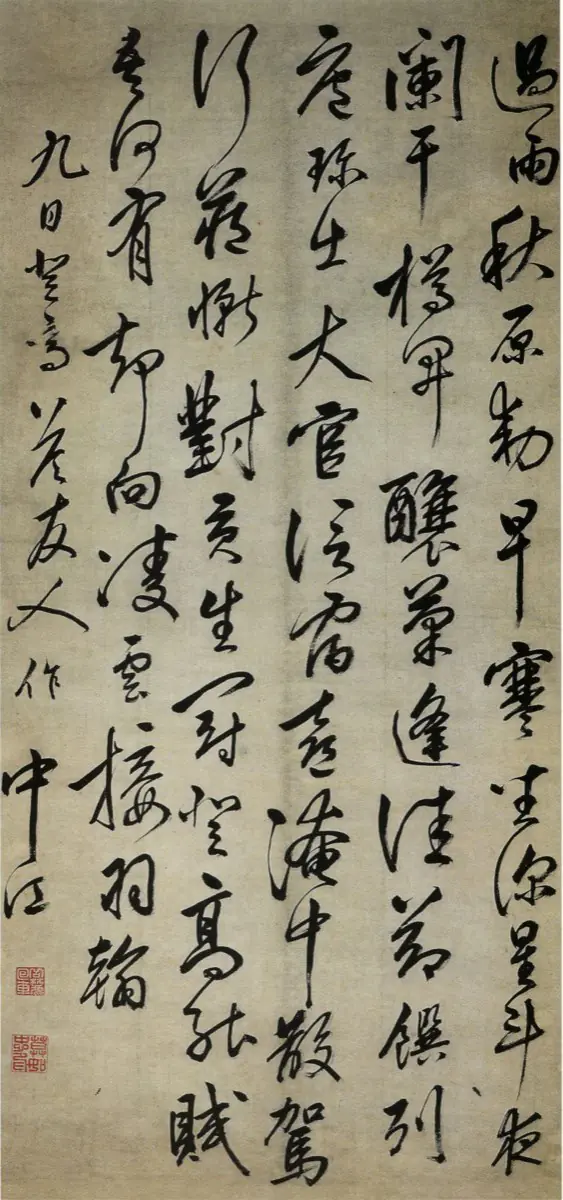
At the heart of the Liu clan’s identity, more powerful than any ancestral hall or clan association, is a 40-character poem. It was composed in two halves: the first 20 characters by Chen Baisha (陈白沙), a Ming Dynasty Confucian scholar of the 15th century, and the remaining 20 by Wan Zhuo Gong (万勺公). The poem belongs to the Liu Shihua branch — the Hengshui Liu of Shuibu township — and it is known as the “White Sand Scroll” (白沙卷). It reads:
宗本漢朝裔,萬祀仰先公。
學維希孔孟,道德永家崇。
Our lineage traces to the Han Dynasty; ten thousand generations revere our ancestors. Study following Confucius and Mencius; morality is the eternal family honor.
景運中興啟,貞元際會逢。
明良相定國,建業兆昌隆。
The fortunes of revival begin; the primal convergence arrives. Bright virtue steadies the nation; establishing achievement foretells prosperity.
This poem is not decorative. It is a portable genealogy — a system where each generation takes one character from the sequence as its generational name. When two Liu clan members met abroad, they could determine their precise kinship relationship by comparing their generation characters: “I am a Zong generation; you are a Ben generation — you are my uncle.” During the Exclusion era, when clan members could not return home to verify relationships, the poem functioned as identity verification across oceans. A syllable carried in the name was all the proof needed. 2
The Taishan Liu clan, in fact, maintains three separate generational poetry systems, corresponding to three independent branches that share a common distant origin but diverged centuries ago. The Liu Zhaoxiong branch, originating from Li’ao, uses 16 characters beginning “大明泰会遇中天,重道崇儒显尊贤” — invoking the Great Ming era and Confucian learning. The Dongshan and Guanghai branch, descended from the Liu Wensong line, uses a 20-character poem beginning “孝友成先德,敬勤佑子孙” — encoding filial friendship and diligence for descendants. Each poem is a self-contained genealogical system, a portable clan charter that encodes branch identity, Confucian values, and historical aspirations. “Taishan Liu” is not one lineage but three, united by common distant origin but separated by 800 years of branching. Yet all three poems share the same fundamental assertion: we know who we are because we know where we came from.
During the Cultural Revolution (1966–1976), this identity came under direct assault. The “four olds” — old ideas, old culture, old customs, and old habits — were targeted for destruction. Ancestral halls were desecrated. Genealogy books were burned. Clan tablets and ritual objects were systematically destroyed across Taishan. The Liu clan’s material heritage suffered devastating losses. But because copies of Liu clan genealogies had been carried overseas by emigrants or preserved by diaspora clan associations, many records survived what the homeland lost. The post-1978 revival of Liu clan genealogy compilation and ancestral hall restoration — including the major 2010 renovation of the Shihua Liu Ancestral Hall — was largely funded and sourced by overseas Liu clan members. The diaspora became the keeper of what the Cultural Revolution tried to erase.
Today, the Shihua Liu Ancestral Hall in Shuibu hosts an annual scholarship-awarding ceremony for Liu clan students — a tradition that resumed in 2023 after a three-year pause during the COVID-19 pandemic. The worldwide Longgang (龙冈, Lónggāng) network includes more than 140 Liu-Guan-Zhang-Zhao organizations, built on the legendary brotherhood of Liu Bei, Guan Yu, Zhang Fei, and Zhao Yun from the Three Kingdoms era. Liu clan associations operate in San Francisco (三藩市刘家公所), New York (纽约刘氏宗亲会), Vancouver, Chiang Mai, Sarawak, and beyond. 3 Digital platforms — WeChat genealogy groups, query systems at liushijiazu.com, and DNA databases — have partially replaced the qiaopi letter as the mechanism of clan connection. An estimated 100,000 Taishan-origin Liu clan members live worldwide, with a global Liu population of more than 80 million.
But there is an honest reckoning to be made. First-generation emigrants who personally experienced the village — who walked the lanes of Longtangli, who chanted the generational poem in the ancestral hall — are aging out. Second-generation children, raised abroad with partial connection, may speak some Taishanese but increasingly default to English or Cantonese. Third- and fourth-generation descendants — born abroad, English-speaking, culturally assimilated — have minimal connection to specific Liu clan villages in Taishan. Taishanese, the dense rural dialect that was the mother tongue of the diaspora’s first wave, has given way to Cantonese, which is giving way to Mandarin and English — a language shift unfolding across generations. The survival of Liu clan identity beyond the first emigrant generation is not guaranteed. It is a live question, not a settled outcome.
And yet. The poem that crossed oceans still speaks. 宗本漢朝裔 — “our lineage traces to the Han Dynasty.” For the Liu clan of Taishan, scattered now across the Pacific and beyond, this is not nostalgia. It is a statement of fact — verified by government archives, cross-referenced genealogies, archaeological sites at Ballarat and Shuibu, and the living practice of a clan that still gathers at an ancestral hall to award scholarships to its young. 4 The Liu surname carries 2,000 years of continuous documented history: emperors and dragon-tamers, Tang-era refugees and Zhuji Lane migrants, goldfield laborers and federal judges, jinshanpo wives and Chinatown founders. This arc is not merely genealogical trivia. It is evidence that human identity — carried in a single syllable, a single character — can persist across millennia, across oceans, across languages, across political systems.
The Liu clan’s story asks a question that every diaspora descendant must eventually confront: what does it mean to carry a name that has outlasted dynasties? The answer, perhaps, is in the poem itself — in the portable identity that crossed oceans in the memory of emigrants, survived the Cultural Revolution in diaspora archives, and is recited still by elders at an ancestral hall in Shuibu township. The poem that crossed oceans still speaks. And as long as there is a Liu clansman anywhere in the world who knows the next character in the sequence, it will continue to speak.
Sources
Books
- 张国雄 et al. 《五邑华侨华人史》. 暨南大学出版社, 2001.
- 梅伟强, 关泽锋. 《广东台山华侨史》. 中国华侨出版社, 2010.
- 刘进, 李文超. 《银信与五邑侨乡社会》. 广东人民出版社, 2011.
- 袁丁. 《跨国移民与近代广东侨乡》. 社会科学文献出版社, 2019.
- Hsu, Madeline Y. Dreaming of Gold, Dreaming of Home: Transnationalism and Migration Between the United States and South China, 1882–1943. Stanford University Press, 2000.
- 骆伟. 《岭南姓氏族谱辑录》. 广东人民出版社, 2002.
- 刘重民 et al. 《台山刘氏源流》. 台山市地方志办公室, published on cnts.gov.cn.
Government Sources
- Taishan Municipal People’s Government (cnts.gov.cn): Liu surname origin, migration, villages, genealogy, and notable figures.
- Chinese Foreign Ministry (fmprc.gov.cn): Chiang Mai Liu Clan Association event, 2015.
- Shantou Foreign and Overseas Chinese Affairs Bureau: Judge Ronald Lew visit, 2016.
- Guangdong Qiaoban: Mayor David Lau root-seeking visit, 2011.
Academic and Media Sources
- tsinfo.com.cn (Taishan Library database): Liu surname origin, Australian goldfields history.
- Zhang Guoxiong. “四邑淘金工在澳洲” (Siyi Gold-Seekers in Australia). meipian.cn, 2026.
- CCTV, cafoundations.org, Southwestern Law School: Ronald Lew biographical profiles.
- People’s Daily Overseas (globalpeople.com.cn): Liu Guangfu profile, 2025.
- Mai Boheng. “澳洲’华人社会之父’刘光福” (Liu Guangfu: Father of Australian Chinese Society). jiangmen.cn, 2019.
- thepaper.cn: Liu Wenjian feature, 2020; Liu Bozhi photography exhibition, 2020.
Genealogy and Digital Sources
- liushijiazu.com: Liu surname genealogy, population data, generation poetry query system.
- 23mofang.com: Genetic genealogy database.
- FamilySearch: Wang Sui Clan Name Chart, Taishan Liu genealogy microfilm.
Footnotes
Continue Reading
- Guan Clan: History, Legacy, and Resilience in the Chinese Diaspora — The Liu clan’s historical brother clan through the Liu Bei–Guan Yu–Zhang Fei oath. Covers the Longgang four-surname alliance and parallel Wuyi migration patterns.
- The Wong Surname: Tracing Its Noble Origins and Global Legacy — Another of China’s great surnames with deep Wuyi roots, offering comparative surname history in the same narrative format.
- Discover the Vital Role of Women in Taishan History — Deep dive into the jinshanpo experience referenced throughout the Liu clan narrative. The women who sustained Taishan’s emigrant villages.
- Wuyi Diaspora Clans and Brotherhoods: Survival Through Solidarity — The broader organizational infrastructure — surname associations, clan halls, mutual aid societies — that sustained Wuyi emigrants including the Liu clan across oceans.
- Population estimate of ~80 million Liu surname bearers worldwide, corroborated by liushijiazu.com, 23mofang.com, World Liu Federation, and Chinese Foreign Ministry (2015 statement citing 70+ million in mainland China). ↩
- The 40-character generational poem of the Liu Shihua branch is independently confirmed by both the cnts.gov.cn government page and the FamilySearch Wang Sui Clan Name Chart. ↩
- Worldwide Longgang network of 140+ Liu-Guan-Zhang-Zhao organizations confirmed by Taishan government source (cnts.gov.cn). ↩
- Liu clan origin and migration route verified against the Taishan Municipal People’s Government Liu surname page (cnts.gov.cn/tssrmzf/zjts/lswh/xsyl/tsxs/content/post_727680.html), the single most authoritative source for Taishan Liu clan genealogy. ↩
Suggested Reading
Is this your family’s story?
Roots Of China is built from readers’ family histories. If a story here sounds like your own — a surname, a village, a journey — leave a comment below, or share your family’s story with us and we may be able to help you find your ancestral village.
