


The Yuan (袁) Surname: From the State of Chen to the Wuyi Diaspora
The Name Before the Place
Most Chinese surnames are named for a place. A king granted a fief; the family took the fief’s name; the name outlived the fief. The surname Yuan (袁姓, Yuán xìng) did not begin this way. It began as a name — a personal style-name (字, zì) carried by one man, claimed by his grandson, and passed down through conquest, collapse, and an ocean crossing, by millions who never saw the place it came from.
The lineage behind the name is among the oldest in China. It runs through the Gui clan (妫姓, Guī xìng), the line of the legendary sage-king Emperor Shun (舜帝, Shùndì). After the Zhou overthrew the Shang in 1046 BC, the new dynasty enfeoffed a descendant of Shun at the State of Chen (陈国, Chénguó), honoring him posthumously as Chen Hugong Man (陈胡公满, Chén Húgōng Mǎn). From that single polity two great surnames later diverged — Chen and Yuan.
The founding act came a few generations on. A Chen minister named Tao Tu (涛涂, Táo Tú — also written 辕涛涂 and 爰涛涂), grandson of a man styled Bo Yuan (伯爰, Bó Yuán), took his grandfather’s style-name 爰 as his own surname. The Song-era compendium Tongzhi records it plainly: “袁氏,亦作’辕’,亦作’爰’,为妫姓,舜后陈胡公之裔……孙涛涂以王父字为氏。” (“The Yuan surname, also written yuan and yuan, is of the Gui clan, descended from Shun through Hu Gong of Chen… his grandson Tao Tu took his grandfather’s style-name as his surname.”) Tao Tu is remembered as the founding surname ancestor (得姓始祖, dé xìng shǐzǔ).
His fief was at Yangxia (阳夏, Yángxià) — present-day Taikang (太康, Tàikāng) county in Henan — and there the surname found its first physical center. A name born from a name had acquired a place. Three thousand years later, that name, romanized Yuen in Cantonese and Toisanese communities, Yuan in Mandarin, and Won or Uan in other dialects, would appear in the ledgers of Gold Mountain and on the envelopes of letters sent home to the villages of Taishan. It is a thread that ties a Taishan villager of 1890 to a grandchild in Vancouver, San Francisco, or Melbourne — and to a great-granddaughter typing 袁姓 into a search box from Toronto in 2026.
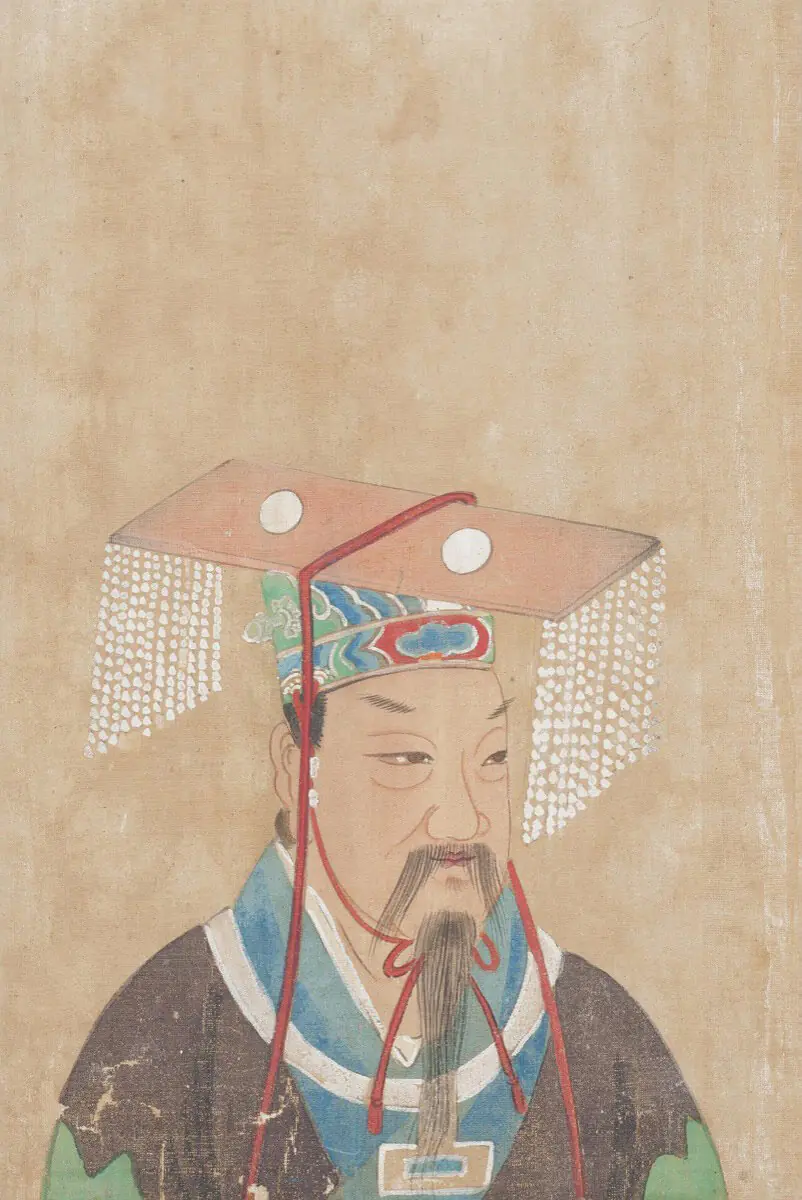
One Surname, Six Characters
The surname did not settle on 袁 all at once. For centuries it was written interchangeably as 爰, 辕, and 袁 — alongside the rarer 榬, 溒, and 援. The scholar Zheng Hesheng (郑鹤声), in his chronology of the Southern Song historian Yuan Shu, compressed the divergence into a single line: “一姓六字五族之异” — one surname, six characters, five clan distinctions.
The interchangeability is attested in the classics themselves. The Zuo Tradition (《左传》) writes the founder’s name 辕涛涂; the Guliang Commentary (《谷梁传》) writes 袁涛涂. The characters 爰 and 辕 were homophones, both read Yuán, and the difference between them — a hand radical here, a chariot radical there — had not yet been fixed.
Fixation came in the early Western Han, when a descendant named Yuan Zheng (袁政, Yuán Zhèng) dropped the “chariot” (车) radical and settled the surname as 袁. A later genealogy sums it up: “去车从袁始涛涂,确定’袁’字始袁政” — dropping the chariot began with Tao Tu, fixing the character 袁 began with Yuan Zheng. The orthodox main line (正宗, zhèngzōng) has been 袁 ever since, even as the surname also absorbed adoptions from outside the Gui line — the 袁纥 of the northern Gaoche people, the Qiyan Mongols in the early Ming, and later Manchu, Yao, Hui, Yi, and Bai families. Yuan is thus a multi-source surname whose 妫姓 line remains the canonical one.
For diaspora descendants, the six-character divergence is a footnote with one practical consequence: the variants 辕 and 爰 survive only in old genealogies, while overseas romanization settled on a uniform Yuan, Yuen, Won, or Uan. The divergence never produced separate diaspora surnames.
The Name in History: The Warlord Clan and Its Fall
Every great Chinese surname has its commandery seats (郡望, jùnwàng) — the prefectures where a branch rose to such renown that its name became shorthand for standing. The Yuan surname has two. The earlier is the Chenjun Yuan lineage (陈郡袁氏, Chénjùn Yuán shì), rooted near the surname’s Yangxia birthplace. The later, and more famous, is the Runan Yuan lineage (汝南袁氏, Rǔnán Yuán shì), founded when a descendant named Yuan Chang moved from Chenjun to Runan.
It was the Runan line that reached the summit of Han-era prestige. Four generations — Yuan An, Yuan Chang (敞), Yuan Tang (汤), and Yuan Feng and Yuan Wei (隗) — held the three highest offices of state, the Three Excellencies (三公, sāngōng). The phrase used of them, “four generations, Three Excellencies” (四世三公, sì shì sān gōng), ranked them as peers of the Yang clan of Hongnong: the two most powerful ministerial houses of the Eastern Han.
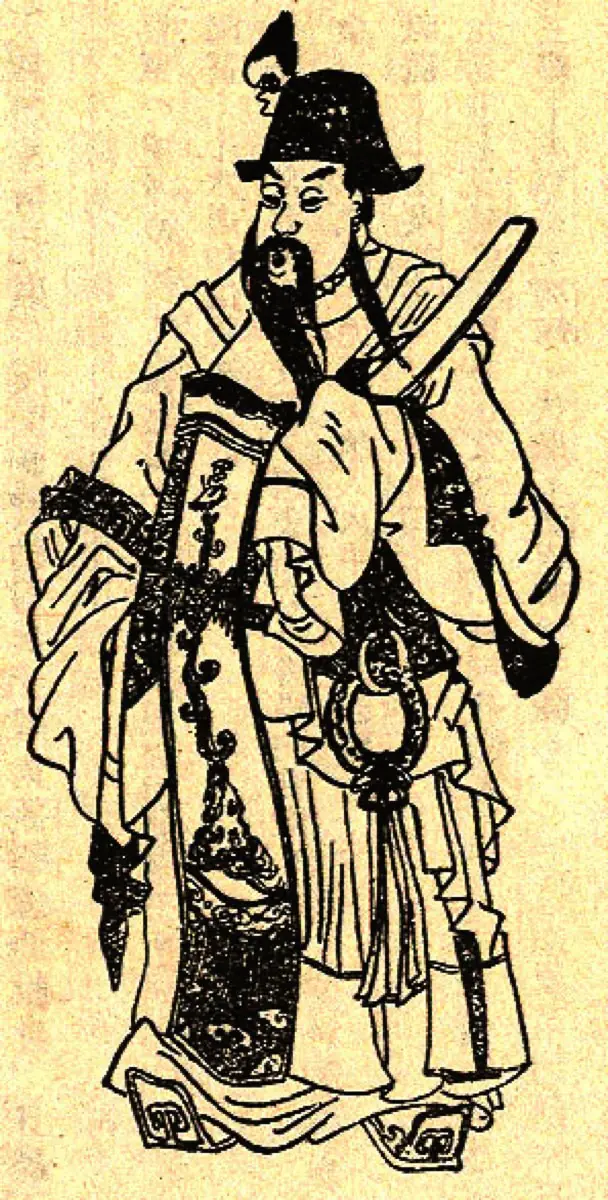
Then came the fall. The Runan Yuan produced the two warlords whose rivalry frames the end of the Han: Yuan Shao (袁绍, Yuán Shào) and Yuan Shu (袁术, Yuán Shù). Yuan Shao was defeated at the Battle of Guandu (官渡之战, Guāndù zhī zhàn) by Cao Cao. Yuan Shu went further, declaring himself emperor, and was destroyed. Their sons Yuan Tan and Yuan Shang turned on each other and were eliminated in turn. A lineage once said to have “disciples and old subordinates throughout the realm” was broken, and its branches scattered — the documentary backdrop against which later Yuan genealogies would narrate their own southward drift.
The surname’s record never really stopped. The Ming general Yuan Chonghuan (袁崇焕, Yuán Chónghuàn), executed for treason and posthumously revered; the Qing poet Yuan Mei (袁枚, Yuán Méi); and Yuan Shikai (袁世凯, Yuán Shìkǎi), the late-Qing official who became the republic’s first president — each carried the name forward. Nationally, the Yuan surname ranks around the 30s, with roughly 6.5 to 7 million bearers, concentrated in Sichuan, Hebei, Henan, and Jiangsu, according to the surname-distribution study of Yuan Yida. The exact rank varies by dataset — different compilations place it 33rd, 36th, or 37th — but the scale is not in dispute: this is one of the most populous surnames in the world.
One caution belongs here. The commandery seats are as much claim as fact for later branches. When a Wuyi village genealogy traces itself to the Runan Yuan, it is invoking a prestige framework — a way of saying “we come from the great house” — rather than presenting a documented chain of names back to Yuan An. The framework is real; each village’s attachment to it is, in most cases, retrospective. The reader should hold the two apart.
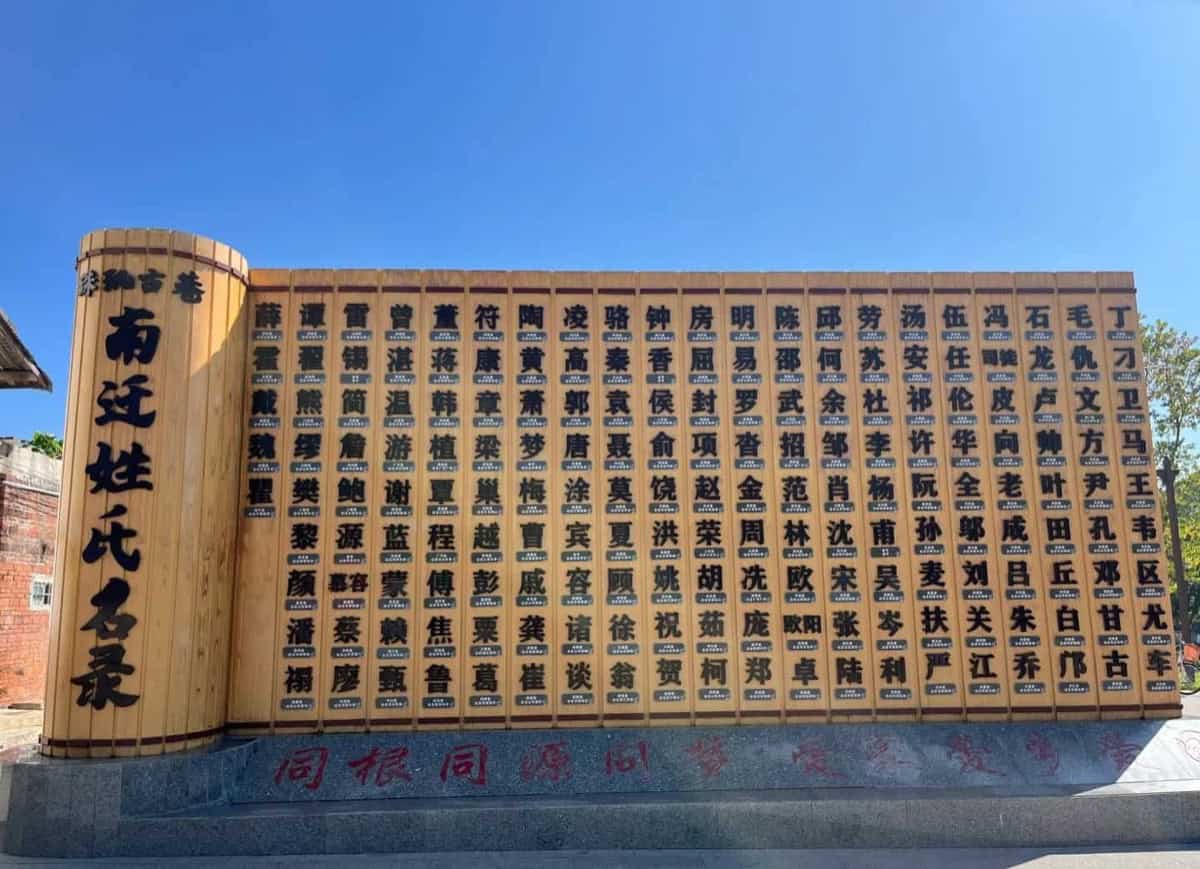
Southward: Zhuji Lane and the Memory of Arrival
How the Yuan surname reached Guangdong is a story told in two registers: documented drift and remembered arrival. The documented part is real but thin — the collapse of the Runan warlords and the wider upheaval of the Han-to-Wei-Jin transition, the long slide of northern clans out of Henan toward the Yangtze and beyond. The precise waves and routes, for Yuan as for most surnames, live in genealogies rather than archives.
The remembered part has a name: Zhuji Lane (珠玑巷, Zhūjīxiàng), the alley in Nanxiong (南雄, Nánxióng) on the Meiling Pass road that the Tang minister Zhang Jiuling opened in 716. It became, for lineage after lineage across Lingnan (岭南, Lǐngnán), the doorway of memory — the place every family claimed to have passed through on the way south. The early-Qing scholar Qu Dajun wrote in his New Gazetteer of Guangdong (《广东新语》) that “the old and prominent families of our Guangdong, their forebears mostly came south through Zhuji Lane of Nanxiong.” The counts vary by source — 76 surnames and 166 families, or 73 and 164, or 141 — but the shape of the claim is uniform.
Yuan genealogies make the same claim in the same idiom. The Taishan county local gazetteer (《台山县乡土志》) records that the Dugang Yuan “lived at Zhuji Lane, and their descendants, when the Song emperor lost his consort, came south together with the people of Wuyi to settle at Dugang in Xinning.” This is the “lost consort” legend, in which a Song emperor’s fleeing concubine supposedly triggered a mass southward exodus. Scholarship treats the framing with care. The historian Liu Zhiwei, and the Guangxu-era Kaiping gazetteer (光绪《开平县志》), observe that late-Qing local gazetteers did this as a matter of convention: “when dating events they always say the Xianchun reign; when naming their homeland they always say Zhuji Lane.” Zhuji Lane, in other words, is the surname’s memory of arrival — a legend-inflected frame, not a settlement date.
The more concrete Guangdong anchor lies not in the lane but in a town: Wentang (东莞温塘, Dōngguǎn Wēntáng), in Dongguan, which clan sources call “the birthplace of the Guangdong Yuan.” Government accounts name a Song-era founder — some records call him Yuan Yuetang (袁悦塘), others Yuan Zhijun (袁志君), described as a 38th-generation descendant of Yuan An who served as Guangdong’s financial commissioner — who migrated from Xinfeng in Jiangxi to Wentang, from which branches later spread toward Xingning, Meixian, Huiyang, and onward. Wentang today counts some 8,000 Yuan residents and a great ancestral hall under reconstruction. The founder’s name is genuinely contested between sources; what is not contested is that Wentang sits at the hinge between the Henan origin and the Wuyi branches.
The Villages of Wuyi: Dugang and the Five Sons
By the nineteenth century the surname’s diaspora center was not a commandery but a handful of villages in Wuyi (五邑, Wǔyì) — the “five counties” of Taishan, Kaiping, Xinhui, Enping, and Heshan, the densest emigrant-sending region in China from the 1840s onward. The Yuan surname’s anchors there are concentrated in Taishan.
The principal lineage is the Dugang Yuan (独冈袁氏, Dúgāng Yuán shì) of Shuibu town (水步镇, Shuǐbù zhèn), documented in the Taishan county local gazetteer. Its founding figure is said to have had five sons, and from those five sons the surname branched across the region in a divergence the gazetteer preserves almost like a map — the five-son divergence (五子分衍, wǔzǐ fēnyǎn):
- The eldest son, Fuxun, gave rise to the villages of Datang, Niulu, and Dugang in Taishan;
- The second son, Ningxun, to a village in Chonglou (冲蒌);
- The third son, Shouxun, to Shuangshi village in Haiyan;
- The fourth son, Chuangji, to Fu’an village (福安村, Fú’ān cūn) in Chonglou — the settlement this article will return to;
- The fifth son, Chuangye, to Zini Pagoda in Xinhui and to Yangjiang.
Fu’an village, in Chonglou town, is the best-documented of these anchors: a single-surname village (单姓村, dānxìng cūn) in an overseas-Chinese town, where nearly every household shared the name Yuan. What it meant to live in such a village — every neighbor a clansman, every obligation a family obligation — is part of the texture of the homeland the diaspora remembered from a distance, a landscape of Taishan’s old village houses and fields.
Two cautions are in order. The Xinhui Zini branch rests on the gazetteer line alone; no independent Xinhui gazetteer or Zini genealogy has been located, so it should be read as a single source rather than richly documented fact — unlike the Xinhui emigration boom itself, which is well attested. And Kaiping, the second of the five counties, appears to have no major Yuan settlement; the surname is absent from the Kaiping gazetteer’s surname survey — an honest negative, not proof that no Yuan individual ever lived there. (Two further notes for the researcher: Dugang in Taishan is not to be confused with a Dugang in Kaiping belonging to the Yang clan; and Heshan’s Yuan clan — written 源氏, a different character — is a separate surname of Xianbei origin, not this one.)

The Village Home: Halls, Generation Poems, and the Genealogy
At the center of a single-surname village stood the ancestral hall (祠堂, cítáng). For the Fu’an Yuan, that hall was the Runweng Ancestral Hall (润翁祖祠, Rùnwēng zǔcí), built at Dugang Fulian village. The clan’s own genealogy records a telling phrase about it: “先有祠然后有村” — the hall came first, then the village. Whatever its literal truth, the saying captures the priority the lineage gave to the building that housed its ancestors’ tablets.
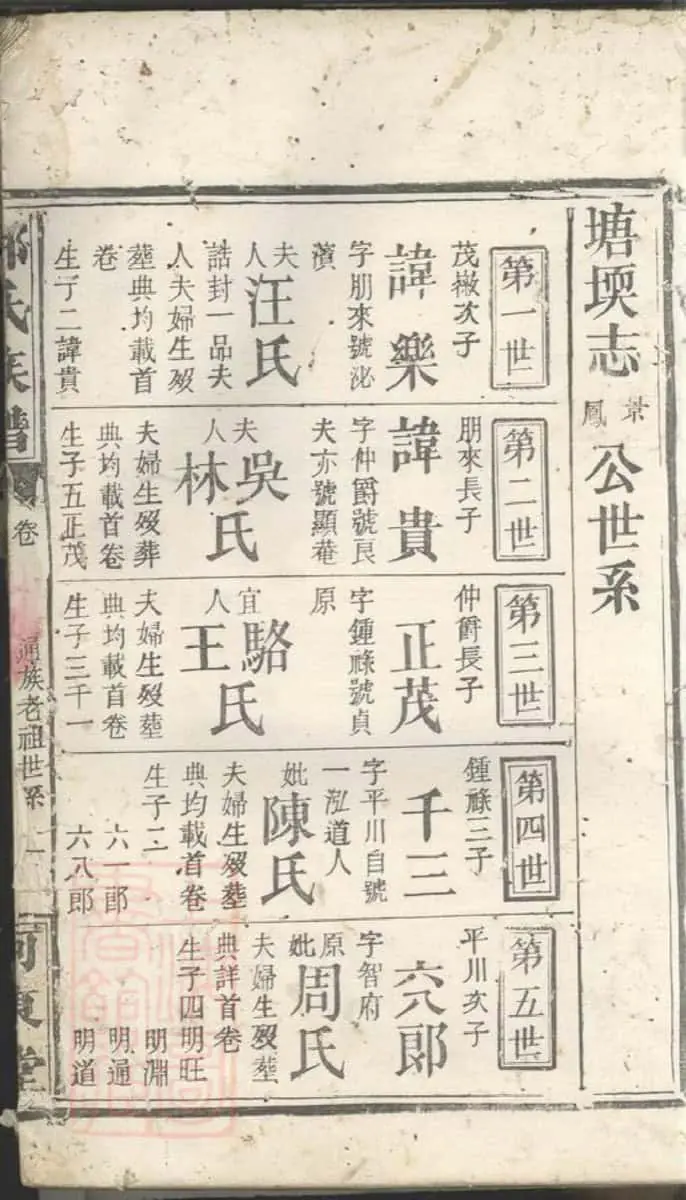
The hall carried a name — Runan Hall (汝南堂, Rǔnán táng) — a hall name (堂号, tánghào) that declared the family’s claimed descent from the Runan Yuan of the Han. The word “claimed” matters. The Fu’an genealogy traces its founding ancestor, Yuan Runweng (袁润翁, Yuán Rùnwēng), as the 25th generation from Yuan An of the Runan Yuan lineage. That is the clan’s own account, preserved in the genealogy recompiled in 1997 by Yuan Yingqi (袁英齐, Yuán Yīngqí) — and the intermediate generations linking Runan to Zhuji Lane to Taishan are unverified. The hall name and the generation count are a claim of standing, not a proven chain of names. A unified Yuan genealogy published in 2010 (《中华袁氏通用世系》) may smooth over exactly such local discrepancies; the local records preserve distinct claims, and both should be held.
Beside the hall stood the family’s textual self. Generation poems (字辈, zìbèi) assigned a character to each generation in a fixed sequence, so that a man’s name revealed his place in the line; the clan genealogy (族谱, zúpǔ) recorded births, marriages, migrations, and the occasional scandal. These documents are what made the diaspora’s return possible a century later — and what made the recompilation (修谱, xiūpǔ) of the genealogy, by Yuan Yingqi in 1997, a homecoming in itself.

The Passage: Credit Tickets and the Crossing
How did a Yuan villager leave? The machinery was regional, and it worked the same way for a Yuan family in Fu’an village as for any other Wuyi lineage. The central device was the credit-ticket system (赊单制, shēdān zhì): passage to Gold Mountain (金山, Jīnshān) — the Cantonese name for the California gold fields and, later, the wider American and Australian west — was financed on credit. A fare might cost around forty dollars up front and more than a hundred by the time it was repaid, deducted from wages not yet earned. The credit-ticket system was debt, but it was debt that moved people.
The route ran from the village to Hong Kong or to one of Wuyi’s own ports, then by steamer across the Pacific. Chain migration (连锁移民, liánsuǒ yímín) was the real infrastructure: a pioneer who had established himself abroad sent back money and sponsorship for a brother, a cousin, a nephew, and the chain extended surname by surname, village by village. Between 1840 and 1940 the five counties sent millions outward in this way.
It is important to be precise about what is and is not known for the Yuan surname specifically. The credit ticket, the Pacific passage, and the labor markets that awaited at the other end are documented at the level of the whole Wuyi region. For a specific Yuan emigrant they remain a “would have” — the mechanism a Fu’an or Dugang villager would have passed through, not a record any particular Yuan individual left behind. The honesty of that gap is part of the story.

Gold Mountain and the Letter
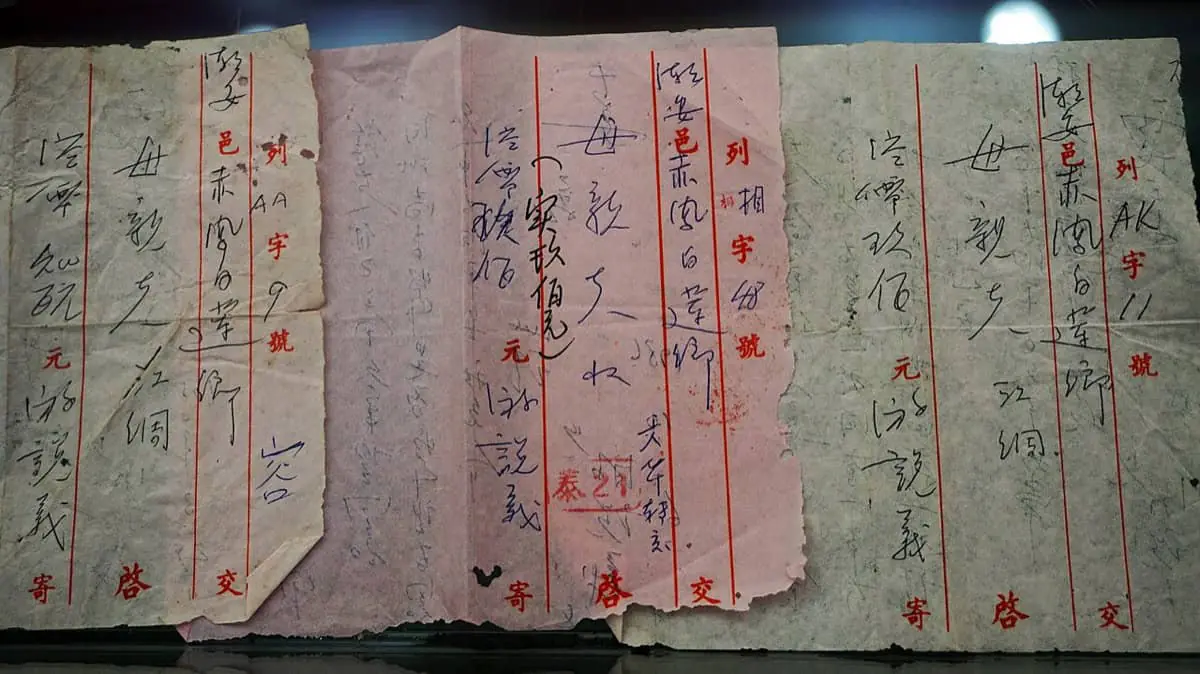
The circulatory system of this split world was a small object with a heavy name: the silver letter (银信, yínxìn), known in Fujian and in scholarship as qiaopi (侨批, qiáopī). A silver letter fused money and message into a single document — a remittance and a letter folded together, carried home by a network of remittance houses and money shops (批局/银号, pījú/yínhào) routed through Hong Kong. Taishan, China’s first qiaoxiang, maintained more than five hundred such agencies during the Republic, and in 2013 the qiaopi archives — the overseas Chinese silver letters — were inscribed on UNESCO’s Memory of the World register. (For the newcomer, a beginner’s guide to qiaopi explains the genre.)
One of those letters carries the surname of this article, and it is the closest thing the record gives us to a named Yuan emigrant’s voice. In the Taishan Yinxin Museum (台山银信博物馆, Táishān Yínxìn Bówùguǎn), at Haikou Port in Duanfen town, is displayed a letter from a Taishan overseas Chinese named Yuan Yesheng (袁叶盛, Yuán Yèshèng), dated the second of May, 1912, to his younger brother Yuan Yeli (袁叶丽, Yuán Yèlì) back home. It contains a single surviving sentence:
适接贤弟来函,为国效力,剿灭满奴,亦本当之责任。
“Having received your letter, to serve the nation and wipe out the Manchu slaves is indeed my proper duty.”
That is all we know. The letter proves that a Yuan emigrant existed, wrote home, and — in the months after the 1911 Revolution — spoke of his duty to the new nation in the language of its overthrow of the Qing. It says nothing of his occupation, his destination, or his fate. The museum does not record which village he came from. His story is a fragment: one sentence, one date, one name on an envelope. Let the silences stand.
Women Who Waited
For every man who crossed, someone stayed behind. In the Wuyi villages, that someone was usually a wife — a “Gold Mountain wife” (金山婆, jīnshān pó), so called because she was married to a man whose wages came from Gold Mountain. For decades she ran the farm, the household, and the clan’s ritual obligations alone.
The marriage was a split household (两头家, liǎngtóujiā): one family living in two worlds, held together by the letters and remittances that arrived — or failed to arrive — from abroad. The 金山婆 was not a passive figure. She allocated the remittance money, raised the children, arranged the ancestral offerings, and often directed the construction of the very halls and houses that remittance wealth paid for. The moral economy she enforced was strict: remittance flowed along patrilineal lines, and the standing expectation was that the emigrant would eventually return — the norm of “falling leaves return to the root” (落叶归根, luò yè guī gēn).
That expectation held the emigrant as a sojourner, a man only temporarily abroad; but many never returned, and the “sojourner” frame sat uneasily beside the permanent settlements the diaspora actually built. Both framings were true at once, and both ran through the same villages. What this meant in a specific household in Fu’an village or Dugang, no surviving Yuan letter records. The 金山婆 is a Wuyi-wide figure, explored in depth in the story of Wuyi’s women; for the Yuan surname she stands as the shared condition of the women of villages like Fu’an — rendered in the aggregate, not in any single named life. The aggregate is enough to see the shape: a woman in a village that shared her husband’s surname, waiting on letters that carried it back.

Exclusion, Division, and the Long Silence
The American door that Gold Mountain had opened began to close in 1882 with the Chinese Exclusion Act (排华法案, Pái Huá Fǎ’àn), and for decades afterward entry to the United States for laborers was possible only through evasion — merchants, students, diplomats, and teachers retained narrow legal channels, while many others entered under false “paper son” identities. Emigration redirected toward Australia and Southeast Asia. A fictive-kinship system emerged — the “paper son” (纸生仔, zhǐ shēng zǎi), in which a would-be migrant purchased a slot in another family’s documents — and the files of Angel Island (天使岛, Tiānshǐ Dǎo) preserve, in state archives, the interrogations that tested whether a claimant was who he said he was. For any Yuan emigrant who tried to enter, this was the machinery he would have faced; no named Yuan case survives in this dossier, so the record stays at the level of the region — the same exclusion-era history told for Wuyi’s railroad workers.
Then came 1949, and the door closed from the other side. The bifurcation severed the diaspora from the villages for roughly thirty years — letters stopped, remittances stopped, and the split household froze into silence. What the overseas money had already built remained: ancestral halls, arcaded qilou (骑楼, qílóu) shop-houses, and the fortified diaolou (碉楼, diāolóu) watchtowers that still line the Wuyi landscape.
When reconnection came after 1978, it came with an appetite for return — and for the genealogy recompilations (修谱, xiūpǔ) that would let the diaspora write itself back into the lineage it had left. The memory of arrival the villages had once told as the Zhuji Lane legend now gained a new chapter, written from the other shore.
The Name Endures
The name endures now in institutions that span the ocean. A transnational Yuan clan-association network (宗亲会, zōngqīn huì), led by bodies such as the All-China Yuan Clan Association, has planned a Yuan cultural park at Taikang in Henan — the surname’s birthplace — to receive Yuan descendants from home and abroad for ancestral rites. Overseas Yuan money has funded the memorial garden of Yuan Chonghuan in Dongguan’s Shijie — some 120 million yuan of it — and academic work documents a Yuan clan association active as early as 1982, with 742 members, spring and autumn sacrifices, and organized groups returning to the home villages to pay respects at the tombs.
The surname has studied itself. The historian Yuan Ding (袁丁, Yuán Dīng) of Sun Yat-sen University, author of the standard work on transnational migration and modern Guangdong qiaoxiang, bears the name he analyzes; so does Yuan Lize (袁立泽, Yuán Lìzé), compiler of the definitive Yuan-surname compendium (《中华姓氏谱·袁姓卷》). The recompilation revival continues, with digitized Yuan genealogies now circulating online.
For the descendant searching today, the trail is concrete, and your surname is the compass: visit Dugang or Fu’an village; learn to read a zupu; consult a Yuan genealogy; search the silver-letter archives. Remember that the name has worn several romanizations — Yuan, Yuen, Won, Uan — so search under all of them. And keep one final distinction straight: the Yuan of Heshan, written 源氏, a different surname of Xianbei origin, is not this name.
Three thousand years ago, a man took his grandfather’s style-name as a surname, and the name of a person became the name of a people. It was carried south by farmers, remembered at Zhuji Lane, settled in the villages of Taishan, and crossed the ocean as Yuen and Yuan and Won. Today it is a character shared between a grandfather who once lived in a village in Wuyi and a great-granddaughter typing 袁姓 into a search box in Toronto — one name, unbroken.
Sources
Books
- 袁立泽 编著,《中华姓氏谱·袁姓卷》(现代出版社/华艺出版社, 2002, ISBN 7-80028-713-0) — the definitive Yuan-surname compendium (origin, figures, humanities, documents).
- 陈瑞松,《陈姓源流》(黄河水利出版社, 2002) — the pre-Yuan lineage stage: State of Chen, 妫姓, Emperor Shun.
- 袁尚海,《中华袁氏通用世系》(云南民族出版社, 2010) — the unified Yuan clan lineage (note: may flatten local branch claims).
- Madeline Y. Hsu, Dreaming of Gold, Dreaming of Home (Stanford University Press, 2000) — exclusion, paper-son, and transnational family mechanics.
- 袁义达,《中国姓氏·三百大姓》(华东师范大学出版社, 2007) — Yuan population and distribution data.
- 梅伟强、张国雄,《五邑华侨华人史》(广东高等教育出版社, 2001) — Wuyi regional diaspora baseline.
Government and scholarly web sources
- Dongguan Municipal Government (dg.gov.cn) — Wentang Yuan genealogy and history; the Yuan Zheng standardization account.
- Jiangmen Municipal Government (jiangmen.gov.cn) — the 1912 Yuan Yesheng silver letter on display at the Taishan Yinxin Museum.
- Taishan Municipal Government (cnts.gov.cn) — the 2013 UNESCO Memory of the World inscription of the qiaopi/silver-letter archives.
- Zhoukou Party Network (zkdj.gov.cn) — the Tongzhi lineage quotation; “one surname, six characters.”
- Guangdong Provincial Gazetteer Office (dfz.gd.gov.cn) — Zhuji Lane and the Zhang Jiuling Meiling Pass road (716).
- China News Service (chinanews.com.cn) — the All-China Yuan Clan Association and the Taikang cultural park plan.
Suggested Reading
Is this your family’s story?
Roots Of China is built from readers’ family histories. If a story here sounds like your own — a surname, a village, a journey — leave a comment below, or share your family’s story with us and we may be able to help you find your ancestral village.
